
Local service guide
Furniture assembly in Anchorage: hiring and preparation
Arrange furniture assembly in Anchorage by sending the assembler your product links, item quantities, delivery status, and access details, then request a written quote covering assembly, placement, wall anchoring, and cleanup. Anchorage’s emergency-management office advises attaching large furniture to walls. Ask about anchoring before booking, and price packaging removal and old-furniture haul-away as separate tasks. [1]
Request a quote for the complete job
Send the product name, model number, assembly instructions, and quantity for each item. Include photos if someone has opened the boxes or started the build. Tell the assembler whether the boxes sit in the final room or require carrying from a garage, entrance, or another floor. Describe stairs, elevator access, parking, and any building appointment rules.
Ask whether the price covers a fixed scope or hourly labor. For an hourly offer, request the minimum charge, expected crew size, and the point at which the assembler will seek approval for more time. For a fixed offer, ask what would change the price. Agree on how to handle missing hardware, damaged panels, incomplete deliveries, and a second visit.
Request separate amounts for assembly, wall anchoring, packaging removal, and old-furniture removal. Compare offers only after each provider confirms the same tasks. Ask for proof of liability insurance and an explanation of how they handle accidental damage. Avoid treating a low headline amount as a complete quote before reviewing its exclusions.
Agree on anchoring before assembly starts
Anchorage’s Office of Emergency Management recommends attaching large furniture to walls as an earthquake-mitigation step. For a dresser, wardrobe, or large bookcase, ask the assembler to review the manufacturer’s restraint instructions and include the anchoring work in the written scope. [1]
Send a photograph of the proposed wall and baseboard. Ask who supplies the restraint and wall fasteners, how the installer will identify a suitable attachment point, and whether the furniture can stand in your preferred position while following its instructions. If you rent, obtain the property owner’s agreement about drilling before the visit. Keep children away from the work area and postpone loading furniture until the assembler finishes the agreed safety steps.
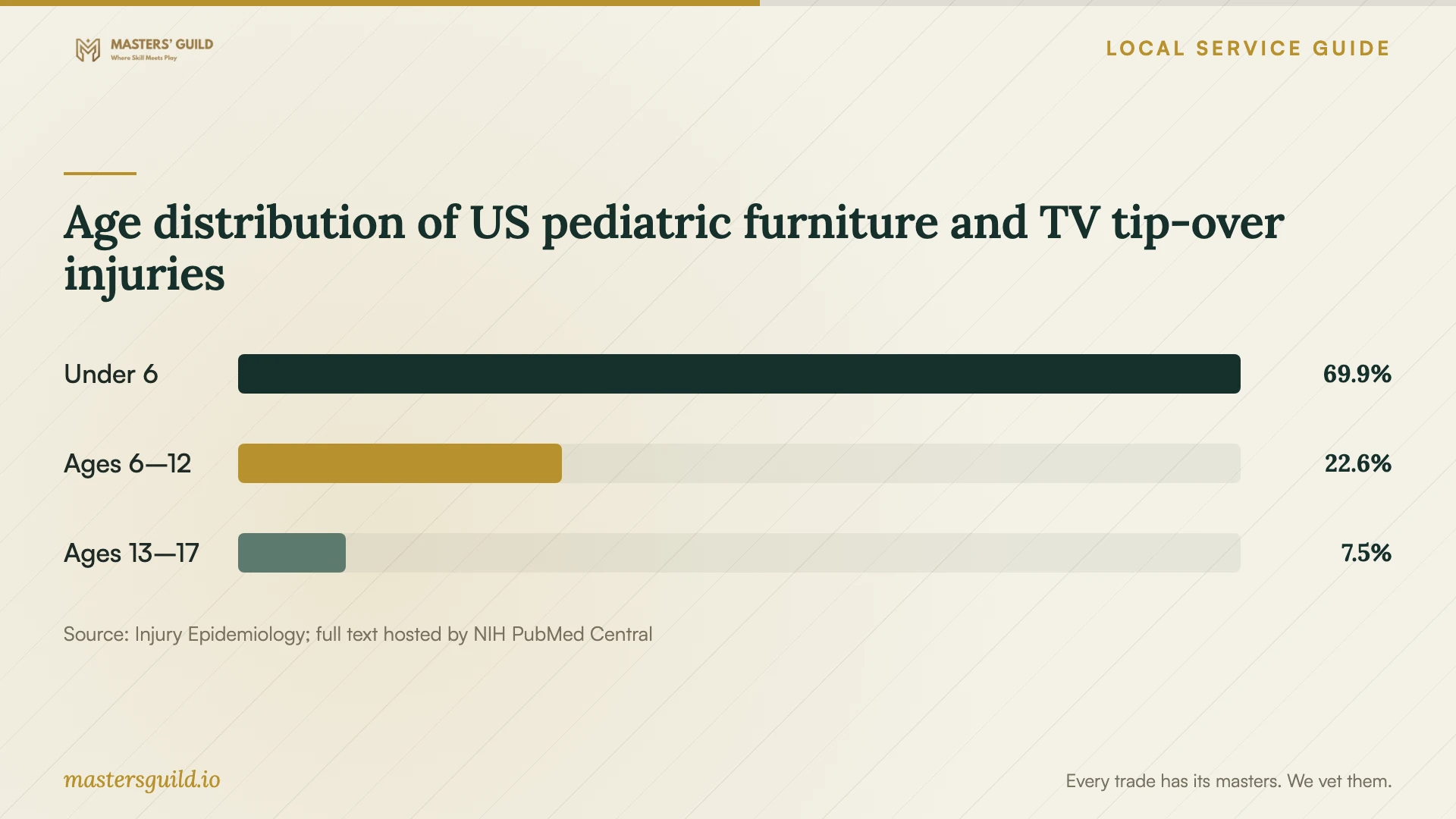
Researchers studying US emergency-department records from 1990 through 2019 found that children younger than six accounted for 69.9% of pediatric furniture and television tip-over injuries. This historical national finding supports giving anchoring attention during planning; it does not measure Anchorage injuries or the safety of a particular item. For a television setup, the study’s authors advise using furniture designed to support a TV and anchoring both the TV and its supporting furniture. [4]
Prepare the room and check the finished work
Choose the final position before the appointment. Measure the item’s finished dimensions against the available space, including drawer travel, doors, and nearby outlets. Ask the assembler how much clear floor space they need. Keep the instructions and labeled hardware together, and photograph delivery damage before anyone starts assembly.
For a heavy item or a build whose instructions call for two people, ask the provider to arrange the required help. Tell them whether you expect to assist with lifting; do not leave that assumption unresolved. Ask them to pause and contact you if they find damaged parts or cannot complete a required restraint.
Before the assembler leaves, inspect panel alignment, drawers, doors, and the agreed anchoring. Ask them to explain any remaining steps or use restrictions from the instructions. Keep spare hardware, the manual, and the receipt. Record incomplete work in writing and agree on who will obtain replacement parts and finish the job.
Choose a cleanup and disposal plan
Specify whether cleanup means gathering packaging in one place, breaking down boxes, or taking material off the property. Ask your waste provider which packaging materials it accepts before mixing cardboard, foam, film, and discarded furniture. Keep packaging you may need for a damaged-item return until you resolve that return with the seller.
SWS serves a designated collection area rather than every address in the municipality. Within its service area, the utility says automated trucks cannot collect waste left beside a roll cart. It also directs tenants to work with the property owner because SWS sets up and bills services through the owner. Confirm your address’s collection arrangements before asking the assembler to leave excess packaging for pickup. [3]
For a self-haul trip, SWS lists a residential Central Transfer Station entrance at 1310 E. 56th Avenue and a commercial entrance at 1050 E. 56th Avenue. The utility requires covered, secured loads and lists additional charges for uncovered or unsecured loads. Confirm current hours and material acceptance with SWS before loading a vehicle, and ask a hired hauler to include disposal charges in the quote. [2]
Age distribution of US pediatric furniture and TV tip-over injuries
Local details that affect your job
Make earthquake anchoring part of the booking
The municipal earthquake-mitigation page advises attaching large furniture to walls. Apply that guidance by asking an assembler to quote the restraint installation alongside the build. Resolve wall attachment, supplied hardware, and any landlord permission before the appointment so you can arrange a complete visit. [1]
Choose between bulky pickup and hired haul-away
SWS says bulky items cannot go in roll carts and offers Saturday bulky-item pickup by arrangement, with additional charges. If you use SWS collection, call 907-343-6250 to discuss pickup before paying an assembler to remove old furniture. Tenants should coordinate service requests with the property owner. [3]
Check the disposal destination for a paid hauler
SWS accepts commercial waste only at the Anchorage Regional Landfill and Central Transfer Station; its Girdwood Transfer Station serves residential users only. Ask the hauler to identify the destination and include disposal costs. This matters if an offer combines assembly with removal of furniture or packaging. [2]
Choose the scope before comparing offers
| Your situation | Scope to request | Decision before booking |
|---|---|---|
| Small item with complete parts | Assembly and final placement | Review the instructions and decide whether you want to build it yourself. |
| Large dresser or bookcase | Assembly plus wall anchoring | Discuss restraints and wall attachment; Anchorage recommends attaching large furniture to walls. |
| Heavy item or instructions requiring two people | Assembly with the required crew | Confirm who supplies lifting help and whether carrying is included. |
| Old furniture to discard through SWS | Assembly with optional removal | Compare haul-away with SWS scheduled Saturday bulky pickup, which carries additional charges. |
| Paid hauler taking discarded items | Removal with disposal charges included | Ask about the destination; SWS accepts commercial waste at the landfill and Central Transfer Station. |
Your hiring checklist
- Send product links, model numbers, quantities, and assembly instructions.
- Confirm delivery completion and photograph damaged or opened boxes.
- Describe carrying distances, stairs, parking, and building access rules.
- Get written prices for assembly, anchoring, cleanup, and haul-away.
- Resolve wall attachment and any property-owner permission before the visit.
- Clear the final room and arrange any help required by the instructions.
- Inspect the completed furniture and record unfinished work before payment.
Frequently Asked Questions
How much should I budget for furniture assembly?
Request an item-specific quote using the exact model and instructions. Ask the provider to separate carrying, assembly, anchoring, and removal charges, and explain any minimum or return-visit fee. For hourly work, agree on an estimate and a spending limit that requires your approval before the assembler continues.
Should I ask the assembler to anchor a large bookcase?
Yes. Anchorage’s emergency-management office recommends attaching large furniture to walls. Ask the assembler to review the item’s restraint instructions, identify the attachment method, and include hardware and installation in the scope. Obtain any needed property-owner agreement before drilling. [1]
Can I leave old furniture beside my municipal trash cart?
SWS says its automated trucks cannot collect waste beside a roll cart and prohibits bulky items in the cart. It offers Saturday bulky-item pickup by arrangement with additional charges. Contact SWS to discuss eligibility and scheduling for your address, or include haul-away in the assembly quote. [3]
What should happen if parts are missing?
Ask the assembler to stop at the affected step and identify the missing part against the manual. Photograph the issue and contact the seller for replacements. Before booking, agree on the charge for work completed, storage of loose parts, and any return visit so you can resolve the delay without an open-ended bill.
Sources and scope
This guide combines the sources below with practical planning guidance. Figures apply to the stated geography and period; request a written quote for your property.