
Local service guide
Flooring installation and repair in Anchorage
Flooring installation and repair in Anchorage starts with a site visit and a written scope covering the floor surface, underlying repairs, removal and disposal. Ask the installer to separate finish work from structural or building-system work. Anchorage exempts tiling, carpeting and similar finish work from building permits, while requiring permits for regulated work unless an exemption applies. Confirm the scope before approving demolition. [1]
Define the repair before choosing a replacement floor
Show the installer the damaged area and explain your goal: replace a few pieces, refinish an existing surface or install a new floor throughout the room. Point out movement, stains, gaps and any known leak. Ask what the installer can inspect during the visit and what they need to check after removal.
Request repair and replacement proposals if you want to compare both options. For a patch, ask the installer to show you the proposed material beside the existing floor before ordering. For a replacement, agree on the rooms, closets, thresholds and stairs included. Photograph the existing surfaces and keep the approved sample with your contract.
If the installer proposes structural repairs or changes to plumbing, electrical or mechanical systems, confirm permit requirements with the Building Official before work begins. Anchorage's general permit rule covers regulated alterations and repairs. Its finish-work exemption does not establish an exemption for the entire renovation. [1]
Compare complete quotes and approve changes in writing
Use itemized, site-specific quotes to set your installation budget. Give each bidder the same room list, photographs and requested material. Ask them to identify the exact product, installation method, preparation work and exclusions. Request a total project price alongside any unit prices.
Have bidders itemize furniture moving, old-floor removal, disposal, underlying repairs, installation, trim and door adjustments. Agree on how they will price concealed damage after removal. Before expanding the work, have the installer send photographs, a proposed repair and a written price for your approval.
Request the contractor's licensing information and proof of insurance, and check that the named business matches your contract. Anchorage states that a permit exemption does not exempt work from its licensing requirements. Include a credential check even when the contractor says the finish work needs no building permit. [1]
Set payment stages, responsibility for material orders and a process for correcting defects. Ask the installer to document the selected product's preparation and installation requirements in the proposal. Agree on a schedule covering delivery, preparation, installation and when you can move furniture back.
Arrange debris and finishing-product disposal
Name the person responsible for loading, hauling and paying disposal charges in your contract. Anchorage requires solid waste generated within the municipality to go to state-permitted processing or disposal facilities within the municipality unless the director grants a written exemption. Ask your installer to identify the intended facility and provide disposal receipts. [2]
Arrange an alternative to the Materials Recovery Facility's natural-wood stream for removed wood flooring. Solid Waste Services excludes lumber and construction wood from that stream. Call 907-343-6250 to confirm the destination and acceptance requirements for your debris, including any material the contractor identifies as needing special handling. [3]
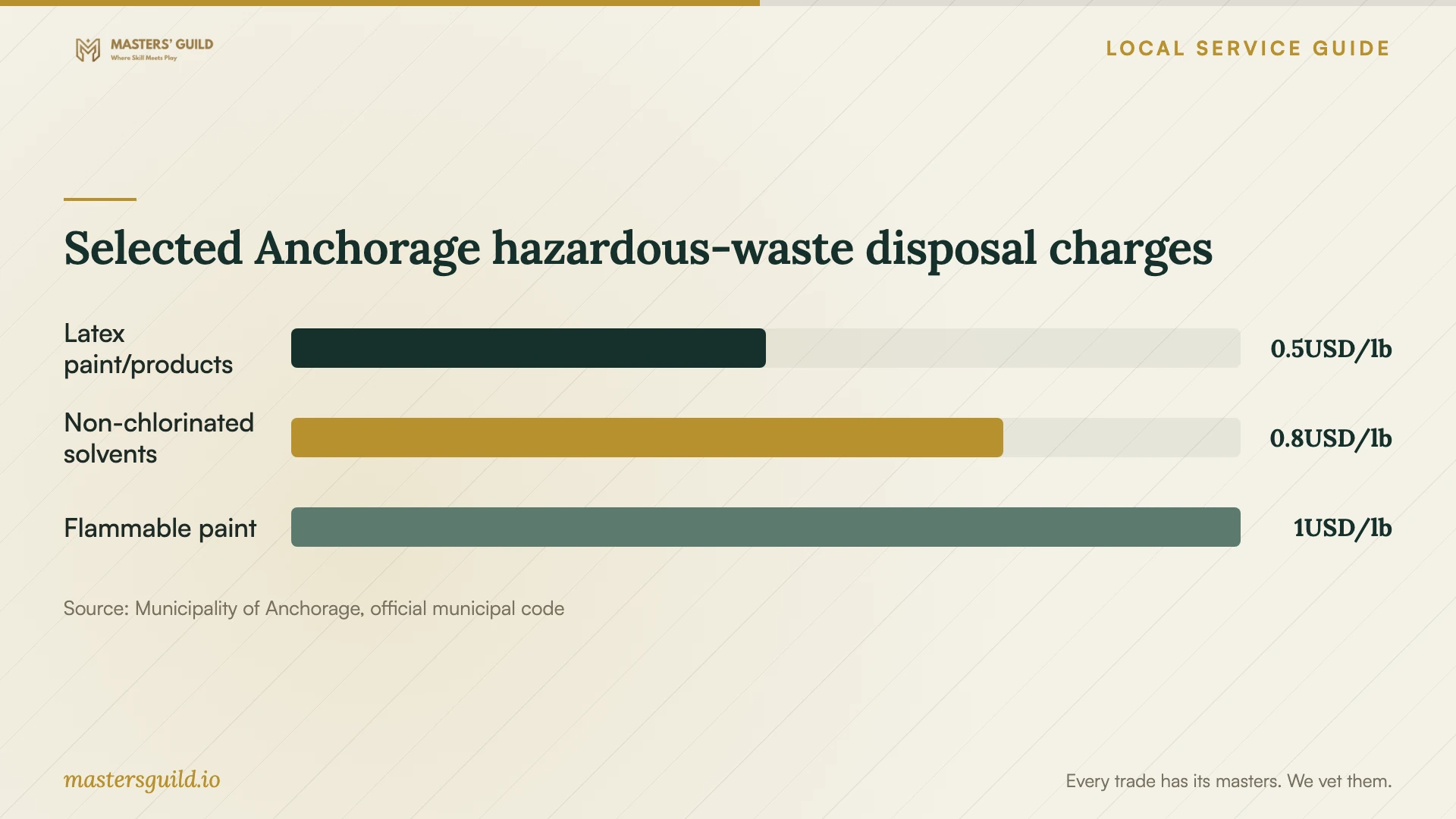
Keep labels readable on leftover finishing products and confirm their waste category before transport. The municipal code gives residential users a household hazardous-waste allowance of up to 40 pounds per day and 200 pounds per month, excluding electronic waste. It lists charges for residential deliveries above the daily allowance and for very small quantity generators at the Anchorage Regional Landfill. Ask Solid Waste Services how these rules apply to your delivery and who may use the residential allowance. [2]
The chart compares selected published chemical-disposal charges relevant to a finishing project. Ask the installer to quote flooring-debris hauling separately and identify whether removal includes facility charges, transport and special handling. [2]
Prepare the rooms and inspect the finished work
Agree on who will move furniture and appliances, protect adjacent rooms and maintain a usable route through the home. Tell the installer which bathroom and entrance you need during the project. Choose a place for delivered materials and confirm that the installer accepts those storage conditions before delivery.
Before the final payment, walk through each room with the installer. Check the agreed layout, transitions, trim, door movement and repaired areas. Record outstanding work in writing with a completion date. Keep the invoice, product details, care instructions and leftover matching pieces together for future repairs.
Selected Anchorage hazardous-waste disposal charges
Local details that affect your job
Confirm permits when work extends below the finish
Anchorage's Section 23.10.104.2.1 exempts tiling, carpeting and similar finish work from building permits. The municipality requires permits for regulated work that lacks an exemption and preserves licensing requirements for permit-exempt work. If removal leads to a proposal for structural floor repairs or building-system changes, confirm the requirements with the Building Official before approving the added work. [1]
Use the correct transfer-station entrance
Solid Waste Services lists the Central Transfer Station residential entrance at 1310 E. 56th Avenue, open Monday through Saturday from 8:00am to 4:30pm. It lists the commercial entrance at 1050 E. 56th Avenue, open weekdays from 6:30am to 4:30pm and Saturday from 8:00am to 4:30pm. Ask which entrance your hauler will use and confirm hours before arranging pickup. [3]
Arrange condominium approval for covered permit work
Anchorage requires an association approval letter for permits involving condominium common areas or structural changes. If your flooring proposal includes either, obtain the association's approval and clarify responsibility for the work before the contractor submits a permit application. [1]
Choose the next step for your flooring project
| Proposed scope | Next step | Include in the agreement |
|---|---|---|
| Localized surface repair | Request a repair proposal and inspect a matching sample. | Repair boundary, material and accepted appearance. |
| Tiling, carpeting or similar finish work | Check that the proposal stays within Anchorage's finish-work permit exemption. | Removal, preparation, installation and disposal. |
| Structural floor repair | Confirm permit requirements with the Building Official before authorizing work. | Repair scope, permit responsibility and approval of added costs. |
| Condominium common-area or structural work | Arrange the association approval letter required for the permit. | Association approval and division of responsibility. |
| Removed wood flooring | Confirm a debris destination outside the Materials Recovery Facility's natural-wood stream, which excludes construction wood. | Hauling, facility charges and disposal receipts. |
Your hiring checklist
- Send bidders the same room list, photographs and material preference.
- Request repair and replacement options where you want to compare them.
- Separate removal, preparation, installation, trim and disposal in the quote.
- Ask the contractor to explain permit requirements and provide licensing information.
- Agree on written approval and pricing for concealed damage.
- Confirm the debris destination and handling of leftover finishing products.
- Set furniture-moving responsibilities and access arrangements.
- Inspect the work together and record unfinished items before final payment.
Frequently Asked Questions
Do I need a building permit to replace flooring?
Anchorage exempts tiling, carpeting and similar finish work from building permits. Confirm requirements if your project includes structural repairs or regulated electrical, plumbing or mechanical work. A finish-work exemption does not cover every part of a larger renovation. [1]
How should I compare flooring estimates?
Ask each bidder to quote the same material and room boundaries. Compare the total price and separate allowances for removal, preparation, underlying repairs, trim and disposal. Resolve exclusions and the process for approving concealed damage before signing.
Can I use the natural-wood drop-off for removed flooring?
Solid Waste Services excludes lumber and construction wood from the Materials Recovery Facility's natural-wood stream. Call 907-343-6250 to confirm the accepted destination for your removed flooring before loading it. [3]
Does the chemical-disposal chart predict my disposal bill?
The chart gives selected per-pound rates from the municipal code. Residential allowances, waste classification and delivery eligibility affect the charge. Confirm your products and quantities with Solid Waste Services and ask for separate transport and flooring-debris costs. [2]
Sources and scope
This guide combines the sources below with practical planning guidance. Figures apply to the stated geography and period; request a written quote for your property.