
Local service guide
Anchorage duct cleaning: scope and hiring
Arrange duct cleaning in Anchorage after a provider shows you substantial contamination and gives you a written whole-system scope. EPA recommends cleaning as needed for substantial mold growth, pests, or excessive debris, rather than on a routine schedule. Start with an inspection, compare written estimates, and separate cleaning from furnace troubleshooting or proposed duct replacement. [1]
Decide whether you need cleaning or another service
Ask the inspector to distinguish dust on the grille from contamination inside the system. EPA identifies substantial visible mold in hard-surface ducts or other HVAC components, vermin infestation, and excessive dust or debris as reasons to consider cleaning. Ask for photographs that identify the affected component and its location, rather than accepting a photograph with no connection to your home. [1]
Treat a mold claim as a reason to investigate the cause. EPA says an expert must identify suspected mold and may need laboratory analysis. Wet or moldy duct insulation needs removal and replacement because cleaning cannot address it. Have the contractor explain how they will correct the moisture problem before you approve the cleanup. [1]
For dust after remodeling, describe the work and whether you ran the forced-air system during it. Ask the inspector to document deposits inside the supply and return paths. For future dusty construction, EPA advises sealing supply and return registers and keeping the HVAC system off until workers finish cleaning up the dust. [1]
Compare the complete scope and total price
Ask each bidder to list the supply ducts, return ducts, registers, grilles, and relevant heating and cooling components they will clean. EPA warns that leaving a contaminated component untreated can contaminate the system again. Have the bidder name exclusions, inaccessible sections, and any components that need a separate HVAC technician. [1]
Compare the total price for the same system and scope. Request separate line items for inspection, access work, component cleaning, and any proposed repairs or chemical treatment. If a bidder charges by the hour, ask for the expected hours and possible interruptions. EPA recommends a written agreement covering the total cost and scope before work begins. [1]
Describe your equipment before requesting an estimate. Send photographs of the furnace or air handler, filter slot, and accessible ductwork. Note the number of systems and any access through a crawlspace or attic. Ask the bidder to explain what could change the price after inspection and require your approval before extra work.
Check the cleaning method and proposed treatments
Ask how the crew will collect loosened debris and protect your rooms. EPA recommends vacuum equipment that exhausts outdoors, or HEPA vacuum equipment when the exhaust stays indoors. The crew should protect furnishings and use cleaning tools suited to the duct material, including soft-bristled brushes for fiberglass duct board or fiberglass-lined ducts. [1]
Ask the provider to inspect for asbestos-containing materials before disturbing insulation or other suspect components. EPA says such materials require specialized procedures and trained, equipped contractors. Also request a plan for closing and insulating any access openings the crew makes. [1]
Review a proposed disinfectant or interior coating as a separate decision. EPA describes unresolved questions about chemical treatments and cautions against routine sealant use. Before approving a biocide, ask to see its label, the permitted use, and an explanation of why physical cleaning and moisture control would not address the problem. Decline claims of EPA-certified duct cleaners; EPA does not certify or approve these companies. [1]
Discuss filtration alongside the inspection
Ask your HVAC technician which filter your existing fan and filter slot can accommodate. EPA advises MERV 13 or the highest rating the system can support when upgrading filtration. Follow the manufacturer's replacement guidance and check that the filter fits without gaps that let air bypass it. [1] [5]
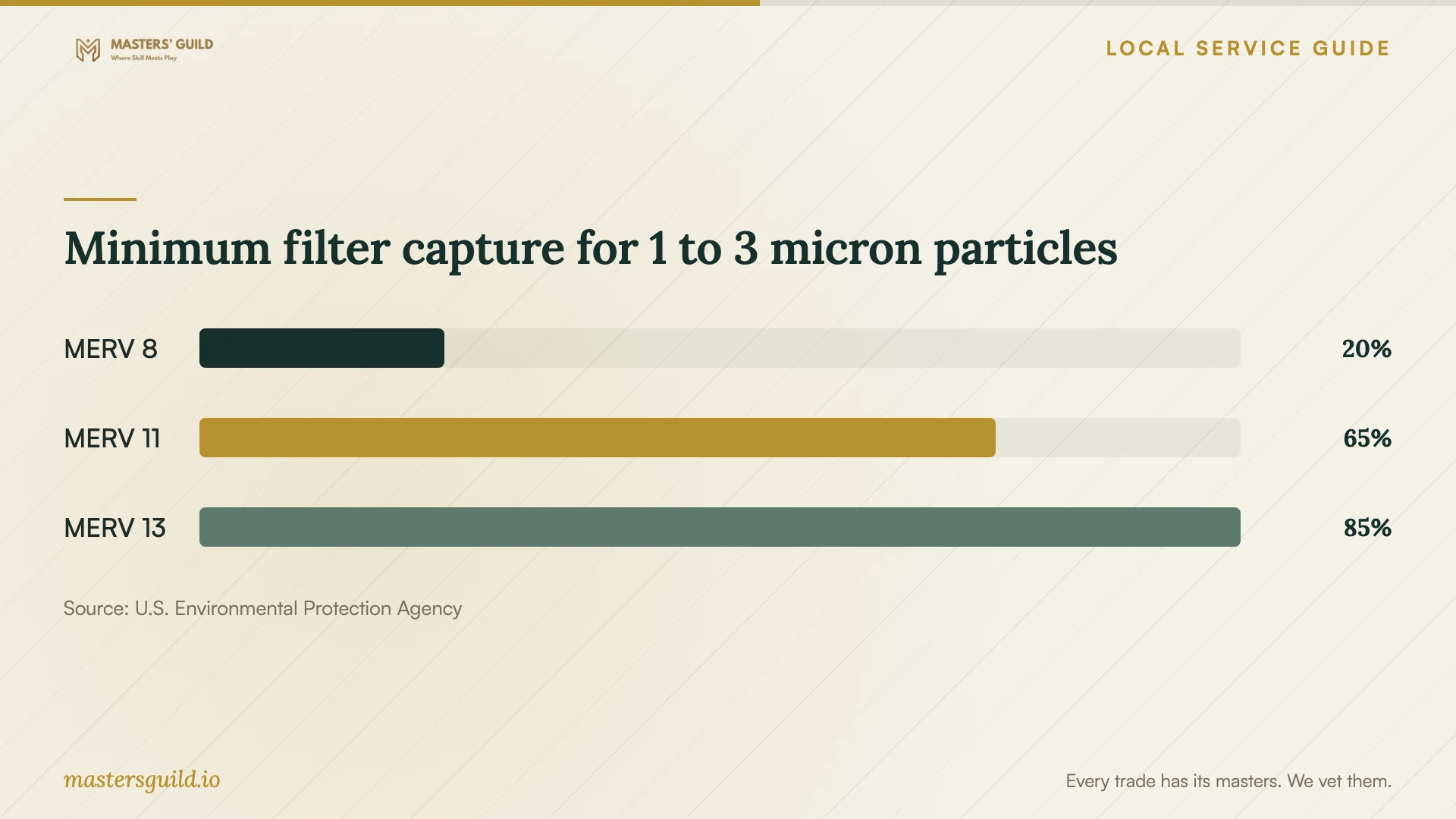
The chart compares EPA's published minimum average capture efficiencies for particles between 1 and 3 microns. Use it to discuss compatible filtration with your technician. These filter-performance figures do not measure dust removal from ducts or prove that cleaning will improve health or reduce your heating bill. EPA says duct cleaning has not been shown to prevent health problems and finds little evidence that duct-only cleaning improves system efficiency. [1] [5]
Prepare the home and inspect the finished work
Clear a path to the equipment, registers, and access points. Discuss parking, hose routes, pet arrangements, and the expected heating interruption before the appointment. Ask the crew to identify any areas they cannot reach before they begin, and agree on how they will document those limitations.
Before paying the final balance, ask the provider to show cleaned components and photographs from inside the supply and return ducts. EPA recommends a visual inspection to verify cleanliness. Check that the crew has reattached registers, secured access covers, and demonstrated proper system operation. Record any unfinished work and agree on a correction date. [1]
Minimum filter capture for 1 to 3 micron particles
Local details that affect your job
Check Anchorage's outdoor dust information
The municipal Air Quality Program reports that coarse particulate pollution, PM10, sometimes approaches federal standards. Before attributing indoor dust to the ducts, check the municipal air-quality report or hotline at 907-343-4899 and discuss outdoor particles and filter fit with your technician. The municipality accepts excessive-dust and smoke complaints at 907-343-4200. An outdoor reading does not establish contamination inside your ducts. [2] [1]
Route a no-heat problem through ENSTAR's guidance
ENSTAR advises checking whether other gas appliances work when you have no heat. If none receives gas, contact ENSTAR Customer Service at 907-277-5551. If only one appliance has a problem, ENSTAR recommends a heating and plumbing contractor. ENSTAR does not service appliances or internal piping beyond its meter. Describe this symptom before accepting a duct-cleaning quote. [4]
Check approvals before expanding the job
Anchorage code requires permits for regulated mechanical-system repairs, alterations, removal, or replacement unless exempted. Its exemptions include replacement of a minor part that does not change equipment approval or make it unsafe; they do not establish a blanket exemption for duct replacement. Ask the contractor to confirm the exact scope with the Building Official before adding repairs. For permitted condominium work involving common areas or structural changes, the municipality also requires association approval. [3]
Choose the next step from the symptom
| What you find | Next step | What to ask |
|---|---|---|
| Dust on return grilles alone | Clean the grilles and review filter maintenance | Can the inspector show substantial contamination inside the system? |
| Excessive duct debris or particles coming from supply registers | Arrange a documented inspection and cleaning estimate | Which supply, return, and equipment components need cleaning? |
| Suspected mold or wet insulation | Investigate identification, moisture correction, and replacement needs | Who will confirm the material and correct the moisture source? |
| No heat from one gas appliance | Contact a heating and plumbing contractor under ENSTAR's guidance | Have you diagnosed the appliance or its piping? |
| Proposed duct replacement or mechanical alteration | Confirm permit requirements before approving extra work | Which exemption or permit applies to this exact scope? |
Your hiring checklist
- Describe the problem, recent remodeling, system count, and equipment access when requesting an inspection.
- Ask the inspector to show and locate the contamination before recommending cleaning.
- Request comparable written estimates with component lists, exclusions, and a total price.
- Ask how the crew will collect debris, protect furnishings, and close access openings.
- Review chemical treatments and repairs separately before authorizing them.
- Confirm municipal and association approvals if the scope expands into regulated work.
- Clear access routes and agree on pet arrangements and heating interruption.
- Review completion photographs and system operation before settling the final balance.
Frequently Asked Questions
How often should I book duct cleaning?
EPA recommends cleaning as needed rather than on a routine schedule. Ask for evidence of substantial contamination. Continue filter maintenance and heating-equipment inspections regardless of whether you clean the ducts. [1]
Can cleaning cure allergies or lower heating costs?
EPA says duct cleaning has not been shown to prevent health problems. It also finds little evidence that cleaning ducts alone improves system efficiency. Ask a provider to separate duct cleaning from maintenance of dirty fans, coils, or heat exchangers, which EPA says may improve efficiency. [1]
Does this scope include dryer or bathroom exhaust vents?
Ask the bidder to list each exhaust system as a separate item and describe what they will inspect and clean. Do not assume that a quote covering furnace supply and return ducts includes other vents.
Do I need a permit for the appointment?
Have the contractor distinguish cleaning from any proposed mechanical repair or alteration. Anchorage's code requires permits for regulated mechanical work unless exempted. Confirm the exact expanded scope with the Building Official rather than treating a cleaning appointment as permission to replace ducts or equipment. [3]
Sources and scope
This guide combines the sources below with practical planning guidance. Figures apply to the stated geography and period; request a written quote for your property.