
Local service guide
Anchorage childcare: choosing and arranging care
Choose Anchorage childcare by checking the provider’s licensing or exemption status, reviewing available inspection records, and confirming care for your child’s age and required hours before paying a deposit. The municipality encourages families to visit and compare programs. If you need help paying, confirm the provider’s assistance-program participation and your family’s eligibility before agreeing to fees. [1] [2] [3]
Check the provider’s status before booking
Ask for the provider’s exact program name, care address, and licensing or exemption status. The Municipality of Anchorage monitors licensed child care centers and homes through announced and unannounced inspections and investigates complaints. Its licensing page directs families to the Alaska Child Care Information System facility map for inspection records. [1]
Match the name and address in the records to the place your child will attend. Read the inspection findings and ask the administrator to explain any concerns and corrective action. During a visit, ask who supervises your child, who covers staff absences, and how caregivers communicate injuries or other incidents. Request clarification before committing if an explanation conflicts with the records.
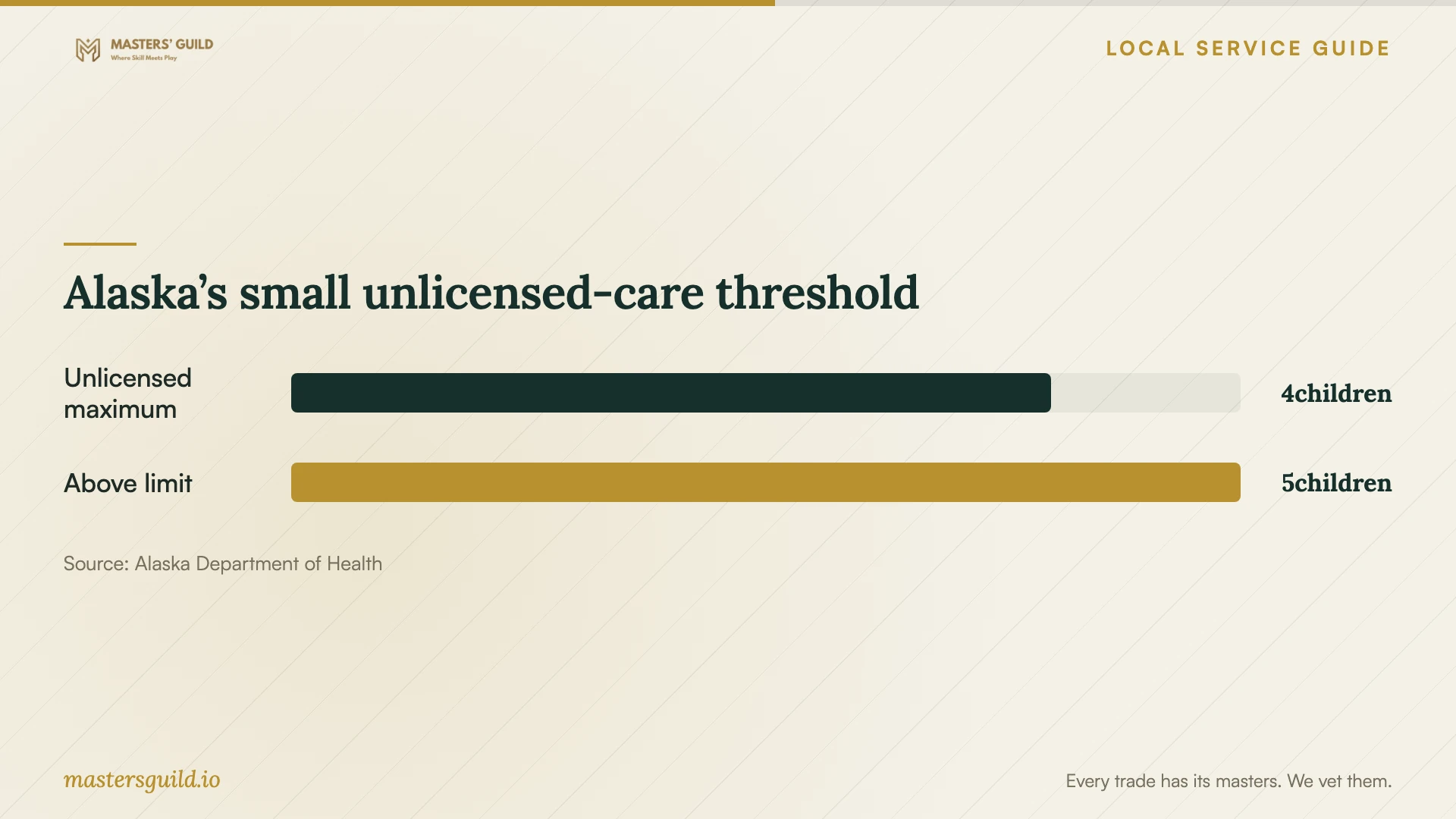
Alaska distinguishes licensed care, approved legally exempt care, and small unlicensed arrangements. Approved exempt categories include relative care, in-home care, and certain military or tribal programs. The state also allows a provider to care for no more than four unrelated children without a license, but says it does not monitor that arrangement and does not allow it to participate in the Child Care Assistance Program. [2]
Compare the actual schedule and care
Write down your child’s age, needed start date, arrival and pickup times, and days of care before contacting programs. Ask whether the provider can offer that exact schedule and whether the answer refers to an available place or a waiting list. Request written confirmation of the start date before changing work arrangements.
Tour during the hours your child would attend, if the provider permits it. Ask about meals, naps, toileting, outdoor activities, authorized pickup, and medication procedures. Discuss allergies and support needs with the person who would care for your child. For care that includes transportation, ask who drives, how the provider handles handoffs, and what happens if pickup arrangements change.
Agree on a backup plan for illness, provider closures, and a delayed pickup. Ask which symptoms require your child to stay home and what conditions allow a return. Keep those answers with the enrollment agreement so both parents and any backup caregiver can follow the same plan.
Build a budget from written fees
Request a quote for your child’s age and exact attendance pattern. Compare the same period across providers, including registration fees, deposits, meals, supplies, and any transportation charges. Ask whether you pay during holidays, absences, or closures, and whether a deposit counts toward tuition or carries separate refund conditions.
Alaska’s Parents Achieving Self Sufficiency program, known as PASS, helps eligible families pay for care while parents work, attend school, or participate in job training. Depending on eligibility, assistance may cover some or all costs. Families may contribute through a sliding fee scale based on income and family size. [3]
Families can apply through the Alaska Child Care Information System and contact their regional office for application help. A provider’s child care license and approval to receive assistance payments are separate checks: licensed providers may apply to participate, and the program also accepts specified approved exempt providers. Ask the office and provider to confirm participation, authorization, and your remaining payment before relying on assistance. [2] [3]
Arrange accommodations before enrollment
Describe the support your child needs during an ordinary day, including communication, meals, medication, mobility, or transitions. Ask the administrator who will provide that support and how substitute caregivers will learn the plan. Request a written agreement about responsibilities and communication before the first day.
Alaska IN! provides additional support for eligible families whose children have a diagnosed disability or special need. The state describes provider funding for training and accommodations, referrals through thread, on-site observation, and a Child Care Provider Inclusion Plan. Ask the Child Care Program Office about eligibility and discuss the proposed support with your chosen provider. [3]
Alaska’s small unlicensed-care threshold
Local details that affect your job
Use Anchorage’s inspection records and licensing office
The municipal licensing page directs families to AKCCIS for inspection records for licensed facilities within the Municipality of Anchorage. If a provider’s status or record needs clarification, call Child Care Licensing at 907-343-4758. The office lists hours of Monday through Friday, 8 a.m. to 5 p.m., and warns that staff working in the field may need a few days to return messages. [1]
Contact the correct assistance office
Alaska Family Services handles the Municipality of Anchorage assistance region, including Anchorage, Bird Creek, Chugiak, Eagle River, Girdwood, and JBER. Call 907-644-5000 for eligibility or application help. The state lists Palmer and Wasilla under the separate Central Region. Use the Anchorage regional contact when asking about an application here. [3]
Check enrollment advice against the 2026 changes
Anchorage’s code changes effective June 24, 2026 removed municipal requirements for child physicals in centers; the municipality says Alaska does not require those physicals. Ask a provider to distinguish its own enrollment policies from government requirements. The city also removed several municipal provisions and points readers to state rules for training, nutrition, and other health requirements. [1]
Choose your next step by the arrangement
| Arrangement | What to verify | Next step |
|---|---|---|
| Licensed center or home | Current licensing status and available inspection records | Visit the program and discuss findings before accepting a place. |
| Approved exempt provider | Exemption category and approval to receive assistance payments | Confirm approval with the assistance office if you need subsidy support. |
| Small unlicensed arrangement | Alaska’s allowance covers no more than four unrelated children; these providers are not monitored or assistance-eligible | Ask about children in care, references, supervision, and emergency arrangements. |
| Care with disability or special-needs support | Alaska IN! eligibility and the provider’s proposed accommodations | Contact the Child Care Program Office and agree on support before enrollment. |
Your hiring checklist
- Write down your child’s age, start date, attendance days, and pickup deadline.
- Request the program name, care address, and licensing or exemption status.
- Review available inspection records and discuss concerns with the administrator.
- Visit the care setting and discuss supervision, illness, medication, and pickup procedures.
- Get a written fee schedule, deposit conditions, and withdrawal terms.
- Confirm assistance eligibility and provider participation before budgeting around a subsidy.
- Agree on accommodations, emergency contacts, and backup care before enrollment.
Frequently Asked Questions
Does a child care license guarantee the program is safe?
Anchorage says its licensing program reduces predictable risks but cannot guarantee that a facility meets all requirements at all times. Review inspection records, visit the setting, and ask the administrator about supervision and any findings. [1]
Can I receive assistance for care from a relative or in-home provider?
Alaska lists approved relative and in-home care among legally exempt provider categories that can participate. Confirm the provider’s approval and your family’s eligibility with the assistance office before making a payment agreement. [2] [3]
Where should I ask for help with an Anchorage assistance application?
Contact Alaska Family Services at 907-644-5000 for the Municipality of Anchorage region. The state also offers applications through AKCCIS. Ask the office which application route applies to your circumstances and what information you need. [3]
How should I compare costs before choosing care?
Request written quotes for the same attendance schedule. Include deposits, registration, meals, supplies, closure charges, and withdrawal notice. Ask which fees you would owe after any approved assistance and confirm those amounts before accepting the place.
Sources and scope
This guide combines the sources below with practical planning guidance. Figures apply to the stated geography and period; request a written quote for your property.