
Local service guide
Snow Removal in Anaheim: Hiring and Storm Planning
Arrange Snow Removal in Anaheim by identifying the material blocking your driveway or entrance, then requesting a written quote for that specific work. Describe snow accumulation, surface ice, mud or storm debris separately. Ask the provider to confirm service at your address, suitable equipment, disposal arrangements and a return-visit price. For rain-related access problems, Orange County advises homeowners to inspect driveway drainage and signs of slope movement; those findings may call for a different specialist. [1]
Define the job before requesting offers
Send photos taken from a safe position and describe the entrance you need to reopen. Include the driveway surface, steps, gate width, parked vehicles and any area where equipment must stay out. Ask the provider to name the method they propose for each area and explain how they will protect the surface.
For snow accumulation, specify clearing boundaries and an agreed location for removed material. For ice, request an assessment and a treatment plan. If you see mud, leaves or pooled rainwater, describe those conditions instead of requesting a snow-plow visit. Ask whether the provider handles that cleanup and whether they need a separate drainage specialist.
Compare quotes for the same work
Ask each provider to quote the same driveway, walkway and steps. Separate the initial visit, treatment materials, debris hauling and any return inspection. Request the callout minimum, cancellation terms and the charge for a second visit if conditions change. The supplied sources contain no verified Anaheim snow-removal prices, so use written job-specific offers to set your budget.
Before accepting an offer, request proof of insurance covering the proposed work. Confirm who will arrive, which equipment they will bring and how you will approve extra work. Ask the provider to document the completed areas with photos. For an ongoing agreement, define the condition that triggers attendance and whether you must call to authorize each visit.
Ask for an ice-treatment assessment
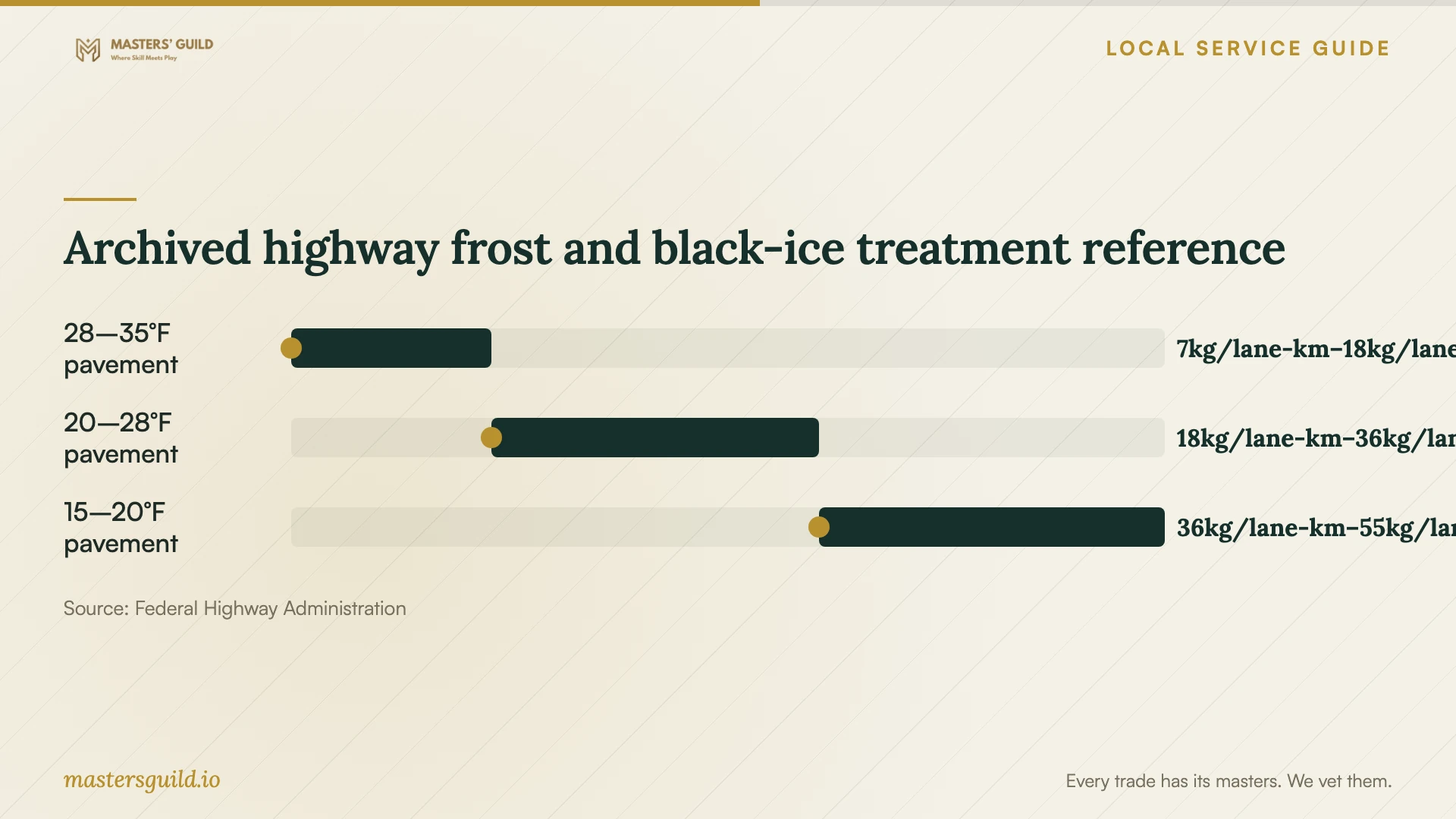
Ask the provider how they will assess the pavement, select a product suitable for your surface and decide whether to return. FHWA's archived June 1996 highway manual bases frost and black-ice treatment on pavement temperature, its trend, its relationship to dew point and traffic conditions. Use those factors as questions for a provider rather than treating an air-temperature forecast as a complete treatment plan. [4]
The reference chart compares initial prewetted-solid chemical ranges from that highway manual. It illustrates why a provider should explain their choice and amount of material. It supplies neither a residential application rate nor evidence that your driveway needs treatment. Ask the provider to follow the chosen product's instructions and explain surface compatibility. [4]
Separate cleanup from drainage and slope problems
Orange County advises homeowners to inspect driveways and walkways for obstructed drainage and damage before storm season and after storms. It also identifies surface cracks, tilting trees or walls and other land movement as reasons to examine sloped areas. If you notice these conditions, photograph them from a safe location and explain them before anyone quotes routine clearing. [1]
Ask a cleanup provider to collect and remove debris rather than push it toward a gutter or drain. H2OC describes runoff from roofs, driveways and sidewalks, and identifies direct dumping or placement of waste where it can enter the storm-drain system as illegal discharge. Put collection, hauling and disposal responsibility in the written scope. [2]
Archived highway frost and black-ice treatment reference
Local details that affect your job
Orange County sandbags require a separate preparation plan
OC Public Works states that Orange County residents can obtain up to 50 free empty sandbags from October 1 through April 30 for home protection from rain and mud. Contractors and commercial entities cannot use this program. The listed pickup address is 2301 N. Glassell St. in Orange, with seasonal locations subject to conditions. Call (714) 955-0200 to confirm arrangements, and plan how you will fill and place the bags. This regional resource addresses rain and mud protection, not snow clearing. [3]
Confirm jurisdiction before reporting a blocked public route
The OC Storm Center describes road-closure and storm information for unincorporated Orange County. OC Public Works says it can respond under most circumstances only to County-maintained roads or flood-control channels. Check the responsible agency for the affected route before relying on County assistance for an Anaheim address. For a County road or channel during an active event, the published reporting number is (714) 955-0333; call 911 for an emergency requiring immediate assistance. [3]
Slope movement changes whom you should hire
For a sloped property, Orange County recommends considering a California-licensed geologist or geotechnical engineer when signs of slope movement appear. Its indicators include erosion gullies, driveway or walkway cracks, tilting structures and land movement. If you observe those signs, seek that assessment before authorizing a cleanup crew to move soil or equipment across the affected area. [1]
Choose the next step from the conditions you observe
| Condition | Next step | Question before hiring |
|---|---|---|
| Snow accumulation on private access | Request a clearing quote with marked boundaries. | Which areas, equipment and material-placement location are included? |
| Surface ice or frost | Request an ice-treatment assessment; FHWA highway guidance considers pavement conditions. | How will you assess the surface and choose the treatment? |
| Mud or debris near drainage | Request collection and disposal; H2OC prohibits waste placement where it can enter storm drains. | Does your price include hauling rather than pushing debris into the gutter? |
| Cracks or tilting features on a slope | Consider a licensed geologist or geotechnical engineer, as Orange County recommends for slope movement. | Should I obtain a slope assessment before cleanup? |
| Blocked public road or flood channel | Identify the maintaining agency; County storm response has jurisdiction limits. | Does OC Public Works maintain this road or channel? |
Your hiring checklist
- Photograph the affected areas from a safe position and describe the material requiring removal.
- Identify the driveway, steps and entrance that you want included in the quote.
- Confirm service at your exact address and ask who will perform the work.
- Request insurance documentation and a method suitable for each surface.
- Separate clearing, ice treatment, hauling and return visits in the written price.
- Agree on material placement and debris disposal before work begins.
- Define how you will approve extra charges and receive completion photos.
Frequently Asked Questions
Should I buy a seasonal snow-removal contract?
Ask the provider to define attendance triggers, cancellation terms and the total commitment before signing. Compare that proposal with a callout arrangement for your stated needs. These sources do not establish a local snowfall frequency or a seasonal-contract saving.
Can I use the chart to calculate driveway treatment?
Use it to ask informed questions. FHWA published these ranges for highway maintenance in an archived June 1996 manual. The units refer to lane distance, and the recommendations depend on pavement and traffic conditions. Ask your provider for a surface-specific plan and product instructions. [4]
Can a cleanup crew push debris into a storm drain?
Require collection and disposal. H2OC identifies direct dumping or placing waste where it can enter the storm-drain system as a form of illegal discharge. Ask the crew to include hauling in its quote. [2]
Does the County sandbag program include filled bags?
OC Public Works specifies empty bags. It lists up to 50 per Orange County resident from October 1 through April 30 for home protection from rain and mud, and excludes contractors and commercial entities. Confirm pickup arrangements before traveling. [3]
Sources and scope
This guide combines the sources below with practical planning guidance. Figures apply to the stated geography and period; request a written quote for your property.