
Local service guide
pressure washing in Anaheim: plan a cleaner job
Arrange pressure washing in Anaheim by asking each provider for a written surface list, cleaning method, washwater capture plan, and disposal destination before you compare prices. Orange County's H2OC Stormwater Program advises mobile businesses to contain their work area, protect nearby storm drains, use dry cleaning first, and capture contaminated water and debris. Include those tasks in your quote, along with access arrangements and a weather rescheduling agreement. [1]
Define the surfaces and the result you want
Send photographs of the driveway, patio, walls, or other surfaces you want cleaned. Include close views of stains and existing damage, plus a wider view showing access and drainage. Tell the provider whether you want general dirt removal, treatment of a particular stain, or preparation for another project. Ask them to describe the expected result and any marks they expect to remain.
Ask for a method for each material. For painted surfaces, wood, roofing, or unfamiliar finishes, ask the provider to check the manufacturer's cleaning instructions and explain their proposed treatment. Request a test area before they clean a conspicuous section. Photograph existing cracks, peeling finishes, and damaged joints together before work begins.
Make runoff handling part of the hiring decision
H2OC identifies contaminated water, cleaning chemicals, and brake pad and tire dust as pollutants associated with mobile businesses. Its Orange County guidance asks operators to prevent water and pollutants from leaving the worksite and to watch nearby storm drains. For a driveway job, walk the drainage route with the provider before you accept the quote, including the route toward the street. [1]
Ask where the provider will place containment equipment, how they will recover the water, and who will monitor the work area during washing. H2OC recommends sweeping debris and using absorbent material for hazardous spills before wet cleaning, then capturing residue with tools such as a broom, mop, or vacuum. Request an explanation of the equipment the provider plans to use for your site. [1]
Ask about disposal separately from capture. H2OC directs mobile businesses to best-management-practice criteria for discharge to landscaped areas and sanitary sewers. Have the provider identify the intended destination and confirm the applicable criteria before work starts. Ask them to include both collection and disposal arrangements in writing. [1]
Compare complete written quotes
Give each provider the same scope. Ask them to list the surfaces, stain treatments, cleaning products, containment, water recovery, disposal, and final cleanup. Confirm whether they need your water supply or electricity and whether they will move furniture or expect you to do it. Request separate prices for optional work so you can accept the parts you need.
Before booking, request proof of insurance and ask how the provider handles accidental damage. Record the payment schedule, cancellation terms, and process for approving extra work. If a provider proposes another visit or additional treatment, ask them to explain the reason and price before you authorize it. Review the finished work together against the agreed surface list.
Choose a workday with a weather contingency
Ask the provider which forecast conditions would lead them to reschedule and how much notice they will give you. NOAA's historical El Toro MCAS narrative describes precipitation as primarily a winter phenomenon. NOAA identifies the station summary's hourly observation period as 1945–1993. Use this historical regional context to discuss flexibility for winter appointments, then check the forecast near the booking date. [2]
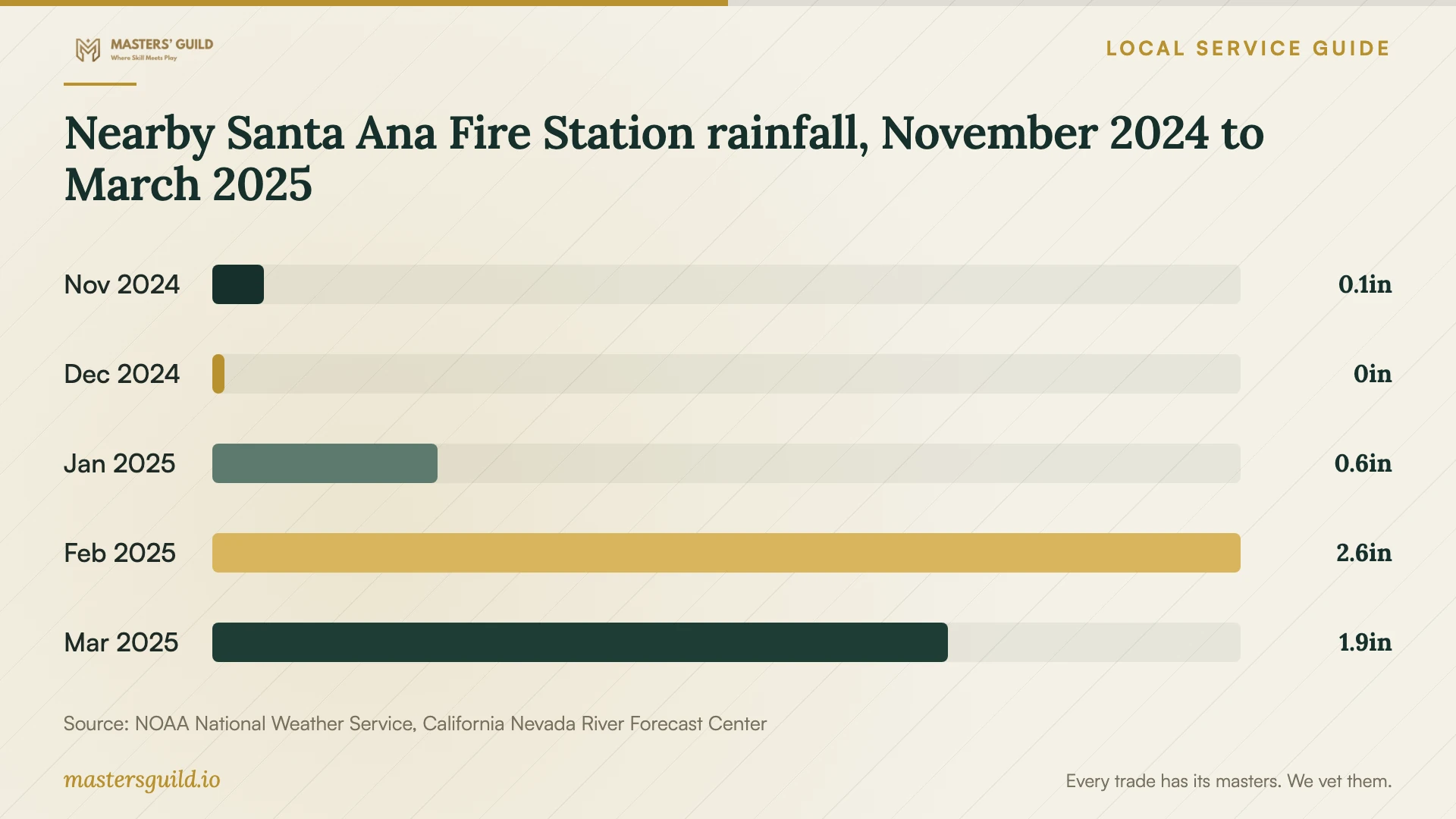
The chart presents Santa Ana Fire Station observations for November 2024 through March 2025. NOAA also reports 0.00 inches for October 2024 and missing values from April through September 2025; those months do not appear in the chart. The California-Nevada River Forecast Center discontinued this monthly summary after water year 2025. Treat the figures as a historical example when discussing scheduling, rather than a prediction of the next rainy period. [3]
Prepare the property and agree on completion
Before the visit, agree on where the crew will park, which gate they will use, and what you need to move. Point out outdoor electrical equipment, plants you want protected, and areas you want excluded. Arrange a route for household members and pets away from the work area. Ask the provider when you can resume using the cleaned surfaces.
At completion, inspect the agreed areas with the provider. Ask them to identify remaining stains, explain any unfinished work, and confirm that they collected equipment and residue. Keep the written scope and before-and-after photographs with your invoice. If you notice an issue, describe the surface and location so the provider can respond to a specific concern.
Nearby Santa Ana Fire Station rainfall, November 2024 to March 2025
Local details that affect your job
Plan containment at the street-facing edge
Orange County's H2OC mobile-business guidance calls for operators to contain their worksite and prevent potential discharge to storm drains. For your Anaheim driveway or front path, show the provider where water could reach the gutter and ask them to include containment and recovery in the quote before booking. [1]
Confirm the disposal destination before arrival
H2OC distinguishes capturing contaminated water from disposing of it and refers operators to criteria for landscaping and sanitary-sewer discharge. Ask your provider to confirm the proposed destination and applicable criteria before arrival. Have them check those criteria before you offer a lawn or household drain as a disposal point. [1]
Questions to resolve before you book
| Your situation | Ask the provider | Booking decision |
|---|---|---|
| Driveway drains toward the street | How will you contain the work area and recover water before it reaches a storm drain? | Include the containment and capture plan in the written scope. |
| Visible oil or loose debris | What dry cleanup will you do before washing? | Confirm debris removal and spill treatment before wet cleaning. |
| Provider proposes lawn or sewer disposal | Which discharge criteria apply to this destination? | Resolve the disposal arrangement before work starts. |
| Painted or unfamiliar finish | Which cleaning instructions will you follow, and can you test a small area? | Agree on the method and test area before authorizing the full surface. |
| Winter appointment | Which forecast conditions trigger rescheduling, and what backup date can we agree on? | Record the weather terms with the booking. |
Your hiring checklist
- Send photographs of surfaces, stains, existing damage, access, and drainage.
- Request a written cleaning method and expected result for each surface.
- Ask the provider to include containment, water recovery, and disposal arrangements.
- Confirm the disposal destination and ask the provider to check applicable criteria.
- Compare quotes using the same scope and separate optional treatments.
- Request proof of insurance and written payment and extra-work terms.
- Agree on preparation tasks, weather rescheduling, and a completion walkthrough.
Frequently Asked Questions
What should a pressure washing quote include?
Request the surface list, cleaning method, stain treatments, water and power arrangements, containment, recovery, disposal, and cleanup. Ask the provider to separate optional work and describe exclusions. Compare totals after each provider has priced the same scope.
Can the provider rinse washwater toward a storm drain?
H2OC's Orange County guidance tells mobile businesses to contain their work area and prevent potential flow or discharge to storm drains. Ask the provider to explain their containment and capture plan before washing starts. [1]
Can collected water go onto the lawn or into a sewer?
Ask the provider to check the criteria for the proposed destination. H2OC refers operators to specific best-management-practice criteria for landscaped areas and sanitary sewers. Its mobile-business page does not give blanket approval for either option. [1]
Does the rainfall chart identify the best month to book?
No. It presents five months of historical observations at nearby Santa Ana Fire Station. It does not provide an Anaheim forecast or a long-term monthly average. Use it as context for discussing weather flexibility, and check a current forecast when arranging the visit. [3]
Sources and scope
This guide combines the sources below with practical planning guidance. Figures apply to the stated geography and period; request a written quote for your property.