
Local service guide
Anaheim mold removal: Planning and Quote Guide
Arrange mold removal in Anaheim by requesting an assessment of affected materials, suspected hidden growth, and occupant protection before accepting a cleanup quote. Ask for separate written scopes for remediation, moisture-source repair, and rebuilding. EPA bases its national remediation guidance on affected area, material, and potential exposure, with professional judgment for each situation. [1]
Start with a materials and moisture assessment
Tell the assessor where you see growth, which surfaces feel wet, and whether you noticed damage after a leak. Share photographs and a rough description of the affected area. Ask them to distinguish observed damage from suspected growth behind finishes. Request an explanation of the purpose and scope before authorizing exploratory removal.
EPA's national table distinguishes materials including carpet, concrete, hard surfaces, drywall, and wood. EPA advises a more cautious approach when professionals expect extensive hidden mold or a high chance of airborne exposure, or when occupants have severe allergies or asthma. Tell the assessor about these circumstances before agreeing to the work plan. [1]
Identify who will investigate and repair the moisture source. Coordinate that work with the remediation schedule, and agree on who will document moisture conditions before you authorize replacement finishes. If different companies handle cleanup and rebuilding, name the person responsible for handing the work area over.
Understand the scope of EPA's area categories
EPA's Table 2 addresses damage caused by clean water. It groups affected surface area into less than 10 square feet, between 10 and 100 square feet, and greater than 100 square feet. Its large category also covers situations with significant potential occupant or remediator exposure. EPA uses these categories to help plan techniques, rather than to establish health-effect thresholds. [1]
For clean-water damage in the medium category, EPA describes limited containment with professional judgment. For the large category, it describes full containment with professional judgment. These are national planning guidelines from a schools and commercial buildings guide, not an Anaheim residential permit rule. Ask the contractor to explain how the proposed protection fits your rooms, materials, and household access. [1]
Suspected sewage or water containing chemical or biological pollutants needs a separate professional protection assessment. EPA states that OSHA requires protective equipment and containment in those circumstances. EPA advises consulting an experienced professional if you or the cleanup team lack contaminated-water remediation expertise. Disclose the suspected water source before anyone applies the clean-water categories to your job. [1]
Compare complete quotes and agree on changes
Request a quote that names the rooms, surfaces, and belongings included. Have the contractor describe what they propose to clean or remove, how they will protect adjoining areas, and how they will handle debris. Ask for proof of insurance and details of remediation training alongside the written scope.
Build your budget from property-specific quotes. Request separate amounts for assessment, remediation, disposal, moisture repair, and replacement finishes. Clarify who moves belongings and restores access. For possible hidden damage, agree on how the contractor will photograph findings, price additional work, and obtain your written approval.
Set completion expectations before work starts. Request photographs, a record of materials removed, moisture measurements with locations, and a written account of unresolved items. Name the person who will review those records and authorize rebuilding. If a contractor proposes testing, ask which decision the result will guide and who will interpret it.
Plan rain-related leak checks using regional context
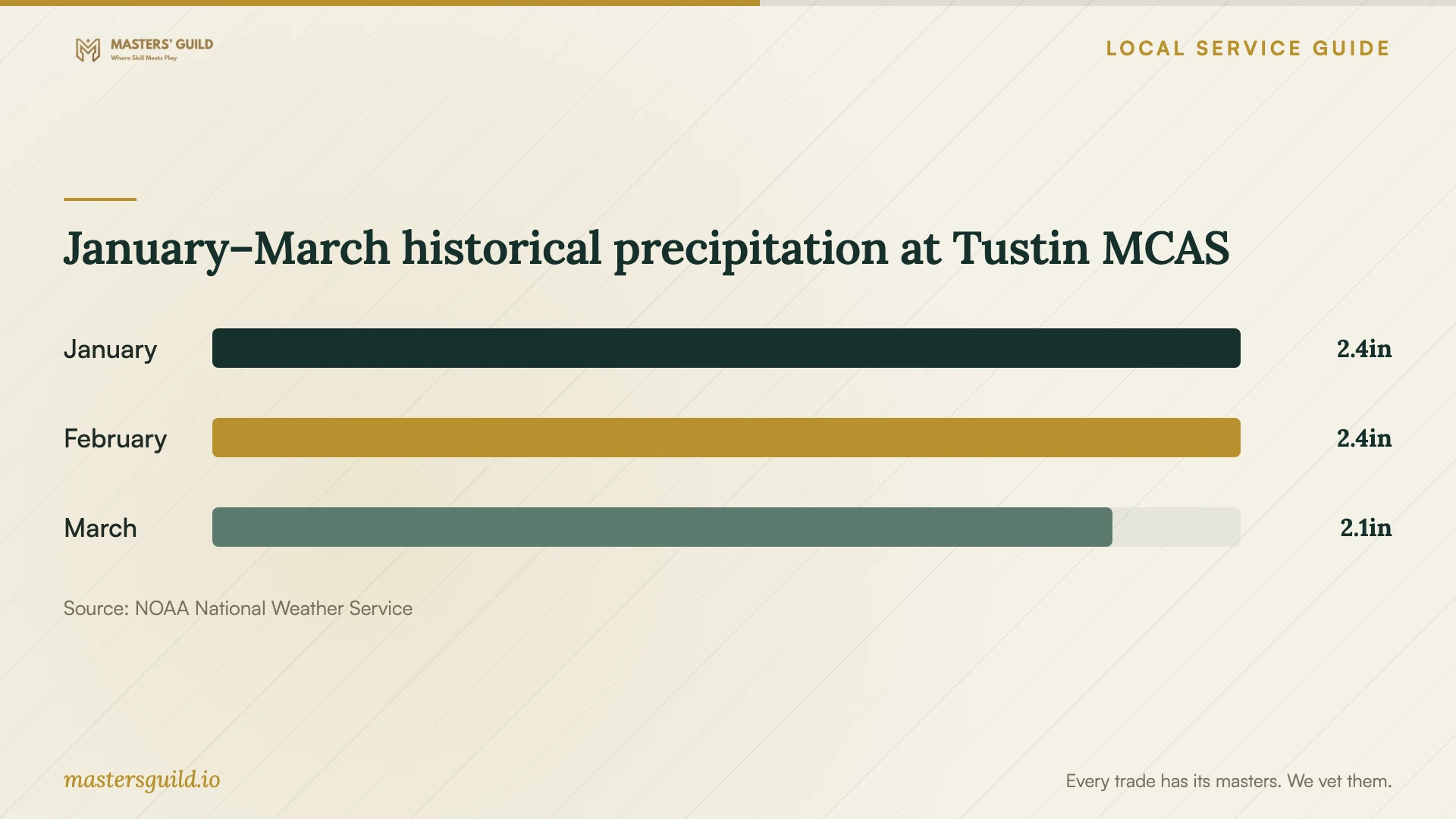
The National Weather Service's historical Tustin MCAS table lists mean precipitation of 2.4 inches in January, 2.4 inches in February, and 2.1 inches in March. These nearby Orange County observations provide regional context, not measurements for your Anaheim property. Use the January–March reference as a prompt to discuss roof and drainage checks with the person handling moisture repairs. [2]
If you noticed dampness after rain, record the date and location and share them with the assessor. Ask them to investigate the suspected entry point before attributing the damage to weather. Keep your own leak history alongside the inspection notes; regional precipitation averages cannot establish the cause of a particular home's moisture problem. [2]
January–March historical precipitation at Tustin MCAS
Local details that affect your job
Report unresolved rental mold concerns to Orange County
If you rent, notify the property manager in writing and retain photographs and correspondence. Orange County Health Care Agency includes mold in unsafe or poorly maintained rentals and hotels among reportable Environmental Health concerns. Call 714-433-6000 for non-emergency complaints. Staff respond during office hours, 8am to 5pm, Monday through Friday, excluding holidays. The county accepts anonymous reports and keeps reported information confidential. Staff assign a complaint record number for follow-up when the concern falls within their jurisdiction; response time varies. Ask for that number and keep it with your repair records. [3]
Use the separate county mold-information contact
Orange County Environmental Health lists 714-433-6407 for mold information, separate from the main complaint line. An Anaheim homeowner seeking guidance can use this regional contact to ask which county service, if any, fits the concern. Describe whether you own or rent, where you found the growth, and whether you suspect sewage contamination. Ask about the appropriate reporting route before assuming the county will investigate a private-home cleanup dispute. [3]
Choose the next planning step
| Situation | Guidance and scope | Next step |
|---|---|---|
| Clean-water damage affecting less than 10 square feet | EPA's small category; material and potential exposure still inform the plan. | Ask the assessor to confirm the extent and explain the cleanup method. |
| Clean-water damage affecting 10–100 square feet | EPA describes limited containment, subject to professional judgment. | Request an explanation of containment and household access. |
| Clean-water damage over 100 square feet or significant potential exposure | EPA describes full containment, subject to professional judgment. | Review a detailed occupant and worker protection plan before authorizing work. |
| Suspected sewage or other contaminated water | EPA's clean-water categories do not cover this situation; EPA identifies protective equipment and containment requirements. | Disclose the water source and seek an experienced professional if the team lacks contaminated-water expertise. |
| Unresolved mold in a poorly maintained rental | Orange County accepts these concerns for follow-up when they fall within its jurisdiction. | Retain correspondence and contact the county's non-emergency complaint line. |
Your hiring checklist
- Photograph visible growth and record affected rooms, materials, and observed leak dates.
- Tell the assessor about suspected hidden damage, sensitive occupants, and the possible water source.
- Request separate scopes for cleaning, removal, disposal, moisture repair, and rebuilding.
- Have the contractor explain containment and access to adjoining rooms.
- Review insurance and remediation training documents alongside the quote.
- Agree on written approval and pricing for additional work.
- Name who will review completion records and authorize replacement finishes.
Frequently Asked Questions
Does a small patch mean I can handle cleanup myself?
Area alone does not settle the decision. EPA uses size categories to help professionals select techniques, not to define health-effect thresholds. Seek an assessment when you suspect extensive hidden growth or airborne exposure, or when sensitive occupants need protection. The table's categories address clean-water damage. [1]
Should the contractor remove affected drywall?
Have the contractor explain the decision for your wall. Request a description of what they observed, what they propose to retain or remove, and how they will check conditions before rebuilding. Agree on the approval process for any additional opening of walls.
Can Orange County help with a rental mold complaint?
The county lists mold in poorly maintained rentals and hotels among reportable Environmental Health concerns. Staff follow up when the complaint falls under their jurisdiction, and response time varies. Call 714-433-6000 for a non-emergency complaint and ask for the complaint record number. [3]
How should I compare two different quotes?
Have both contractors price the same rooms, materials, and work stages. Identify exclusions for moisture repair, debris disposal, and rebuilding. Compare the proposed occupant protection and completion records, then agree on written approval for additional work before choosing a provider.
Sources and scope
This guide combines the sources below with practical planning guidance. Figures apply to the stated geography and period; request a written quote for your property.