
Local service guide
Lawn mowing in Anaheim: scheduling and hiring
For lawn mowing in Anaheim, hire a provider who will identify your grass, agree on a cutting height, adjust visits to its growth and spell out clipping disposal. Ask for separate quotes for the first cleanup and recurring care. UC lawn guidance recommends removing only one-third of the leaf at a time; Orange County guidance directs crews to keep collected clippings out of gutters and storm drains. [2] [4]
Agree on the cut before booking recurring visits
Ask the provider to identify the grass during the estimate and name the intended finished height. If you do not know the species, send close photographs and request confirmation before the first cut. Avoid instructions such as cut it short, which leave the crew without a measurable target.
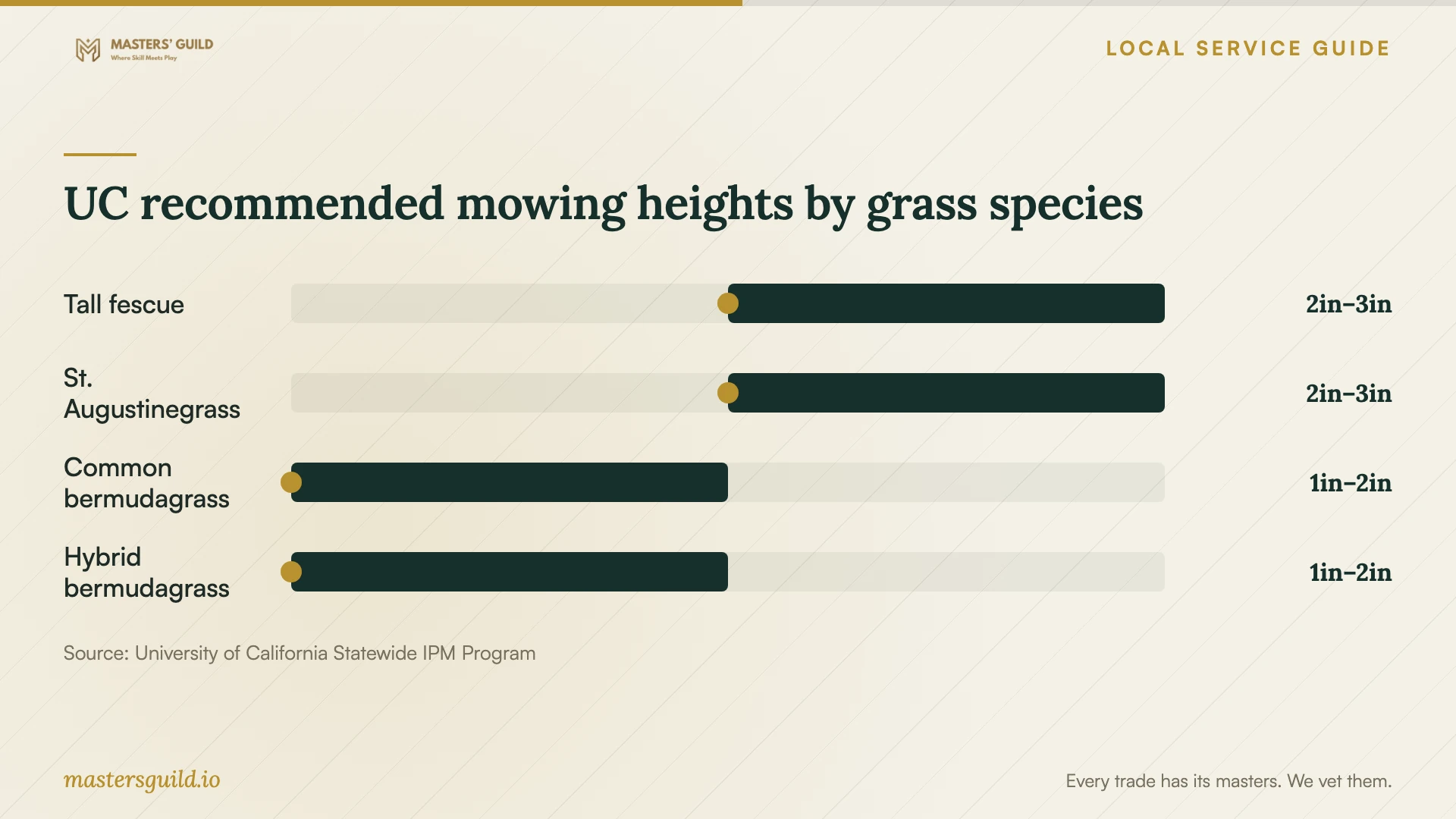
UC's mowing-height recommendations differ by species. Its crabgrass guidance lists tall fescue and St. Augustinegrass at 2–3 inches, and common and hybrid bermudagrass at 1–2 inches. UC also explains that cutting too short can thin the lawn and create openings for weeds. Use these recommendations as a starting point for discussing your turf with the provider. [1]
For an overgrown lawn, ask the crew to describe the recovery plan before accepting a single cleanup price. UC advises restoring the recommended height through more frequent mowing and gradual reductions. Request a quote that states whether follow-up cuts belong to the initial cleanup or count as separate visits. [2]
Choose visits by growth and agree on changes
Decide between weekly and every-other-week service after discussing how much grass the crew will remove at each visit. UC recommends mowing often enough to remove only one-third of the leaf at a time. Water, fertilizer and seasonal growth affect that interval, so a fixed calendar alone does not establish the right frequency. [2]
UC describes cool-season grasses as most active in spring and fall, and warm-season grasses as most active in summer. Ask how the provider will propose schedule changes as your lawn speeds up or slows down. Require your approval before adding paid visits, and agree on how skipped visits affect a monthly bill. [2]
For each estimate, give providers the same scope: front and back lawn, edging boundaries, trimming around obstacles, clipping handling and pavement cleanup. Ask each provider to state the per-visit price, any monthly arrangement and the charge for an extra recovery cut. Compare the total for that scope rather than a starting price.
Set a clipping and curbside cleanup plan
Choose how the crew will handle clippings before work starts: leave them on the lawn, collect them into your organics cart or haul them away. Ask the provider to explain the proposed method and include any removal charge in writing. For cart disposal, check available space and your hauler's instructions.
OC Waste & Recycling identifies grass clippings, leaves and garden trimmings as organic waste. It directs residents to their own hauler because sorting instructions vary by city and hauler. The county warns that compostable-labeled bags may not be accepted; confirm your hauler's instructions before the crew puts bags in your cart. [3]
Require the crew to collect debris from the sidewalk, driveway and curb after mowing. H2OC's regional landscape guidance directs crews to put collected clippings in green waste containers and keep them out of gutters and storm drains. Anaheim explains that runoff passes through its storm drains untreated and that leaves and debris can clog catch basins. [4] [5]
Separate mowing from treatments and repairs
Keep the mowing agreement specific. Ask the provider to list fertilizing, weed treatment, irrigation work and lawn repair as separate options, with your approval required before work begins. Request proof of insurance and a written process for reporting damage to sprinkler heads, gates or other property.
If you see suspected crabgrass, ask the provider to identify it and explain equipment cleaning. UC advises cleaning the mower after cutting crabgrass-infested turf to avoid moving seeds to other sites. UC also notes that smooth crabgrass can produce seed even under close mowing, so lowering the cut does not establish a weed-control plan. [1]
If you add fertilizer or pesticide service, discuss weather-related postponements. H2OC advises landscape businesses against applying these products when rain is predicted within 48 hours and tells them to follow label directions. Ask how the provider will notify you when a treatment visit needs to move. [4]
UC recommended mowing heights by grass species
Local details that affect your job
Anaheim curbside cleanup affects the job scope
Anaheim's stormwater page explains that urban runoff flows untreated to waterways and that leaves and debris can clog catch basins. Include cleanup beside curbside drain openings in your mowing instructions. Before the crew leaves, check that it has collected loose debris rather than pushed it into the street. [5]
Use your Anaheim hauler's organics instructions
Orange County's residential guidance includes grass clippings in organic waste but distinguishes city services from the county's unincorporated-area contracts. For this property, confirm instructions with your own hauler, including bag acceptance, before authorizing cart disposal. If you share bins, ask your property manager which container the crew may use. [3]
Plan added treatments around regional runoff guidance
H2OC's Orange County landscape-business guidance advises against fertilizer or pesticide application when rain is predicted within 48 hours. If your mowing agreement includes treatments, request a separate rescheduling rule so the crew does not treat the lawn merely because it has arrived for a cut. [4]
Match the mowing agreement to your lawn
| Situation | Request | Reason |
|---|---|---|
| Grass species unknown | Identification and an agreed finished height before cutting | UC recommends different mowing heights for different species. |
| Grass has grown too tall | A staged recovery plan with follow-up prices | UC advises gradual height reduction while following the one-third rule. |
| Growth changes between visits | A proposed frequency change that requires your approval | UC bases mowing frequency on growth, season and desired height. |
| Crew will collect clippings | Cart instructions or a written hauling arrangement, plus curb cleanup | County guidance defers to hauler-specific sorting; H2OC keeps collected clippings out of drains. |
Your hiring checklist
- Send lawn photographs and describe gate access, steps, slopes and obstacles before the estimate.
- Ask the provider to identify the grass and write down the agreed cutting height.
- Separate the initial cleanup price from recurring service and request approval before extra cuts.
- List mowing areas, edging, obstacle trimming and pavement cleanup in the same scope for each quote.
- Confirm whether the crew leaves clippings, uses your organics cart or hauls them away.
- Check your hauler's instructions before allowing bags or collected debris into the cart.
- Move toys and pet waste, secure pets and point out sprinkler heads before the visit.
- Agree on access, billing, cancellations and how you will report damage or request corrections.
Frequently Asked Questions
Should I book weekly or every-other-week mowing?
Choose the interval that lets the crew follow the one-third rule at the agreed height. UC says growth varies with grass type, season, water and fertilizer. Ask the provider to review the interval after observing your lawn and get your approval before changing the bill. [2]
Can a provider cut an overgrown lawn to its target height in one visit?
Ask for a staged plan. UC advises gradual height reduction through successive cuts when grass has become too tall. Have the provider state how follow-up visits will count toward your cleanup price or recurring agreement. [2]
Can the crew put bagged clippings in my organics cart?
Confirm with your hauler first. OC Waste & Recycling lists grass clippings as organic waste and directs residents to hauler-specific sorting instructions. The county warns that compostable-labeled bags may not be accepted. Give the crew the instructions that apply to your address. [3]
Does the mowing quote include weed control?
Ask the provider to itemize it rather than assume coverage. UC recommends healthy turf practices for crabgrass management and notes that some pesticide products are available only to licensed applicators. Request a separate description of any proposed treatment, its price and who will apply it. [1]
Sources and scope
This guide combines the sources below with practical planning guidance. Figures apply to the stated geography and period; request a written quote for your property.