
Local service guide
Anaheim flooring installation and repair
For flooring installation and repair in Anaheim, arrange an inspection before agreeing to a final scope. Ask the installer to separate repair, replacement, surface preparation and removal costs, and document how they will handle hidden damage. Check the contractor’s classification against the material: California’s C-15 scope includes flooring preparation, wood-floor finishing and repair, but excludes ceramic tile. Before booking removal, verify the job address with the relevant regional agency and confirm the disposal destination accepts the material. [3]
Choose repair or replacement after inspecting the problem
Show the installer the damaged area and explain when you first noticed it. Ask them to inspect the surface underneath before recommending a repair or replacement. Request a written explanation of what they propose to keep, remove and fix. If they cannot inspect beneath the flooring until removal, agree on the point at which they will stop and seek your approval.
For a patch, ask to see the proposed replacement material beside the existing floor. Agree on acceptable differences in color, texture and height before work begins. For a whole-room replacement, have the installer explain the doorway transitions, baseboard treatment and any changes needed around appliances or doors. Photograph those details with the installer so both of you can refer to the same scope.
Check contractor scope and compare complete quotes
The California Contractors State License Board describes C-15 work as preparing surfaces and installing carpet, resilient sheet goods, resilient tile, wood floors and other floor-covering materials, except ceramic tile. The classification also includes wood-floor finishing and repair. Use this description to discuss the bidder’s scope; the classification page does not establish a project’s licensing threshold or settle eligibility for additional structural work. [3]
Ask for a room-by-room quote that names the flooring product, installation method and preparation allowance. Separate material supply, removal, disposal, repairs underneath the floor, trim and transitions. Ask who moves furniture and appliances, who reconnects anything they disconnect, and who handles cleanup. Require written approval for changes instead of accepting an open-ended instruction to repair whatever the crew finds.
Agree on access hours, which rooms you can use during work and when you can return furniture. Ask the installer to base the schedule on the selected product’s instructions and the condition they find on site. Request those instructions with the quote so you can check preparation and return-to-use requirements before committing to dates.
Resolve removal questions before the crew arrives
Verify address and project applicability with South Coast AQMD before treating its regional asbestos guidance as a requirement for your job. Under that guidance, a Cal/OSHA Certified Asbestos Consultant performs the prior survey. For renovation, the consultant surveys affected construction materials that the work may disturb. For building demolition, the agency requires a comprehensive inspection, including potentially hidden materials; a limited survey does not meet that demolition requirement. [1]
Give the consultant the proposed removal scope, including any layers or adhesive the installer intends to disturb. Ask the installer and consultant to agree on the survey boundary before demolition starts. Keep the report with your project records and ask who will arrange any specialist removal identified through the survey.
South Coast AQMD’s owner-occupant exemption requires a homeowner who resides in the house, whose name appears on the deed of trust, and who performs the renovation without laborers, friends or family members. The house must not be vacant or used for rental or business purposes. The agency excludes apartments, townhouses and condominiums from its residential single-unit dwelling definition. A homeowner should not apply this exemption to a hired flooring crew. [2]
The agency advises against homeowner asbestos removal because of exposure and cross-contamination concerns. It also states that asbestos-containing waste deposited outside the home remains subject to applicable handling, storage and disposal requirements. Ask the agency or a qualified specialist to resolve suspected asbestos before anyone disturbs it. [2]
Agree on disposal responsibility and final inspection
If you plan to use Orange County’s public landfills, first confirm that the waste qualifies and that the site accepts the specific material. The county identifies Olinda and Prima Deshecha as its public disposal sites; Frank R. Bowerman does not allow public disposal. The county requires Orange County waste origin and lists an Orange County driver’s license, a current utility bill showing the origin address, or a contract showing that address as proof. [4]
For the July 1, 2026 through June 30, 2027 fee period, the county lists a $15 additional charge for hard-to-handle items longer than six feet. Ask whether the proposed load attracts that charge. The fee schedule does not establish acceptance of every flooring material or asbestos waste, so obtain acceptance confirmation before loading or sending a contractor to a site. [4]
Put haul-away responsibility in the contract, including the destination and any disposal exclusions. At completion, walk through the rooms with the installer and compare the work with your agreed scope. Check transitions, trim, door clearance and cleanup. Record outstanding items, collect care instructions and agree on how the installer will handle a later repair request.
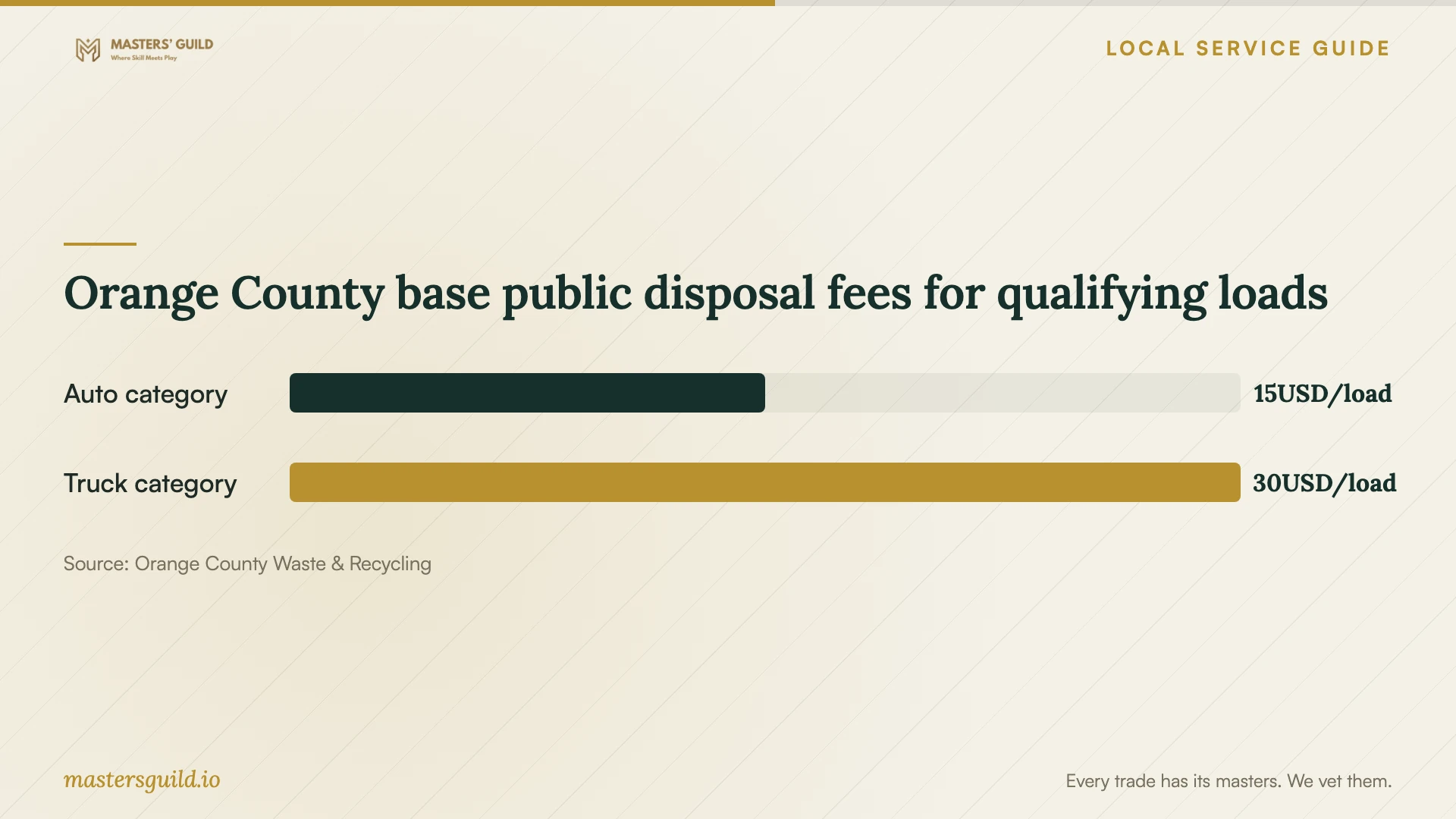
Orange County base public disposal fees for qualifying loads
Local details that affect your job
Regional survey preparation for a hired removal crew
For your Anaheim project, confirm address and project applicability with South Coast AQMD before scheduling removal. If its survey requirement applies, arrange a Cal/OSHA Certified Asbestos Consultant and provide the exact materials the crew plans to disturb. A renovation survey covers affected materials; a building demolition requires a comprehensive survey. Resolve that distinction before paying for a survey or booking the crew. [1]
County disposal preparation before loading
If Orange County Waste & Recycling confirms your waste qualifies, choose an accepting public site between Olinda and Prima Deshecha, and prepare proof of origin. Ask about the material, vehicle category, load weight and the $15 surcharge for hard-to-handle items longer than six feet. Do not route a homeowner’s public disposal trip to Frank R. Bowerman, where the county prohibits public disposal. [4]
Choose the next step for your flooring job
| Situation | Next step | Detail to settle |
|---|---|---|
| You want to repair one damaged area | Request an inspection and a proposed patch sample. | Agree on appearance and the repair boundary. |
| You plan wood-floor finishing or repair | Discuss the bidder’s C-15 scope. | CSLB includes wood-floor finishing and repair in this classification. |
| You want ceramic tile | Ask the bidder to explain the applicable classification. | C-15 excludes ceramic tile. |
| A hired crew will remove existing materials | Verify South Coast AQMD applicability and resolve any required consultant survey. | Renovation surveys cover affected materials; homeowner personal-work exemptions do not cover hired crews. |
| You plan a public landfill trip | Confirm eligibility and material acceptance with Orange County Waste & Recycling. | Public sites are Olinda and Prima Deshecha; prepare proof of waste origin. |
Your hiring checklist
- Photograph damaged areas and identify the rooms included in the job.
- Ask the installer to explain repair and replacement options after inspection.
- Confirm the contractor’s proposed scope and classification for your chosen material.
- Obtain separate quote lines for preparation, removal, disposal, trim and transitions.
- Agree on written approval before the crew performs additional repairs.
- Resolve regional survey applicability before anyone disturbs existing materials.
- Confirm disposal acceptance and who supplies proof of waste origin.
- Arrange a final walkthrough and collect product care instructions.
Frequently Asked Questions
How should I compare flooring quotes?
Give each bidder the same rooms and product specification. Ask for separate preparation, removal, disposal and finishing costs, plus exclusions. Compare the proposed work and approval process for hidden damage before comparing totals.
Does C-15 include ceramic tile installation?
No. CSLB’s C-15 description excludes ceramic tile. It includes surface preparation and flooring work such as carpet, resilient coverings and wood-floor installation, finishing and repair. Ask a ceramic-tile contractor to explain the classification that covers their work. [3]
Can I use the homeowner asbestos exemption while hiring an installer?
South Coast AQMD requires the qualifying owner-occupant to perform the renovation without laborers, friends or family members. Its exemption also has occupancy, ownership and property-use conditions and excludes specified dwelling types. Verify applicability with the agency; do not treat home ownership as an exemption for a hired crew. The agency advises against homeowner asbestos removal. [2]
Are the chart fees my contractor’s haul-away price?
No. They are Orange County’s published base public disposal fees for specified vehicle and weight categories. Ask the contractor to quote removal and transport separately, confirm material acceptance and disclose additional disposal charges. [4]
Sources and scope
This guide combines the sources below with practical planning guidance. Figures apply to the stated geography and period; request a written quote for your property.