
Local service guide
Duct cleaning in Anaheim, CA: Hiring and Planning
Arrange duct cleaning in Anaheim after an inspection identifies substantial contamination, pests, or excessive debris in your HVAC system. Ask providers to show the problem, explain its cause, and give written estimates for the full cleaning scope. EPA recommends cleaning as needed rather than on a routine schedule. For smoke concerns, use South Coast AQMD’s filtration guidance to plan your next step. [1] [2]
Decide whether to book an inspection or cleaning
Start by describing what you have observed: debris blowing from supply registers, suspected growth inside ducts, pest evidence, or a moisture problem. EPA identifies substantial visible mold on hard surfaces, vermin infestation, and excessive dust or debris as reasons to consider cleaning. Ask the inspector to show you the affected areas and explain which components need attention. [2]
Ask for evidence before accepting a mold diagnosis. EPA cautions that a substance can resemble mold and that an expert may need laboratory analysis to identify it. If the inspector finds wet or moldy insulation, discuss replacement and moisture correction. Cleaning without correcting the cause can leave you facing the same problem again. [2]
Tell the provider about recent renovation work and whether you ran the HVAC system while workers produced dust. EPA advises sealing supply and return registers and keeping the system off during dusty construction until cleanup finishes. Use that history to request an inspection rather than assuming a remodel automatically requires whole-system cleaning. [2]
Get estimates for the same work
EPA recommends written estimates from at least three providers. Give each the same description of your concern and request an itemized scope. Ask whether the price covers supply and return ducts, registers, grilles, the blower, coils, drain pans, and air-handler housing. EPA warns that leaving a contaminated component uncleaned can contaminate the system again. [2]
Record your system count, accessible equipment locations, and any rooms the provider cannot enter without your help. Ask each company to list exclusions, access work, proposed repairs, and separately priced treatments. Request a planned arrival window and an estimate of the work time. Agree on how the provider will obtain your approval if inspection changes the scope.
Do not treat an advertised starting price as a complete quote. EPA’s guidance lists a broad national reference of $450 to $1,000 per heating and cooling system, with variation by scope, size, access, region, and contamination. The document originated in 1997; this figure is not a current Anaheim price survey. Use written site-specific estimates to set your budget. [2]
Check the method and proposed treatments
Ask how the crew will collect debris and protect your home. EPA recommends vacuum equipment that exhausts outdoors, or HEPA vacuum equipment when it exhausts indoors. The provider should identify your duct materials, use suitable cleaning tools, protect furnishings, and seal and reinsulate any access openings made during the work. [2]
Ask the company about experience with systems like yours, relevant state licenses, and the standards it follows. EPA does not certify, endorse, or approve duct-cleaning companies. Its page includes historical licensing information, so do not use that passage to determine today’s California licensing requirements. [2]
Require a separate explanation for any chemical biocide or interior coating. EPA describes unresolved questions about these treatments and says no biocides are registered for fiberglass duct board or fiberglass-lined ducts. Ask the provider to identify the material, show the product label, and explain the proposed use before you authorize treatment. [2]
Prepare your home and inspect the finished work
Before the appointment, clear a route to registers and equipment. Agree on where the crew can place equipment and how it will protect floors and furniture. Tell the company about pets, access restrictions, and any suspected asbestos-containing material. EPA says trained and equipped specialists must handle asbestos-containing HVAC materials. [2]
Ask for photographs of the inspected areas before work starts and the same locations after cleaning. EPA recommends a visual inspection and asking the provider to show each system component after completion. Review both supply and return areas, the blower, accessible coils, and drain pans against the agreed scope. [2]
Before signing off, ask the crew to demonstrate system operation and show that registers are reattached and access openings are secure. EPA’s completion checklist also checks for damaged fiberglass and air leakage at access doors. Keep the scope, photographs, invoice, and any recommended follow-up work together. [2]
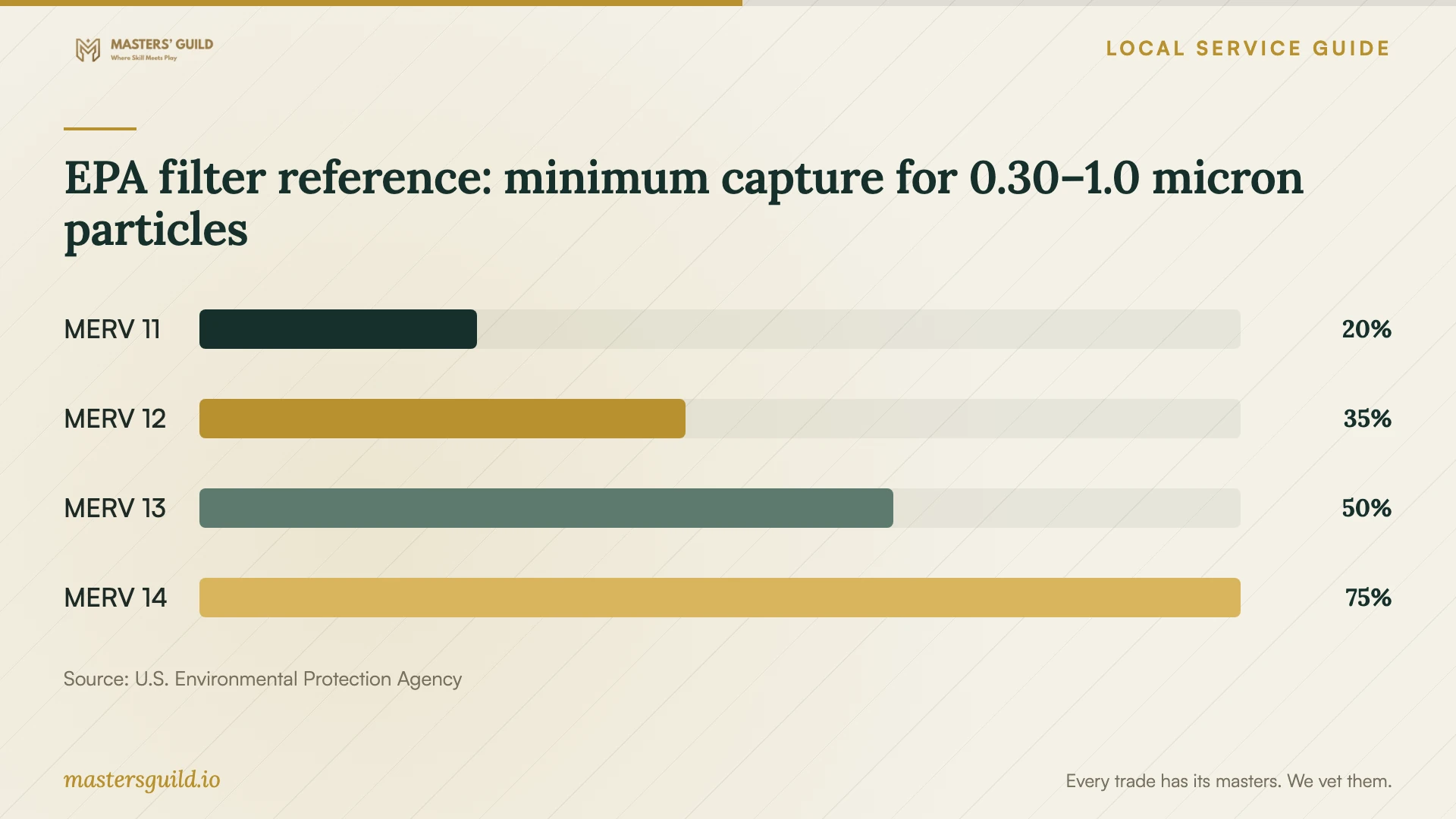
EPA filter reference: minimum capture for 0.30–1.0 micron particles
Local details that affect your job
Regional smoke planning: arrange a filter check
For your Anaheim home, use South Coast AQMD’s regional wildfire guidance when smoke prompts you to seek cleaning. The agency recommends checking its app or interactive map because smoke conditions can change quickly. It advises clean HVAC filters, closing an available fresh-air intake during smoke, and using a portable HEPA cleaner to create a room with filtered air. Ask your HVAC technician to check filter compatibility: AQMD recommends MERV 13 or higher for smoke particles, while EPA says to stay within what your fan and filter slot can accommodate. Make filtration part of the appointment request rather than assuming duct cleaning will address ongoing outdoor smoke. [1] [3]
Regional ash cleanup: separate the house cleanup scope
If wildfire ash has entered your home, give the cleaner a separate description of affected rooms and surfaces. South Coast AQMD’s regional guidance recommends a HEPA-filter vacuum indoors, or suitable industrial equipment with disposable collection bags. It cautions against leaf blowers and advises keeping ash-filled cleanup water away from storm drains. Ask which ash-cleanup tasks the company will perform and request evidence of contamination inside the HVAC system before adding duct work. This guidance applies when ash is present; it does not establish that a wildfire has affected your property. [1] [2]
Choose the next step from the inspection findings
| Finding or concern | Next step | Ask the provider |
|---|---|---|
| Dust on return grilles | Clean the accessible grille and assess further evidence | Can you show contamination beyond the grille? |
| Excessive debris or particles from supply registers | Inspect the system and consider cleaning | Which components contain debris, and what caused it? |
| Suspected mold or wet insulation | Confirm the finding and correct moisture; replace wet or moldy fiberglass | What material is affected, and how will you address the moisture? |
| Pests in ducts | Correct the underlying cause and plan cleaning | What needs correction before cleaning starts? |
| Wildfire smoke concern | Check regional alerts and compatible filtration | Can this system accommodate the proposed filter? |
Your hiring checklist
- Write down the symptoms, affected rooms, and any renovation or moisture history.
- Request inspection photographs that identify the proposed cleaning areas.
- Give providers the same system and access information when requesting estimates.
- Obtain an itemized scope with exclusions and a total price before work starts.
- Ask how the crew will collect debris, protect furnishings, and close access openings.
- Approve proposed chemicals or coatings only after reviewing the explanation and product label.
- Clear access to equipment and agree on arrangements for pets.
- Review completion photographs and ask the crew to demonstrate system operation.
Frequently Asked Questions
How often should I schedule duct cleaning?
EPA recommends cleaning as needed, rather than at a fixed interval. Ask for inspection evidence of substantial contamination before booking repeat work. Keep up with filter replacement and HVAC maintenance according to the equipment manufacturer’s guidance. [2] [3]
Will cleaning improve allergies or lower energy bills?
EPA says duct cleaning has not been shown to prevent health problems and finds little evidence that cleaning ducts alone improves system efficiency. Cleaning dirty coils, fans, and heat exchangers may improve efficiency. Discuss unexplained symptoms with your doctor rather than relying on a cleaner’s health promises. [2]
Should I install a MERV 13 filter?
South Coast AQMD recommends MERV 13 or higher for smoke particles. EPA advises choosing a rating your system fan and filter slot can accommodate. Ask an HVAC technician to confirm compatibility and follow the manufacturer’s replacement guidance. [1] [3]
Does the quote include dryer-vent cleaning?
Ask the provider to identify the exact ducts and vents in its estimate. If you also want dryer-exhaust work, request a separate scope and price so you can confirm what the appointment covers.
Sources and scope
This guide combines the sources below with practical planning guidance. Figures apply to the stated geography and period; request a written quote for your property.