
Local service guide
TV Mounting in Allentown, PA: Plan and Hire
Arrange TV Mounting in Allentown by asking the installer to quote bracket installation, cable routing, wall repairs, and any outlet work as separate items. Send photos and the TV model before booking. For electrical changes, confirm permit requirements and the electrician’s local credentials with the city’s Bureau of Building Standards and Safety. Pennsylvania directs homeowners to their municipality for local licensing information. [1] [3]
Define the installation before comparing offers
Send the TV’s model number and a photo of its rear mounting points. Include the bracket model if you own one. Ask the installer to check the TV and bracket instructions for compatibility, hardware, and wall attachment. Have them explain how they will identify the wall construction before drilling.
Photograph the whole wall, nearby outlets, and seating area. Mark your preferred screen position with removable tape and assess it from your usual seat. For a moving bracket, ask the installer to demonstrate the proposed extension and cable route before you approve the position.
For a fireplace location, supply the fireplace and TV instructions and request a site assessment before accepting a fixed quote. Ask the installer to address the attachment surface, viewing height, and manufacturers’ placement requirements. Choose another wall if the installer cannot explain the arrangement.
Separate cable concealment from outlet work
Ask for a drawing or written description of the cable route. Specify whether you want a surface cover, openings for signal cables, or a new outlet near the screen. Identify who will handle electrical work and who will patch and paint openings. Agree on the power arrangement before anyone cuts the wall.
Allentown’s fee ordinance includes electrical work within its permit fee framework and lists several electrician license categories. Pennsylvania’s Department of Labor and Industry directs homeowners to the municipality for local licensing requirements. For an outlet addition or relocation, ask the city which permit and license category apply to that scope. [1] [3]
Allentown’s fee ordinance does not resolve whether a bracket-only installation needs a permit. Describe the planned bracket attachment, wall openings, outlet changes, and any structural alteration when asking the city. Record the answer and agree with the contractor who will handle any required application and inspection. [1]
Budget for the work you approve
Request an itemized written quote for mounting labor, bracket and hardware, cable treatment, electrical work, wall finishing, and disposal. Ask whether the installer will inspect the wall before confirming the price. Agree on how you will authorize additional work if they find a different wall construction.
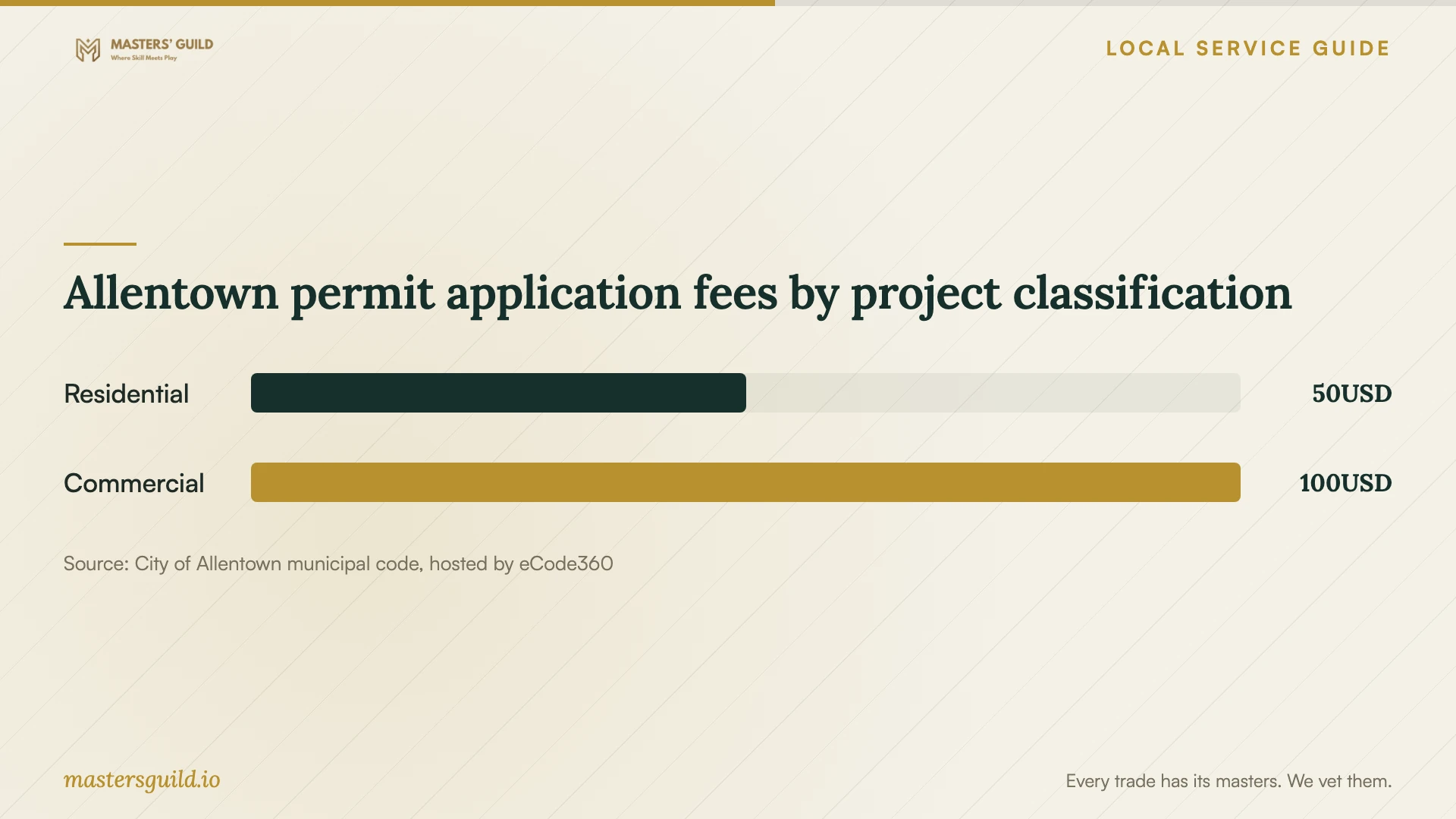
For permitted residential projects, Allentown lists a $50 application fee plus a review and inspection charge equal to the greater of $50 or 1% of the total work cost. The ordinance also lists a state UCC fee of $4.50, or the amount determined by Pennsylvania. Confirm the applicable total with the city before budgeting. [1]
The chart compares published application fees. It does not establish a local mounting labor rate or a complete permit bill. Compare installation offers against your written scope and request a separate allowance for applicable permit charges. [1]
Check registration and the written agreement
Pennsylvania’s Home Improvement Consumer Protection Act defines covered residential home improvement using a total agreed work price greater than $500, subject to its definitions and exclusions. It excludes from its contractor definition a person whose home-improvement work totaled less than $5,000 during the previous taxable year. Do not treat $5,000 as the minimum price of your individual job. [2]
For mounting combined with wall alteration or wiring, ask whether the contractor considers the project covered by the act and request registration information where applicable. Section 7(a) requires the performing contractor’s registration number in contracts governed by that subsection. Section 7(f) sets separate contract requirements for qualifying home-improvement retailers with net worth above $50 million and their employees; those requirements do not include that registration-number provision. [2]
Selected contract requirements include the work description, materials, approximate start and completion dates, and pricing terms. These are selected provisions, not a complete compliance checklist. Ask for these details in writing even if the installer says your project falls outside the act. [2]
Request current insurance information and identify who will perform each part of the work. Keep the quote, agreed scope, and changes together. Ask the installer to document the completed wall attachment and leave the bracket instructions with you.
Agree on wall openings and the handover
For a painted wall where lead-renovation requirements may apply, ask the contractor to assess those requirements before opening it. EPA says making a hole with a hammer constitutes surface demolition, so the minor repair and maintenance exception does not apply even when the disturbed area is less than six square feet. Its guidance distinguishes a cut-out technique that preserves the removed wall section. [4]
Ask how the installer will protect the room, contain debris, and finish the wall. At handover, have them demonstrate bracket movement, explain the attachment and locking mechanism, and test your connected devices with you. Check the agreed screen position, cable treatment, and patching before signing a completion acknowledgment.
Allentown permit application fees by project classification
Local details that affect your job
Confirm the city fee classification for an apartment
Allentown’s fee ordinance classifies buildings with three or more dwelling units as commercial. Its residential definition covers specified one- and two-family dwellings and townhouses. If you own an apartment or condominium unit, ask the Bureau of Building Standards and Safety which classification applies to your proposed permitted work before budgeting from the residential fee column. [1]
Verify the credential for the electrical scope
Allentown lists master, residential, journeyman, special, electrical appliance installer, and telecommunications installer license categories. Ask the city which credential authorizes the proposed outlet or wiring work, then request that credential from the person doing it. Pennsylvania says local licensing information must come from the municipality where construction will occur. [1] [3]
Choose the next step for your installation
| Proposed work | Next step | Ask before booking |
|---|---|---|
| Bracket installation using existing power | Request a mounting scope and wall assessment. | How will you verify attachment, bracket compatibility, and the final position? |
| New or relocated outlet | Confirm the permit and electrical credential with Allentown. | Who will perform the electrical work and arrange any required inspection? |
| Permitted work in a multiunit building | Confirm the fee classification; Allentown treats buildings with three or more dwelling units as commercial. | Which application and review charges apply to this building? |
| Opening a painted wall | Ask the contractor to assess lead-renovation requirements and describe the opening method. | Will you preserve the removed section or demolish the surface, and how will you handle debris? |
| Residential mounting plus alterations | Clarify whether Pennsylvania’s home-improvement law covers the project and which contract provisions apply. | Will the agreement include registration information where required, scope, price, and dates? |
Your hiring checklist
- Send the TV model, bracket model, and photos of the wall and nearby outlets.
- Mark the preferred screen position and assess it from your seating area.
- Ask the installer to explain wall attachment and manufacturer compatibility checks.
- Specify the cable route and identify any outlet addition or relocation.
- Ask the city about applicable permits, fee classification, and electrical credentials.
- Agree on wall-opening methods, debris control, patching, and painting.
- Keep an itemized quote and approve scope changes in writing.
- Test bracket movement and connected devices with the installer at handover.
Frequently Asked Questions
How much should I budget for installation?
Obtain an itemized quote for your TV, bracket, wall, and cable plan. The city figures cover permit components, not installer labor. For applicable residential permits, Allentown lists a $50 application fee and a separate review and inspection charge of at least $50, plus the listed state fee. Confirm the full applicable charge with the city. [1]
Does a mounting installer need a Pennsylvania license?
Pennsylvania reports no statewide licensing or certification requirement for most construction contractors. Home-improvement registration and municipal trade credentials are separate requirements. Ask Allentown about the electrical credential for any proposed outlet work, and clarify registration requirements for qualifying residential alterations. [2] [3]
Do I need a permit for mounting the bracket?
Allentown’s fee ordinance does not resolve bracket-only permit requirements. Give the city the complete scope before booking. Include outlet work, wall openings, or structural alterations, and ask the contractor to identify who will handle any required permits. [1]
Does a small wall opening avoid lead-renovation rules?
Do not assume the opening’s size settles the question. EPA says hammer demolition falls outside the minor repair exception even below six square feet. Its guidance distinguishes a cut-out that preserves the removed section. Ask the contractor to assess applicability and agree on the method before work starts. [4]
Sources and scope
This guide combines the sources below with practical planning guidance. Figures apply to the stated geography and period; request a written quote for your property.