
Local service guide
Interior Design in Allentown, PA: Hiring and Planning
Arrange Interior Design in Allentown by defining the rooms, purchases and construction work you want, then asking designers for a written proposal with deliverables, revision limits and separate design and purchasing charges. For renovations, ask who will confirm permits with the Bureau of Building Standards and Safety. In a historic district, check exterior approval requirements before committing to replacement windows or doors. [1] [2]
Choose the help your room needs
Start with the decision you need help making. For furniture placement, paint selections or a room you plan to furnish yourself, request a consultation with a written action list. For a room redesign, ask for a measured floor plan, finish selections and a shopping list with dimensions. For construction, request a proposal that identifies who prepares drawings, coordinates trades and handles approval questions.
Give candidates the same brief: rooms involved, furniture you will keep, activities the space must support and your total spending limit. Ask them to distinguish concept images from drawings that installers can use. Request relevant project examples and ask what the designer handled on each project. Discuss storage, walking routes, cleaning and daily use alongside appearance.
Compare the complete budget
Request separate amounts for design services, furniture, finishes, delivery, installation and construction. Ask whether the designer charges hourly or by an agreed project fee, how many revisions you receive and what triggers another charge. For purchasing, clarify markups, discounts, returns, damaged deliveries and responsibility for measuring before orders.
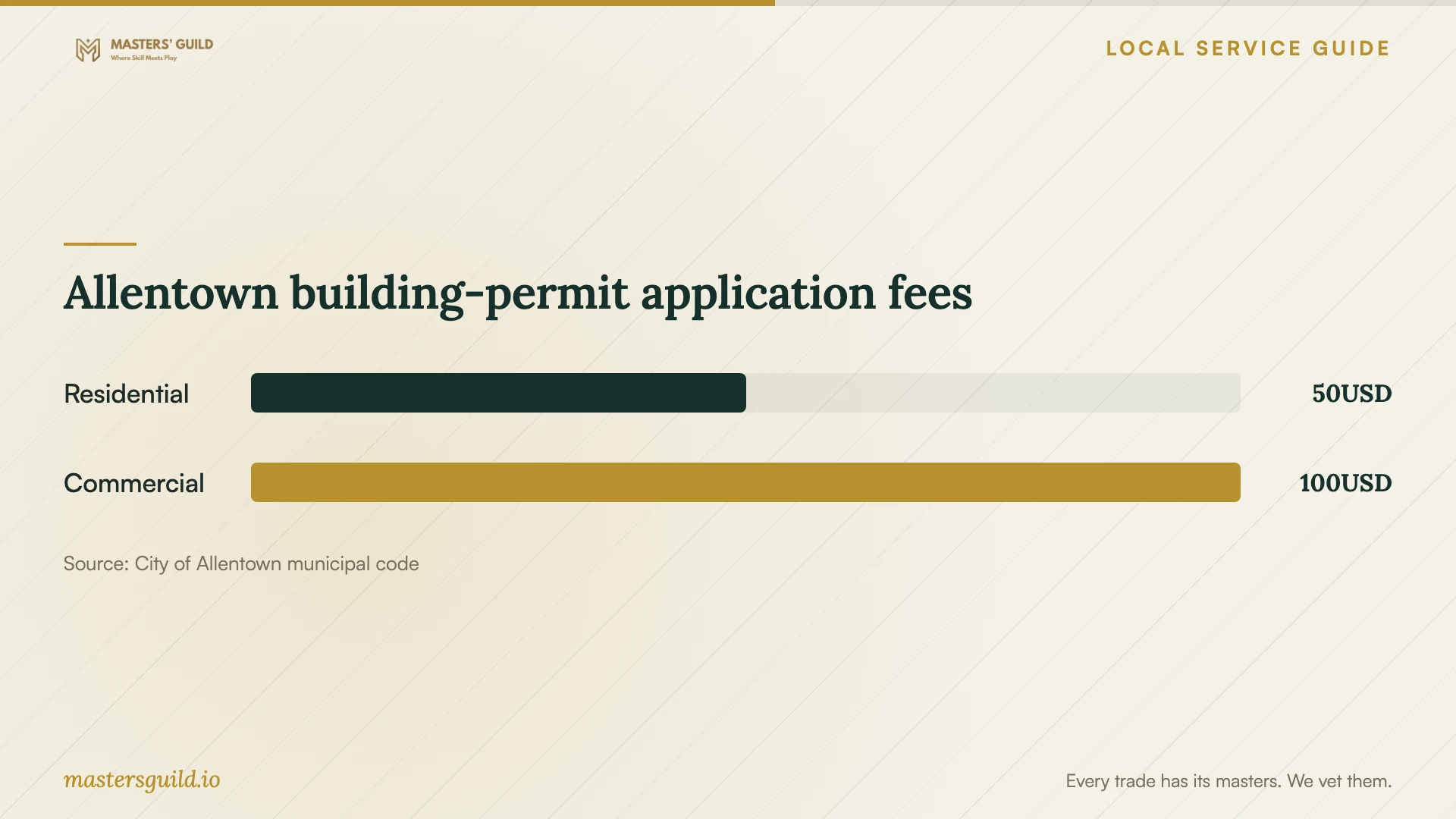
For permitted residential construction, Allentown lists a $50 nonrefundable application fee and a review and inspection charge equal to the greater of $50 or 1% of the total cost of work. The city includes labor and materials from all trades in that cost. The schedule also lists a state UCC charge of $4.50, or the amount determined by Pennsylvania. Ask the city to confirm the total for your scope before budgeting. [1]
The application-fee chart compares published municipal charges. It does not establish local design prices or a complete renovation budget. Ask each designer for a quote against your actual brief; the supplied official sources do not provide a local designer-fee survey. [1]
Resolve approvals before ordering
Send the city a description of proposed wall, electrical, plumbing and mechanical changes before you authorize construction. Allentown's building-fee schedule addresses alterations and these systems, but a fee schedule alone does not determine whether your particular work needs a permit. Ask who will submit the application and coordinate inspections, and record that responsibility in the agreement. [1]
For a property within the designated Old Allentown, Old Fairgrounds or West Park historic districts, check whether the design changes exterior features visible from a street, alley or sidewalk. The historic ordinance requires the applicable approval before permit issuance: City Council's certificate of appropriateness following HARB review, or qualifying staff approval. Ask about that route before specifying windows, exterior doors or other visible changes. [2]
Separate interior furnishing choices from exterior alterations in your brief. The historic ordinance focuses its architectural review on visible exterior features. Ask the city to verify your address against district boundaries; a neighborhood name does not establish whether your property falls inside the designated district. [2]
Check the people doing renovation work
Ask who contracts with each installer and who pays them. For work covered by Pennsylvania's Home Improvement Consumer Protection Act, contractors must register, subject to the act's exclusions. The law addresses residential remodeling, flooring, painting and other specified improvements; do not assume a standalone design consultation has the same obligations. Ask the renovation contractor for a registration number and current insurance information. [3]
For covered home-improvement contracts, Pennsylvania requires a written agreement with work specifications, approximate starting and completion dates, pricing and other consumer protections. The contractor and owner must sign written changes to specifications. The act also gives an individual three business days to cancel after signing, subject to its emergency-work exception. Keep the completed contract and approved changes together. [3]
Before sanding trim, replacing windows or cutting into painted walls in a pre-1978 home, ask the contractor how EPA renovation requirements apply. EPA requires firm certification for covered paid paint-disturbing work and specifies training and work practices. Exceptions exist, but window replacement and demolition of painted surfaces do not qualify for the minor-repair exemption based on area. [4]
Allentown building-permit application fees
Local details that affect your job
Confirm the city's residential classification
Allentown's fee schedule classifies buildings with three or more dwelling units as commercial. Its residential definition covers specified one- and two-family dwellings and qualifying townhouses. If you are redesigning a unit in a larger building, ask the city which application category applies before using the residential fee in your budget. [1]
Plan historic exterior approvals into the sequence
In a designated historic district, the Bureau of Building Standards and Safety forwards applications for applicable visible exterior work to the HARB Secretary. The secretary determines whether the historic ordinance applies and can approve qualifying work through the staff route. Ask your designer to prepare exterior specifications for that check before placing orders that you cannot return. [2]
Match the proposal to your project
| Your project | Help to request | Next step before committing |
|---|---|---|
| Furniture and color choices | Consultation with an action list | Agree on written recommendations and follow-up questions. |
| Room furnishing plan | Measured layout and purchasing support | Clarify ordering, delivery, returns and installation responsibilities. |
| Layout or building-system changes | Design and renovation coordination | Confirm permit requirements and application responsibility with the city. |
| Visible exterior changes in a historic district | Design support for exterior specifications | Confirm the HARB or staff approval route before ordering. |
| Paint-disturbing work in older housing | Designer and contractor coordination | For pre-1978 housing, check EPA RRP coverage and certification. |
Your hiring checklist
- Photograph the rooms and list furniture, finishes and features you want to keep.
- Prepare room dimensions and flag measurements the designer must verify on site.
- Set a total spending ceiling with separate allowances for design, purchases and construction.
- Request deliverables, revision limits, purchasing terms and payment stages in writing.
- Assign responsibility for city approval questions, applications and inspections.
- Ask renovation contractors for relevant registration and insurance documentation.
- Agree on delivery access, installation dates, room protection and cleanup.
- Approve substitutions and added charges in writing before work or ordering proceeds.
Frequently Asked Questions
How much should I budget for a designer?
Request a project-specific proposal. Separate the design fee from furniture, delivery, installation and renovation costs. Ask how the designer charges for revisions and purchasing. The municipal application fees shown here cover city administration and do not establish a designer's price. [1]
Does historic review apply to choosing furniture?
Allentown's historic ordinance focuses on exterior architectural features visible from a public right-of-way. Furniture selections do not change those features. If your room project includes replacement windows or exterior doors, confirm the property's district status and approval route with the city. [2]
Can a designer arrange the renovation contractors?
Ask the designer to specify that service in the proposal and identify who signs each construction contract. For contractors and work covered by Pennsylvania's home-improvement law, check registration and the required written contract. Keep design purchasing terms and construction responsibilities clear. [3]
Should I check for lead before changing painted trim?
For pre-1978 housing, discuss EPA RRP requirements with the renovation firm before paint-disturbing work. EPA does not require paint testing, but says the rule applies unless you have documentation that the paint is not lead-based, subject to applicable exceptions. Ask who will determine coverage and protect the work area. [4]
Sources and scope
This guide combines the sources below with practical planning guidance. Figures apply to the stated geography and period; request a written quote for your property.