
Local service guide
Allentown duct cleaning: Scope and Hiring
Arrange duct cleaning in Allentown, PA by asking providers to show the contamination and give you a written whole-system scope before booking. EPA advises considering cleaning for substantial visible mold inside hard-surface ducts or on other heating and cooling components, a duct infestation, or ducts clogged with excessive dust and debris and/or particles released through supply registers. Suspected contamination needs assessment first. Tell bidders your residential unit count: Allentown’s sheet metal licensing chapter exempts residential properties with three units or fewer. For other properties, ask the city how the chapter applies to your proposed work. [1] [2]
Establish whether cleaning addresses your problem
Ask the provider to inspect the system and identify the component and location of any contamination. EPA advises considering cleaning for substantial visible mold inside hard-surface ducts or on other system components, a duct infestation, or ducts clogged with excessive dust and debris and/or particles released through supply registers. A suspicious stain or possible pest trace calls for assessment; it does not establish those conditions. [1]
If the contractor suspects mold, ask how they will confirm it and identify the moisture source. EPA says an expert must identify mold and may need laboratory analysis. Wet or moldy duct insulation needs removal and replacement because cleaning cannot correct it. Resolve the conditions causing growth before cleaning or replacement to prevent recurrence. [1]
For dust after renovation, describe the work and whether you ran the forced-air system during it. Request an inspection before authorizing cleaning. For future dust-producing work, EPA advises sealing supply and return registers and keeping the system off until workers finish cleaning up the dust. [1]
Compare complete scopes and written totals
Ask each bidder to identify supply ducts, return ducts, registers, grilles, the blower, coils, drain pans and air-handler housing in the estimate. EPA advises cleaning all components of a contaminated system because an omitted component can contaminate the system again. Have the contractor distinguish components they will clean, inspect or exclude. [1]
Obtain inspection-based local quotes. Request a total that identifies system count, access work and optional services. Ask whether the contractor charges by system, register or labor time, and require your approval before extra work. EPA recommends a written agreement stating the total cost and scope before work begins. For hourly work, ask for estimated hours and expected interruptions. [1]
Ask where the vacuum will exhaust and how workers will protect your furnishings. EPA recommends equipment that exhausts outside, or HEPA vacuum equipment when the exhaust stays indoors. Have the provider identify your duct materials and explain the cleaning method. EPA specifies soft-bristled brushes for fiberglass duct board and fiberglass-lined metal ducts. [1]
Separate dryer exhaust and chemical treatments
For dryer-exhaust work, ask the provider to list the route they will clean, the exterior termination they will inspect and any access limitations. Give this work its own line in the estimate so you can compare offers without guessing what a vent-cleaning package includes.
USFA reports that failure to clean was the leading factor contributing to ignition in home clothes dryer fires during 2018–2020, at 31%. This historical national figure gives context for dryer maintenance. It does not measure Allentown fire incidence or establish the effectiveness of a particular cleaning package. [4]
Before approving a chemical biocide, ask the contractor to show the product label, explain its permitted use on your duct material and justify the treatment. EPA says research has not demonstrated these treatments’ effectiveness in duct cleaning or their potential adverse health effects. Discuss physical removal and moisture control before accepting a chemical add-on. [1]
Plan access and the heating interruption
Ask how long the provider expects to keep your system off and which rooms they need to enter. Discuss basement, attic and exterior access, then agree on equipment placement. Clear the requested work areas before arrival. If you share equipment or access with another household, coordinate the appointment with the owner or manager.
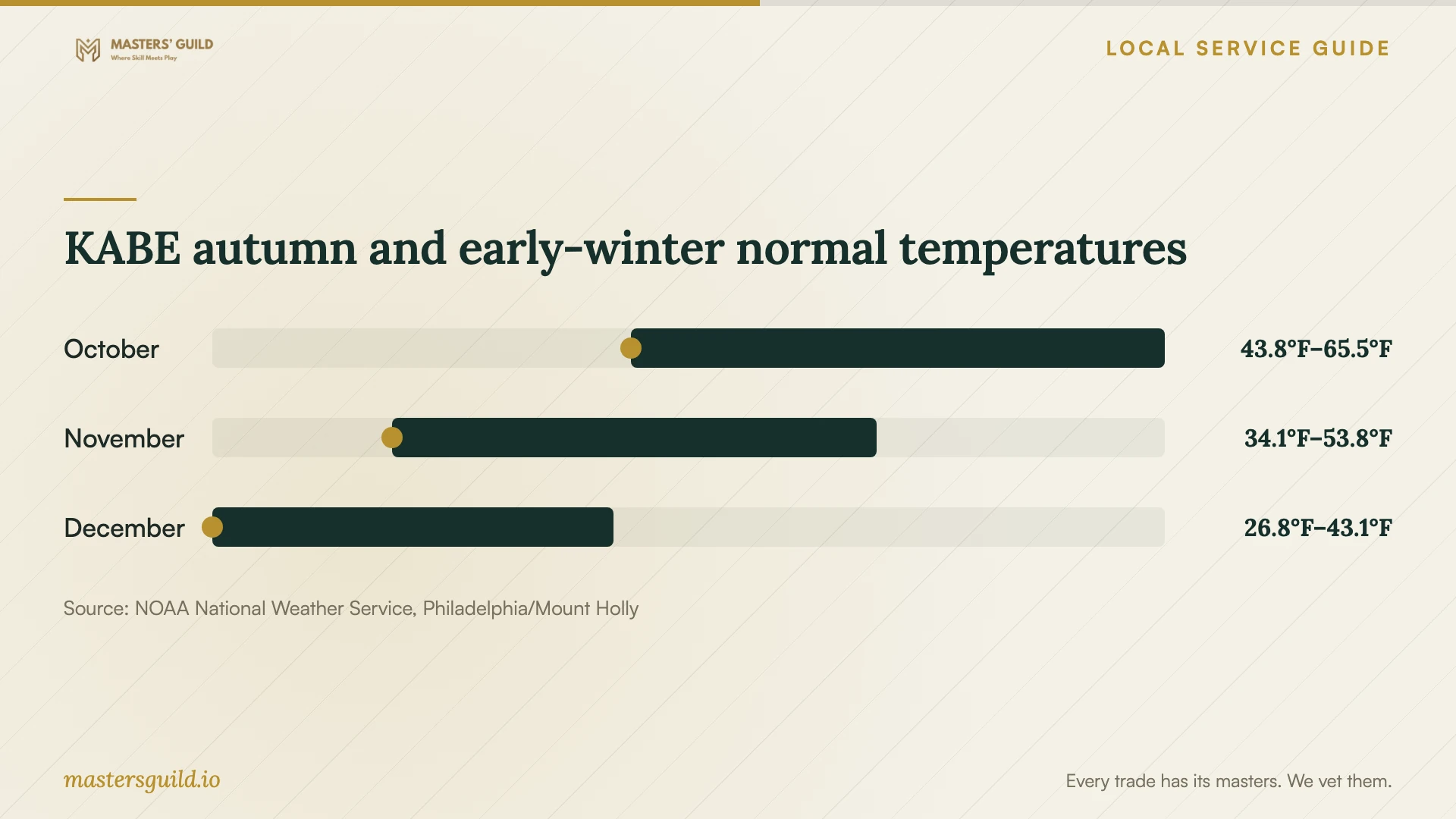
Use the airport temperature chart when discussing heating downtime. NWS lists normal lows of 43.8°F in October, 34.1°F in November and 26.8°F in December at KABE. Check the appointment-day forecast and agree on an interruption plan that suits your household. These monthly normals do not establish a cleaning season or predict conditions on your booking date. [3]
Keep heating-equipment maintenance in the plan. EPA recommends inspection and servicing of fuel-burning furnaces, stoves and fireplaces before each heating season. Ask your heating contractor to specify that service separately from duct cleaning. [1]
Inspect the finished work before closing the job
Agree on photographs and a completion walkthrough before work starts. EPA recommends visual inspection of the cleaned system. Ask the provider to show representative supply and return locations, reattached registers and sealed access openings, and demonstrate proper operation in heating and cooling modes. [1]
Keep the estimate, approved changes and completion photographs together. Identify any excluded areas or unfinished work during the walkthrough and ask the contractor to record the next step. For ongoing care, follow the equipment manufacturer’s filter recommendations and address leaks or standing water. EPA emphasizes preventing dirt and moisture from entering the system. [1]
KABE autumn and early-winter normal temperatures
Local details that affect your job
Building size changes the local licensing question
Allentown Chapter 499 includes heating, ventilation, air-conditioning and exhaust ductwork in its definition of sheet metal systems. Covered work includes repair, alteration, testing and other servicing. The chapter exempts residential properties with three units or fewer. Give the Bureau of Building Standards and Safety your address, unit count and proposed cleaning or repair scope when asking how the chapter applies. This chapter-specific exemption does not establish an exemption from other requirements. [2]
Verify the individual technician for covered work
Allentown requires the Bureau to maintain a public registry of sheet metal technician license and apprentice permit holders, update it each month and identify suspended or revoked credentials. Licensed technicians must carry their license cards while performing covered work. Apprentices holding a valid Allentown sheet metal systems apprentice permit may perform covered work under a licensed technician’s supervision while enrolled in a registered apprenticeship program. Ask who will perform your job and request credential verification from the Bureau before hiring for covered work. [2]
Choose the next step from the condition you can verify
| Condition | Next step | Before authorizing work |
|---|---|---|
| Dust on a return grille | Vacuum or remove and clean the grille | Request evidence of deeper contamination before buying whole-system cleaning |
| Ducts clogged with excessive debris or particles released through supply registers | Consider cleaning after a system assessment | Identify the underlying cause and affected components |
| Suspected mold or wet insulation | Assess the material and moisture source | Confirm suspected mold; arrange replacement of wet or moldy insulation and moisture correction |
| Confirmed duct infestation | Correct the underlying cause and consider cleaning | Agree on measures to prevent recurrence |
| Residential property with more than three units | Ask the Allentown Bureau how Chapter 499 applies to the scope | Verify the technician’s license or the apprentice’s valid city permit, program enrollment and licensed supervision for covered work |
Your hiring checklist
- Describe the problem and request photographs identifying affected components.
- Give bidders your residential unit count and flag proposed duct repairs or alterations.
- Send each bidder the same component list and request a written total with exclusions.
- Discuss duct materials, vacuum exhaust, access openings and protection of furnishings.
- List dryer-exhaust work and chemical treatments separately for your approval.
- Agree on system downtime, room access and equipment placement.
- Walk through the finished work and retain photographs, invoices and approved changes.
Frequently Asked Questions
How often should I have my air ducts cleaned?
EPA recommends as-needed rather than routine cleaning. Ask for an assessment against its specified conditions: substantial visible mold inside hard-surface ducts or on other system components, a duct infestation, or ducts clogged with excessive dust and debris and/or particles released through supply registers. Continue filter changes and heating-equipment maintenance. [1]
Does an Allentown duct cleaner need a sheet metal license?
Chapter 499 regulates work on sheet metal systems and exempts residential properties with three units or fewer. For larger residential properties, give the Bureau your proposed scope and ask how the chapter applies. For covered work, verify the technician’s license or the apprentice’s valid city-issued permit, enrollment in a registered apprenticeship program and licensed supervision. The licensing chapter alone does not establish whether your work needs a building permit. [2]
Can cleaning reduce allergies or energy bills?
EPA says duct cleaning has not been shown to prevent health problems and finds little evidence that cleaning ducts alone improves system efficiency. Discuss unexplained symptoms with your doctor. Ask an HVAC contractor to assess dirty coils, fans or other equipment before accepting a guaranteed health or savings claim. [1]
What should I ask about the price?
Ask for the total, included components, access work, exclusions and approval process for extras. Have each bidder price the same scope. EPA recommends written estimates from at least three providers and an estimate of hours and interruptions if the provider charges by the hour. [1]
Sources and scope
This guide combines the sources below with practical planning guidance. Figures apply to the stated geography and period; request a written quote for your property.