
Local service guide
Bathroom Remodeling in Allentown, PA
For Bathroom Remodeling in Allentown, choose a contractor who gives you a written scope, identifies the plumbing and electrical trades, and assigns responsibility for permits and inspections before demolition. Ask the city to confirm the requirements for your proposed work. Pennsylvania requires most home improvement contractors to register, while Allentown publishes separate electrician and plumber license schedules. Check registration and the applicable local credentials as separate steps. [2] [3]
Define the bathroom you want before requesting quotes
Write down what you want to keep and what you want to replace. Separate paint, hardware, and storage changes from shower reconstruction, fixture relocation, or wall changes. Give contractors a sketch with room measurements and the proposed locations of the toilet, vanity, tub, and shower. Mark the features you need, such as easier shower entry, space for assistance, or storage within reach.
Ask for a site visit before accepting a final scope. Show the contractor leaks, loose finishes, staining, and previous repairs. Request a written explanation of what they can assess before demolition and what they will inspect after opening the walls or floor. Agree on how they will document concealed damage, price repairs, and obtain your approval before adding work.
Build a budget from comparable written proposals
Request separate amounts for demolition, plumbing, electrical work, ventilation, shower preparation, tile, fixtures, finishing, and debris removal. Name the products or set clear allowances for items you have not selected. Ask whether each allowance includes delivery and installation. Have the contractor state who buys materials and who handles returns, damaged deliveries, and missing parts.
For residential permit budgeting, Allentown’s published schedule lists a $50 nonrefundable application fee, a state UCC fee of $4.50 or the amount determined by Pennsylvania, and a plan review and inspection charge of the greater of $50 or 1% of total work cost. The city includes labor and materials from all trades in that valuation and reserves the right to correct it. Ask the city to confirm the charges for your application before treating a proposal’s permit allowance as final. [1]
Keep an amount in your budget for changes you approve after demolition, but choose that amount with the contractor after reviewing the room. Request a written change order that states the added work, price, and effect on completion. A proposal with unresolved fixture choices or repair exclusions needs clarification before you can compare its total with another offer.
Check contractor registration and local trade credentials
Pennsylvania’s Department of Labor and Industry says the Commonwealth has no licensure or certification requirements for most construction contractors. It also says most home improvement contractors must register with the Attorney General’s Office, maintain minimum insurance coverage, and use contracts that meet consumer protection requirements. Ask for registration information, proof of insurance, and the proposed contract before hiring. [3]
Ask who will perform the bathroom wiring and plumbing, including subcontractors. Allentown’s code lists electrician license categories and master and journeyman plumber licenses, with annual renewal schedules. Pennsylvania directs consumers to the municipality for local licensing information. Give the city the proposed tradespeople’s names and credentials and ask whether those credentials cover your work. [2] [3]
Request examples of completed projects with a similar shower, layout, or accessibility goal. Ask references about communication, changes to the agreed price, and how the contractor handled corrections. During the site visit, ask the contractor to explain the shower waterproofing approach, ventilation route, and inspection sequence in terms you can understand.
Set permit and inspection responsibilities before demolition
Give Allentown’s Bureau of Building Standards and Safety a description of the proposed work and ask which permits, plans, and inspections apply. Include fixture moves, wiring, ventilation changes, and any wall alteration in that description. The fee article covers alterations and electrical, mechanical, and plumbing systems, but it does not establish the permit exemption or application procedure for each bathroom project. [1]
Name the person who will submit applications, pay fees, schedule inspections, and provide approval records. Allentown states that approval for issuance does not create a valid permit until the required fee is paid. The city also doubles the permit fee for starting work without a required permit. Ask for confirmation of permit issuance before authorizing work that requires one. [1] [4]
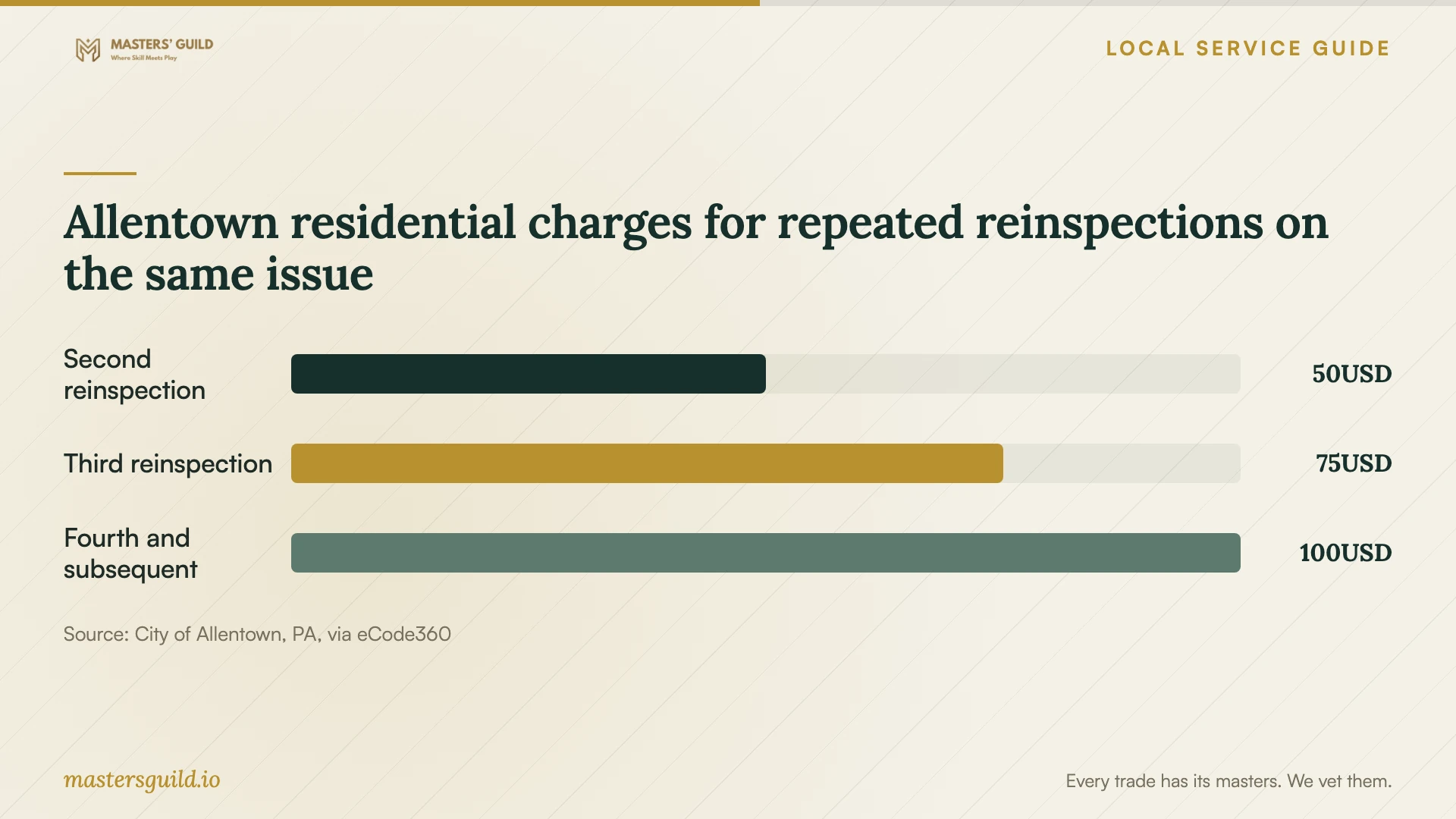
Put correction responsibilities in the contract. Allentown lists residential charges of $50 for a second reinspection, $75 for a third, and $100 for a fourth and subsequent reinspections on the same issue. Ask who pays inspection charges and correction costs when work fails to meet the approved requirements. [4]
Arrange bathroom downtime and completion
Ask for a schedule that separates material ordering, demolition, trade work, inspections, installation, and final corrections. Have the contractor identify the days when you cannot use the toilet or shower. If this is your only bathroom, agree on an alternative before demolition and ask what happens if a delivery or inspection changes the schedule.
Agree on work hours, access, dust protection, water shutoff notices, and daily cleanup. Confirm where workers will store materials and carry debris. At completion, walk through the room with the contractor, test the fixtures and fan, and record unfinished items. Collect product care instructions, warranty terms, and applicable inspection records before closing out the job.
Allentown residential charges for repeated reinspections on the same issue
Local details that affect your job
A bathroom in a larger residential building needs a classification check
Allentown’s fee article classifies a building with three or more dwelling units as commercial. Its commercial schedule lists a $100 application fee and a plan review and inspection charge of the greater of $75 or 1.5% of total work cost. If your bathroom is in such a building, ask the city to confirm the applicable classification before accepting a residential permit allowance. [1]
Street dumpster placement requires a separate disposal discussion
For approved dumpsters in the public right-of-way, Allentown lists monthly fees of $35 for containers of 20 cubic yards or less and $55 for larger containers. These are city placement charges. Ask who will obtain placement approval and include the container rental, hauling, and disposal arrangements in the proposal. [1]
Match your next step to the proposed work
| Your situation | What to clarify | Next step |
|---|---|---|
| Paint, hardware, or storage changes | The exact work and any proposed trade alterations | Request an itemized scope and confirm applicable permit requirements. |
| Shower reconstruction | Waterproofing, drain work, and inspection responsibilities | Ask for a written installation scope before choosing finishes. |
| Fixture moves or wiring changes | Who performs each trade and which credentials apply | Verify the proposed credentials and permit requirements with the city. |
| Bathroom in a building with three or more dwelling units | The city fee code’s commercial classification | Confirm classification before budgeting application and inspection charges. |
| Demolition debris needs a street dumpster | Approval for placement in the public right-of-way | Assign approval responsibility and distinguish city fees from hauling costs. |
Your hiring checklist
- Prepare a measured sketch and identify fixtures you plan to keep or move.
- Give each bidder the same product selections or allowance requirements.
- Request contractor registration information, insurance documentation, and trade credentials.
- Confirm the building classification and proposed permit requirements with the city.
- Name who obtains permits, schedules inspections, and pays for corrections.
- Agree on written approval for concealed repairs and other scope changes.
- Plan toilet and shower access during construction and confirm debris arrangements.
- Collect completion records, care instructions, and written warranty terms.
Frequently Asked Questions
How much should I budget for the remodel?
Use written site-specific proposals for the construction budget. The supplied municipal schedule establishes permit-related fees, rather than bathroom remodeling prices. Compare the same layout and product choices, then clarify allowances, concealed repairs, and exclusions before choosing a contractor. [1]
Does contractor registration cover local plumbing and electrical credentials?
Check them separately. Pennsylvania identifies home improvement contractor registration as a state requirement for most such contractors and directs consumers to municipalities for local licensing requirements. Allentown publishes electrician and plumber license schedules. Ask the city which credentials apply to the people performing your work. [2] [3]
Can the contractor start while the permit paperwork is pending?
For work that requires a permit, confirm issuance before authorizing the start. Allentown says an application approved for issuance is not a valid permit until the required fee is paid. Starting without a required permit triggers a doubled permit fee. [1] [4]
How long will I lose access to the bathroom?
Ask your contractor for a project-specific downtime plan before signing. Identify when the toilet and shower become unavailable, the alternative you will use, and who contacts you if materials, inspections, or added repairs change the schedule.
Sources and scope
This guide combines the sources below with practical planning guidance. Figures apply to the stated geography and period; request a written quote for your property.