
Local service guide
Pressure Washing in Albuquerque: Plan and Hire
For Pressure Washing in Albuquerque, choose a provider who explains the cleaning method for your surface and includes runoff containment and disposal in the written quote. The Water Authority prohibits water waste within its service area, including water flowing from your property onto adjacent property or the public right-of-way. Before booking, ask the provider to inspect drainage, identify the material, and describe how they will contain wash water and handle collected waste. [2]
Define the job before requesting quotes
Send bidders photographs of the entire cleaning area, close-ups of stains, and views showing where water would flow. Identify whether you want a driveway, patio, wall, steps, or several surfaces cleaned. Include access through gates, parking arrangements, and the location of your water connection. Ask the provider to confirm measurements before agreeing to a final price.
Describe the result you want, such as removing loose dirt or treating specific stains. Ask the bidder to separate general cleaning from stain treatment and explain any limits on the expected result. For painted or coated surfaces, request a method that follows the applicable product or material instructions. Avoid accepting a promise to remove every mark without an inspection.
Request an itemized written quote covering preparation, cleaning products, surface protection, wash-water collection, disposal, and cleanup. Confirm who will move furniture or vehicles and whether the total includes that work. Have the provider list exclusions and explain how you will approve any extra charges before work begins.
Inspect drainage before the provider starts
Walk the property with the provider and trace the route from the washing area to the curb, neighboring yard, and any drain. The Water Authority defines water waste to include water other than natural precipitation that flows or sprays from a property to the public right-of-way or adjacent property. Its prohibition applies throughout its service area, even when someone uses water from another source. [2]
Ask the provider to explain the barriers, collection equipment, or other measures they propose for your site. Agree on a stopping point if containment fails. Sweeping and collecting loose debris before washing follows the City's pavement-cleaning advice and gives you a preparation task to include in the scope. [1]
Address pollution control alongside keeping water within the property boundary. The City warns against washing detergents, oils, and greases into streets or storm drains. It explains that storm drains connect to pipes or arroyos leading to the Rio Grande and that substances entering that system receive no treatment. [1]
Confirm a disposal route for collected water
Ask where the provider will take collected wash water and who will confirm that the destination accepts it. Resolve this before booking an oily driveway or a job using chemical cleaners. The Water Authority explains that chemicals, solvents, pesticides, fats, oils, and grease can affect the sewer collection system or treatment plant, and its Sewer Use Ordinance regulates pollutant discharges. [3]
Do not assume that collecting water gives the provider permission to empty it into any household drain. For questions about the proposed sewer-disposal route, contact the Water Authority's Industrial Pretreatment Program at 505-289-3419. Describe the cleaning products and contaminants involved, then ask the provider to incorporate the accepted handling instructions into the quote. [3]
Use a material-specific plan for older masonry
If your project includes historic brick or stone, consult someone qualified to assess preservation work before approving cleaning. GSA's national historic-masonry guidance calls for identifying the material, condition, previous treatments, and soiling, then testing methods in inconspicuous locations. It recommends the gentlest method that removes soiling without damaging the substrate. [4]
GSA supplies this guidance as a professional reference, rather than an Albuquerque rule or a pressure setting for every exterior surface. Have the specialist explain the test result, selected products, protection of openings and vegetation, and collection of cleaning runoff. Approve the test area before the provider expands the work, and photograph its appearance for the final inspection. [4]
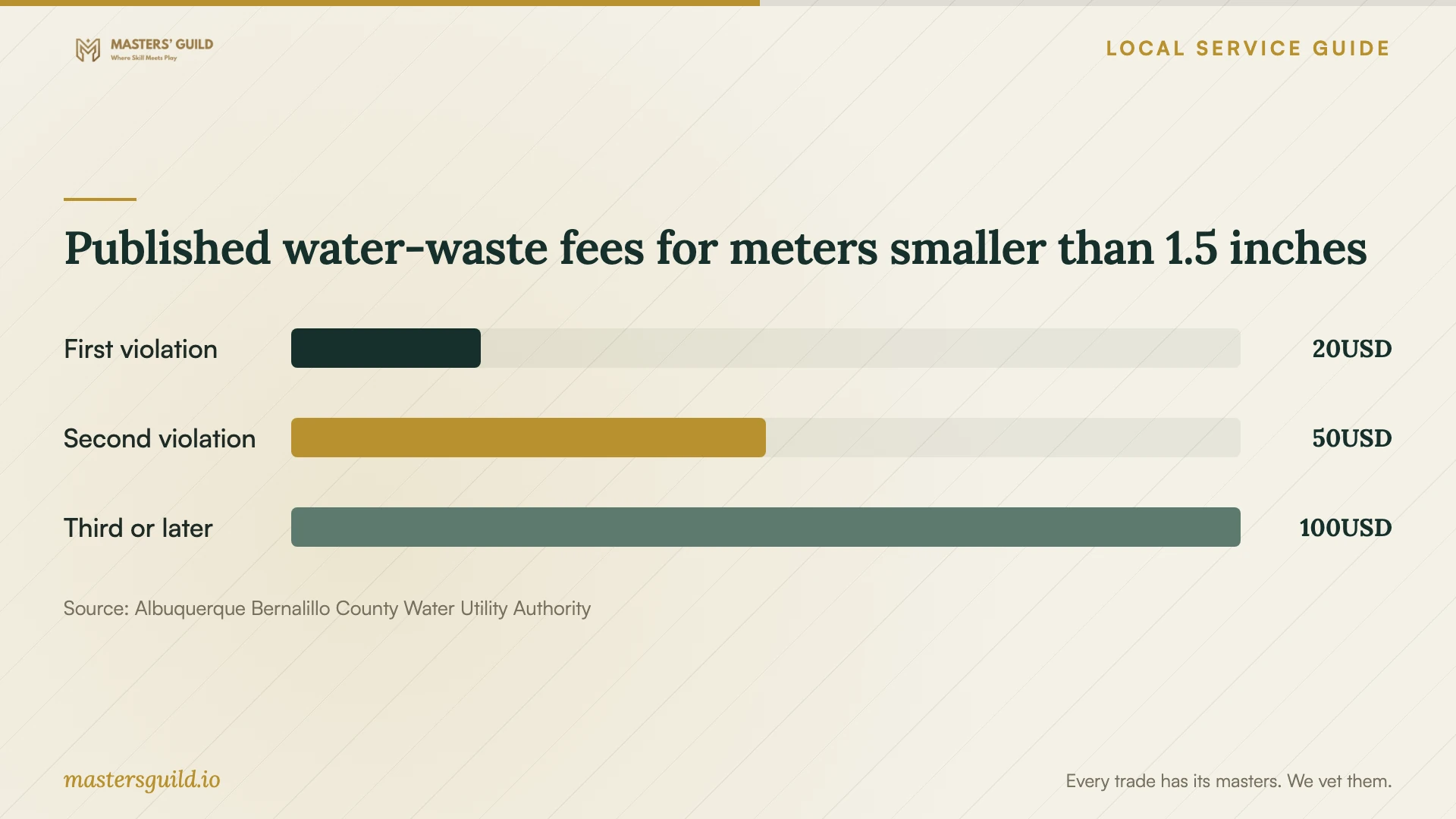
Published water-waste fees for meters smaller than 1.5 inches
Local details that affect your job
Water crossing the property boundary changes the plan
Within the Water Authority service area, water flowing or spraying onto adjacent property or the public right-of-way counts as water waste. For a driveway sloping toward the street, require a containment plan before washing begins. Have the bidder inspect that slope and explain how they will prevent water from leaving the property. The utility publishes escalating fees by meter size and violation stage. [2]
Street drains lead to the Rio Grande without treatment
The City warns that hosing pavement can wash pollutants into storm drains and that water entering a public street or storm drain violates City Ordinance. Require the provider to address the curb and nearby drain in the scope. Include debris collection before washing and a plan that keeps detergent, oil, and grease out of the street. [1]
The utility can answer sewer-disposal questions
The Water Authority regulates pollutants entering its sanitary sewer through its pretreatment program. For collected water containing cleaning chemicals or oil, ask the provider to confirm an acceptable disposal route. The program lists 505-289-3419 for further information; use that contact before accepting a proposal to discharge collected water into a drain. [3]
Choose the next step for your cleaning job
| Job situation | Next step | Question for the bidder |
|---|---|---|
| Driveway slopes toward a street or neighboring property | Require a runoff-containment plan before booking. | How will you stop water from crossing the property boundary? |
| Oil stains or chemical cleaners are part of the job | Confirm collection and an acceptable disposal route. | Who will verify that the destination accepts this wash water? |
| Historic brick or stone needs cleaning | Seek qualified preservation guidance and approve a test patch. | How will you select the gentlest successful method? |
| Quotes cover different tasks | Request revised quotes using one shared scope. | Does your total include preparation, protection, collection, disposal, and cleanup? |
Your hiring checklist
- Photograph surfaces, stains, existing defects, and the drainage route.
- Give each bidder the same cleaning area and desired result.
- Ask for a written cleaning method and any proposed test area.
- Confirm how the provider will contain and collect wash water.
- Request the disposal destination and responsibility for confirming acceptance.
- Ask for proof of insurance and clarify who handles accidental damage.
- Agree on access, furniture moving, water use, and protection of nearby areas.
- Inspect the completed work against the agreed scope before closing the job.
Frequently Asked Questions
Can the provider let wash water run into the street?
The Water Authority prohibits water waste, including water flowing from a property to the public right-of-way. The City also warns against pavement-washing water entering public streets or storm drains. Require the provider to explain containment before work starts. [1] [2]
Does collecting wash water make sewer disposal acceptable?
Collection alone does not establish an acceptable disposal route. The Water Authority regulates pollutants entering its sewer system. Ask the provider to confirm how they will handle the products and contaminants involved; the Industrial Pretreatment Program lists 505-289-3419 for questions. [3]
Should I request pressure washing for historic masonry?
Request an assessment and cleaning plan before choosing equipment or pressure. GSA recommends qualified preservation guidance, inconspicuous tests, and the gentlest successful method for historic masonry. Its national reference does not supply a universal specification for your property. [4]
How should I compare prices?
Ask bidders to price the same area and tasks. Compare stain treatment, surface protection, collection, disposal, and cleanup alongside the total. Request written exclusions and an agreed process for approving extra work.
Sources and scope
This guide combines the sources below with practical planning guidance. Figures apply to the stated geography and period; request a written quote for your property.