
Local service guide
Mold Removal in Albuquerque: Plan Cleanup and Repairs
Arrange Mold Removal in Albuquerque by asking an experienced remediator to identify the moisture problem and explain which materials need cleaning or removal. Request separate written scopes for cleanup, leak repair, and rebuilding. EPA recommends checking mold-cleanup experience and references; Albuquerque requires permits for specified plumbing, electrical, and mechanical repairs. Before anyone opens walls or removes suspect materials, ask whether an asbestos assessment belongs in the plan. [1] [2] [3]
Choose the cleanup scope before choosing a contractor
Start with the affected surface, the water source, and any areas you cannot inspect. EPA describes a patch smaller than about 10 square feet as a job a homeowner can handle in most cases. Its guidance calls for professional help with sewage or other contaminated-water damage and suggests an experienced professional for suspected hidden mold. Treat the size threshold as one part of the decision. [1]
For a small hard-surface patch, EPA recommends detergent and water, followed by complete drying. Wear gloves, goggles, and a properly fitting N-95 respirator to limit exposure. Moldy porous materials, including carpet and ceiling tiles, may need disposal because cleaning may not remove growth from their internal spaces. [1]
If you suspect mold in the HVAC system, EPA says not to run it because it could spread mold through the building. Consult a health professional before cleanup if you have health concerns. Ask the remediator how you should use the affected room while they investigate. [1]
Compare written plans and define what the price covers
Request a site-specific, itemized quote covering cleanup, moisture repairs, disposal, and rebuilding. Have each contractor describe the same suspected problem before comparing totals. Include investigation, material removal, and drying in the proposed scope. Have contractors mark exclusions and explain how they will obtain your approval if opening a wall reveals additional damage.
Contact references from mold-cleanup jobs. EPA recommends checking the contractor's experience and asking them to follow guidance from government or professional organizations. Ask which guidance they use and how they will apply it to your home. [1]
Keep leak repair and rebuilding visible in the proposal. Identify who will coordinate those tasks, who will check drying before closing walls, and what documentation you will receive. Agree on access, working hours, furniture handling, payment stages, and any arrangements you need while the room is unavailable.
Before booking an inspection, ask the contractor to state any investigation charge and whether they credit it toward the work. Request a written explanation of what that visit includes and which decisions may require further investigation.
Give testing a defined purpose
Ask what decision a proposed test will help you make. EPA says sampling is unnecessary in most cases when visible mold growth exists. It also explains that sampling cannot demonstrate compliance with federal mold standards because the federal government has set no such limits. [1]
EPA says surface sampling may help determine whether someone has cleaned an area adequately, and it recommends professionals with experience designing sampling protocols and interpreting results. Have the testing provider explain the method, limitations, and next step before you authorize the expense. [1]
New Mexico's Environmental Health Epidemiology Bureau provides mold information but does not conduct mold testing, home inspections, or landlord-tenant dispute resolution. Use its guidance to assess a proposal; arrange inspection or remediation with a provider who states what they will deliver. [4]
Prepare for water damage and check the finished work
After a leak or water intrusion, begin arranging drying without waiting for a mold test. EPA and New Mexico health guidance recommend drying water-damaged areas and items within 24 to 48 hours to prevent growth. Tell the contractor when you first noticed water and which materials remained wet. [1] [4]
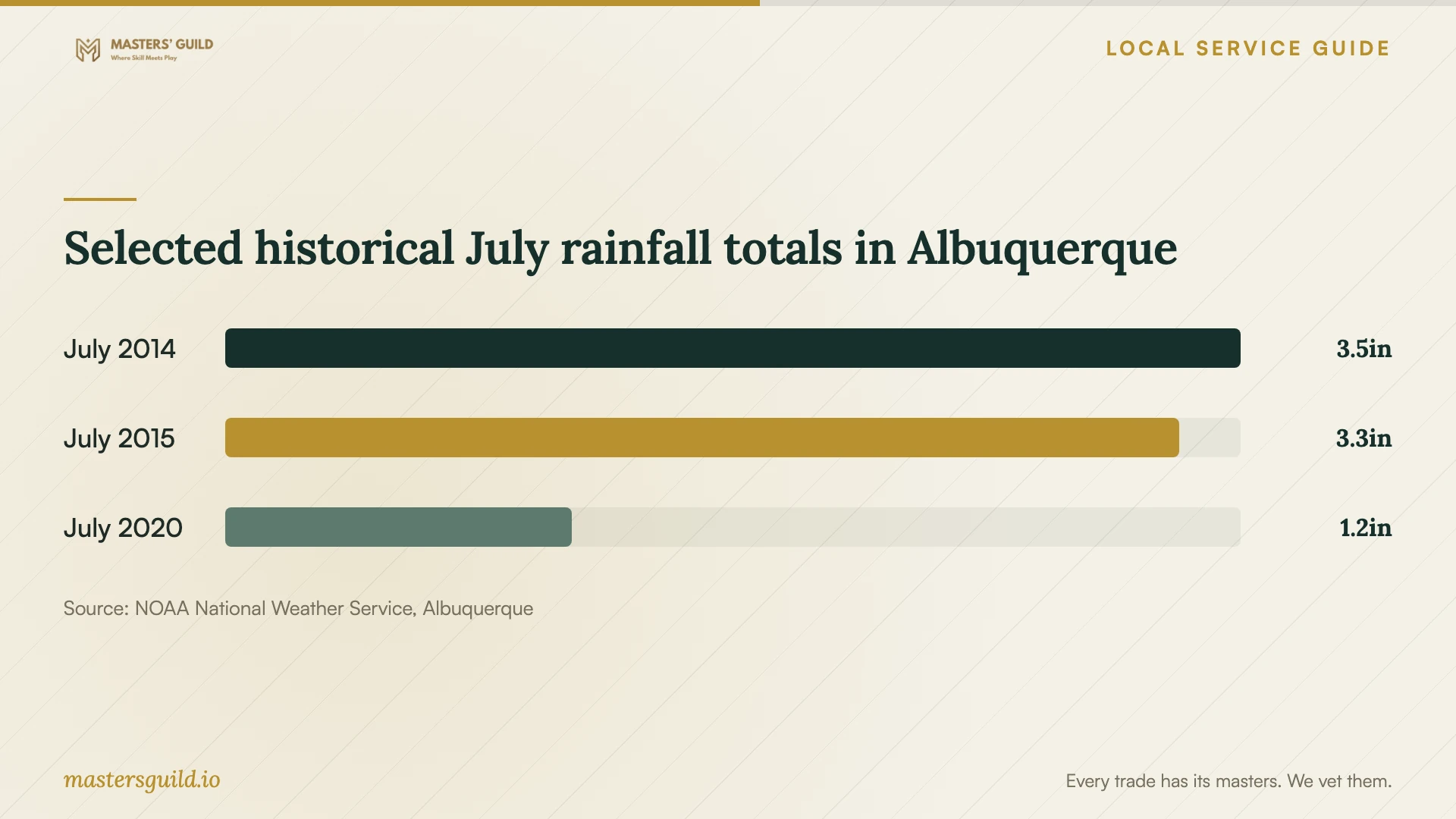
New Mexico health guidance calls for mold prevention during monsoons and after floods. The historical July rainfall chart provides local context for rain-related intrusion. If you notice dampness after rain, tell the contractor where water entered and ask who will investigate that entry point. [4] [5]
Before accepting the cleanup, review the moisture repair and inspect the cleaned area with the contractor. EPA's completion guidance calls for fixing the water problem, removing visible mold and moldy odors, and revisiting the site after cleanup for signs of water damage or renewed growth. EPA also notes that mold can leave cosmetic staining, so ask the contractor to distinguish staining from remaining growth. [1]
Selected historical July rainfall totals in Albuquerque
Local details that affect your job
Check permits for the repair that caused the mold
Within Albuquerque, installation or alteration of bathroom or kitchen piping requires a plumbing or mechanical permit. The city also lists equipment or ductwork installation and says a licensed contractor must perform that work. Homeowners or contractors can apply, upload documents, and track applications through ABQ-PLAN. Call Building Safety at 505-924-3320 with the proposed repair scope before work begins, and name the permit applicant in your agreement. [2]
Resolve asbestos questions before removing materials
Albuquerque's Air Quality Division regulates removal of regulated asbestos-containing material within Bernalillo County. The city says asbestos inspections must use an accredited inspector. Its homeowner guidance says residents removing asbestos from their own homes do not have to submit a notification, while recommending professional removal and prohibiting disposal in household garbage. Ask Air Quality at 505-768-1972 which requirements apply to your property and proposed demolition. Keep asbestos assessment, removal, and disposal responsibilities explicit before authorizing material removal. [3]
Choose your next step from the damage you can see
| Situation | Next step | Reason |
|---|---|---|
| Small hard-surface patch under about 10 square feet | Consider homeowner cleanup with precautions and moisture repair. | EPA says homeowners can handle this size in most cases. |
| Musty odor with no visible source | Consider an experienced professional to investigate hidden growth. | EPA warns that disturbing concealed mold can release spores. |
| Sewage or other contaminated-water damage | Call a professional experienced with contaminated-water cleanup. | EPA identifies this as a situation requiring professional help. |
| Suspected mold in the HVAC system | Stop running the system and seek guidance before further action. | EPA warns that operating it could spread mold. |
| Cleanup includes bathroom piping or ductwork installation | Confirm Albuquerque permit requirements and the responsible contractor. | The city lists these scopes under plumbing or mechanical permits. |
Your hiring checklist
- Photograph visible growth and water damage without disturbing suspect materials.
- Record the leak history, affected rooms, and any work already attempted.
- Ask for a written explanation of the moisture source and investigation plan.
- Compare itemized cleanup, repair, disposal, and rebuilding scopes.
- Assign responsibility for permit checks and asbestos questions before demolition.
- Agree on access, room use, payment stages, and approval of additional work.
- Request completion photos, moisture-repair documentation, and a follow-up plan.
Frequently Asked Questions
Do I need a mold test before hiring someone?
EPA says sampling is unnecessary in most cases when mold is visible. You can address cleanup and moisture without first identifying the mold species. If a contractor recommends testing, ask what question it answers and how the result would change the work. [1]
Does mold cleanup require an Albuquerque permit?
The city's permit page does not identify a standalone mold-cleanup permit. Associated repairs can require permits, including alterations to bathroom or kitchen piping and specified mechanical or electrical work. Give Building Safety the full scope rather than asking only about mold removal. [2]
Can the contractor spray or paint over the mold?
EPA says killing mold alone is insufficient because dead mold can still cause allergic reactions. It advises removing growth and drying surfaces before painting or caulking. Ask the contractor to describe removal and moisture correction before accepting a coating proposal. [1]
Can New Mexico health officials inspect my home for mold?
The Environmental Health Epidemiology Bureau provides information but does not perform home inspections or mold testing. Arrange an inspection with a provider whose written scope explains what they will inspect, report, and recommend. [4]
Sources and scope
This guide combines the sources below with practical planning guidance. Figures apply to the stated geography and period; request a written quote for your property.