
Local service guide
Kitchen Remodeling in Albuquerque: Plan and Hire
Arrange Kitchen Remodeling in Albuquerque by defining your layout and appliance changes, verifying the remodeler's New Mexico license, and assigning permits and inspections before demolition. The city requires permits and inspections for remodeling, and state regulators advise checking appropriate licensing before signing an agreement. Ask bidders to price the same written scope, including cabinets, trade work, approvals and cleanup. [1] [3]
Define the kitchen before requesting bids
Write down what you want to keep and change. Separate cabinets, counters and finishes from moving the sink, changing appliances or removing a wall. Give each bidder the same sketch, photographs and appliance list. Ask them to identify decisions you must settle before they can give a firm price.
Describe how you use the room: where you prepare food, which doors interfere with each other, and what you struggle to reach. Ask the designer to show cabinet and appliance doors open on the proposed plan. Review storage, seating and access with the people who use the kitchen before approving dimensions.
Request separate prices for your preferred layout and an option that retains fixture locations. Have the contractor describe the work in each option. Before choosing, check which plumbing, electrical, ventilation and wall changes each bidder included.
Assign permits and inspections in the contract
Albuquerque's Building Safety FAQ states that remodeling requires permits and inspections and lists reworking plumbing among common permit projects. Ask Building Safety to confirm approvals for your scope. The city lists 505-924-3969 for building permits, 505-924-3311 for electrical permits and 505-924-3320 for mechanical permits. [1]
Name the permit applicant and inspection coordinator in your agreement. The city requires a contractor who pulls the permit to schedule inspections. Ask the remodeler to identify inspection stages in the schedule and provide permit details before covered work begins. [1]
The city describes residential plan review as approximately two and a half weeks, depending on project size and complexity. Use that as a review reference rather than a promised approval date. Ask your bidder to distinguish design, review, material delivery and construction time. [1]
Check the contractor and compare complete prices
New Mexico's Regulation and Licensing Department advises homeowners to verify appropriate licensing before entering an agreement. Request the contracting company's legal name and license number, then verify them with the department. Ask who will perform plumbing and electrical work and how the lead contractor will coordinate those trades. [3]
The department identifies large down payments, cash-only payment, missing insurance documentation and refusal to provide an invoice or contract as warning signs. Request proof of liability insurance and a payment schedule tied to described work. If a contractor asks you to obtain the permit, discuss that request with the permitting authority before signing. [3]
Request line items for demolition, cabinets, counters, appliances, installation, trade work, permits and disposal. Require each allowance to identify the included products and how the contractor will charge any difference. Ask whether the total includes taxes, delivery, protective coverings and repairs to adjacent finishes. Build your budget from project-specific bids.
Choose appliances before approving cabinet openings
Give the remodeler model numbers and installation instructions for appliances you intend to keep or purchase. Ask them to confirm openings, door clearances, connections and service access. Record who will measure, order and check each item before installation.
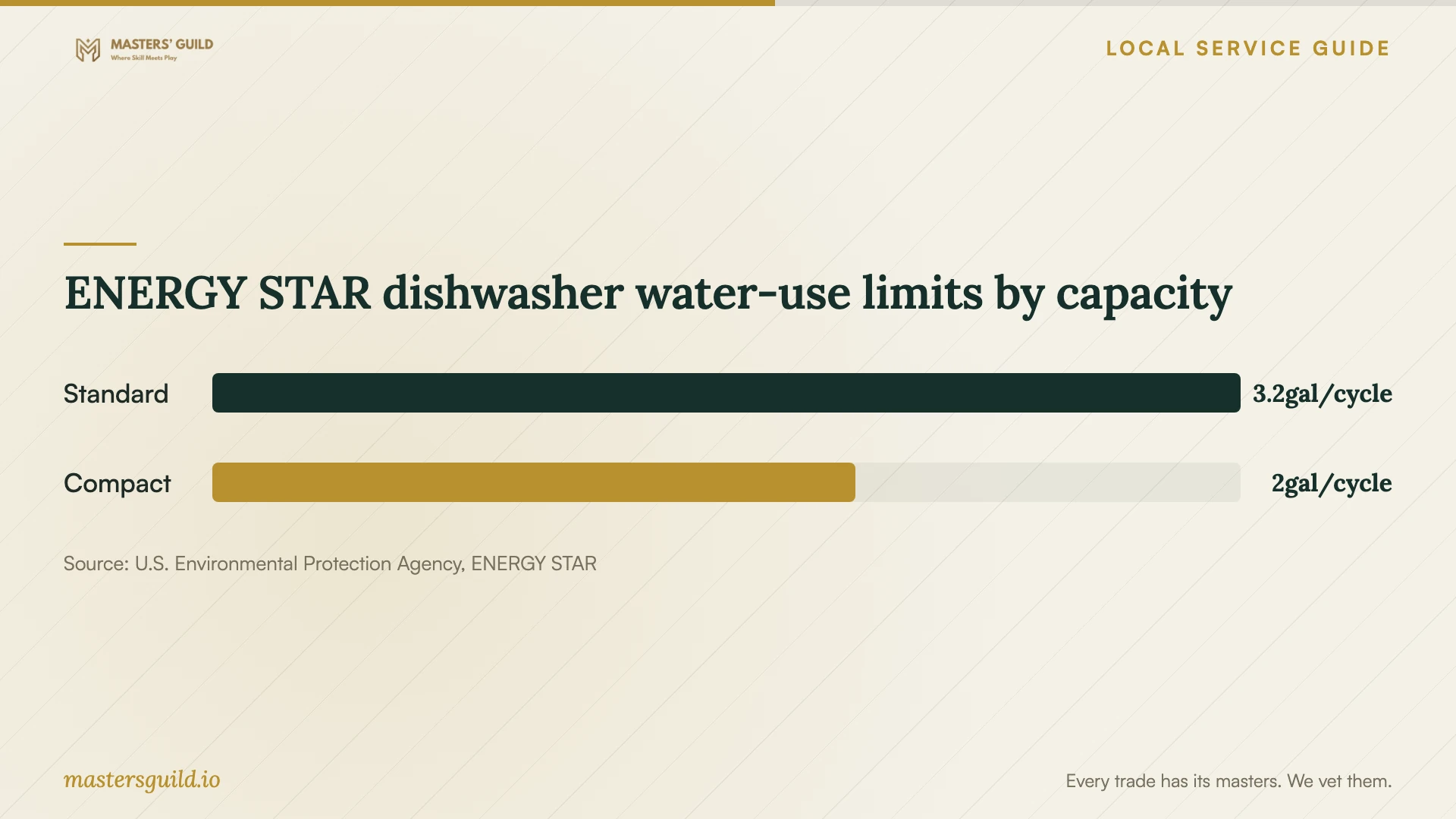
ENERGY STAR publishes national dishwasher criteria with water-consumption limits of 3.2 gallons per cycle for standard machines and 2.0 for compact machines. It defines standard capacity as at least eight place settings plus six serving pieces, and compact capacity as below that threshold. [4]
Choose capacity around the loads you expect to wash, then compare individual model specifications. The chart shows certification limits rather than measured household consumption. It does not establish how much water your household would save by choosing a compact machine. [4]
Agree on disruption, changes and handover
Ask when you will lose access to the sink, cooking appliances and refrigerator. Decide where you will prepare food and store dishes during that period. Agree on work hours, access, dust containment, cleanup and material storage.
Require written approval of changes before the crew proceeds. Each change should describe the work, price and schedule effect. Ask how the contractor will handle conditions discovered after demolition and who can authorize additional spending.
Before the final payment milestone, walk through the kitchen together and record unfinished items. Request inspection records, appliance instructions, warranties and finish-care guidance. Check drawers, doors, fixtures and appliance access against the agreed scope.
ENERGY STAR dishwasher water-use limits by capacity
Local details that affect your job
Historic review depends on exterior changes
The city's historic-overlay page includes maps for Old Town, Huning Highland and East Downtown. Check your address rather than relying on a neighborhood name. Within an overlay zone, the city requires a Certificate of Appropriateness for exterior alterations, including windows, and for additions. It exempts interior alteration or demolition that leaves exterior appearance unchanged. If your kitchen plan includes a window change or exterior vent opening, ask Landmarks staff to determine the review required before ordering or starting that work. Call 505-924-3860 and select the Boards, Commissions, and ZHE signs option. [2]
Separate application charges from the permit allowance
Albuquerque accepts plans, applications and supporting documents through ABQ-PLAN. The city collects plan-review fees at submission and permit fees after the required divisions approve plans. Its FAQ sets plan-review fees at 65% of the permit fee plus zoning and hydrology fees; permit fees depend on project square footage and valuation. Ask your bidder which charges the allowance includes and who pays them. Keep the plan-review number, which starts with T, to check status and comments. [1]
Match your proposed work to the next step
| Proposed work | Approval consideration | Next step |
|---|---|---|
| Cabinets and finishes within the existing room | The city states that remodeling requires permits and inspections. | Describe the exact work to Building Safety and confirm approvals. |
| Move the sink or rework plumbing | The city's permit FAQ lists reworking plumbing as a permit project. | Ask the bidder to identify plumbing work and permit responsibility. |
| Interior work in a historic-overlay property | Interior alteration that leaves exterior appearance unchanged does not require a Certificate of Appropriateness; building permits may remain necessary. | Confirm that the proposed work stays within the exemption. |
| Change a kitchen window or add space in a historic-overlay property | The city requires a Certificate of Appropriateness for exterior alterations and additions. | Consult Landmarks staff before approving the exterior design. |
| Replace the dishwasher | ENERGY STAR sets different capacity and water-use criteria for standard and compact models. | Choose capacity for your needs and confirm the selected model's installation requirements. |
Your hiring checklist
- Prepare one scope, sketch and appliance list for all bidders.
- Check historic-overlay status before proposing exterior changes.
- Verify the contracting company's license and request insurance documentation.
- Name the permit applicant and inspection coordinator in the contract.
- Compare materials, allowances, exclusions and complete quoted totals.
- Confirm appliance dimensions and delivery arrangements before approving cabinetry.
- Agree on kitchen downtime, access, cleanup and written change approval.
- Set a handover milestone covering unfinished items and project documentation.
Frequently Asked Questions
Do I need a permit for a kitchen remodel?
Albuquerque states that remodeling requires permits and inspections and lists reworking plumbing as a common permit project. Give Building Safety your exact scope and confirm approvals before work starts. [1]
Does an interior kitchen remodel need historic approval?
Within an Albuquerque historic-overlay zone, interior alteration or demolition that leaves exterior appearance unchanged does not require a Certificate of Appropriateness. Building permits may remain necessary. Discuss window changes, additions or exterior alterations with Landmarks staff. [2]
Who should schedule inspections?
The city requires the contractor to schedule inspections when the contractor pulls the permit. Identify that responsibility in your agreement and ask for inspection records at handover. [1]
How can I compare different cabinet allowances?
Ask each bidder to name the cabinet line, quantities, hardware and installation included. Request the same specification from all bidders, or keep each difference visible alongside the price. Ask how upgrades and unused allowances affect your final bill.
Sources and scope
This guide combines the sources below with practical planning guidance. Figures apply to the stated geography and period; request a written quote for your property.