
Local service guide
Flooring installation and repair in Albuquerque
Flooring installation and repair in Albuquerque starts with a site visit and a written scope covering the existing floor, underlying surface, removal, and disposal. Ask the installer to price repair and replacement where both merit consideration. Before approving tear-out, arrange professional sampling of suspect floor tile that the work would disturb, and resolve leaks before covering water-damaged areas. EPA recommends accredited asbestos inspection for suspect materials before disturbance; the city advises fixing water problems first. [2] [4]
Decide what needs repair before choosing a new floor
Show the installer the damaged areas, adjacent rooms, doorways, and any spare flooring you have. Ask for separate proposals for a localized repair and broader replacement. For each option, request an explanation of what the installer will remove, what they will inspect underneath, and how they will finish the edges. Approve a sample or repair approach before ordering materials.
Point out leaks, stains, and musty odors during the visit. Albuquerque's mold guidance tells homeowners to look beneath carpet, pad, and vinyl flooring for hidden moisture or mold, and to fix leaks or other water problems first. Ask who will investigate the cause and what condition the installer needs before beginning the flooring work. [4]
Resolve suspect old tile before tear-out
EPA identifies floor tile as a material that may contain asbestos and says appearance cannot establish whether asbestos is present. If you suspect the existing material and plan to disturb it, EPA recommends sampling by a trained, accredited asbestos inspector and analysis by a qualified laboratory. Arrange that assessment before authorizing exploratory removal. [2]
Albuquerque advises homeowners to consider their options before removing asbestos because improper removal can create exposure. The city says residents removing asbestos from their homes do not need to submit a notification, but recommends a licensed removal professional. Treat that homeowner guidance as specific to its stated scope; ask the Air Quality Program about the requirements for your property and proposed work. [1]
Ask the flooring bidder to identify who handles inspection, any specialist removal, and disposal. Put those responsibilities and exclusions in writing. If you have not resolved a suspect-material question, keep demolition out of the approved scope until you have the assessment and an agreed next step.
Discuss moisture before installing wood
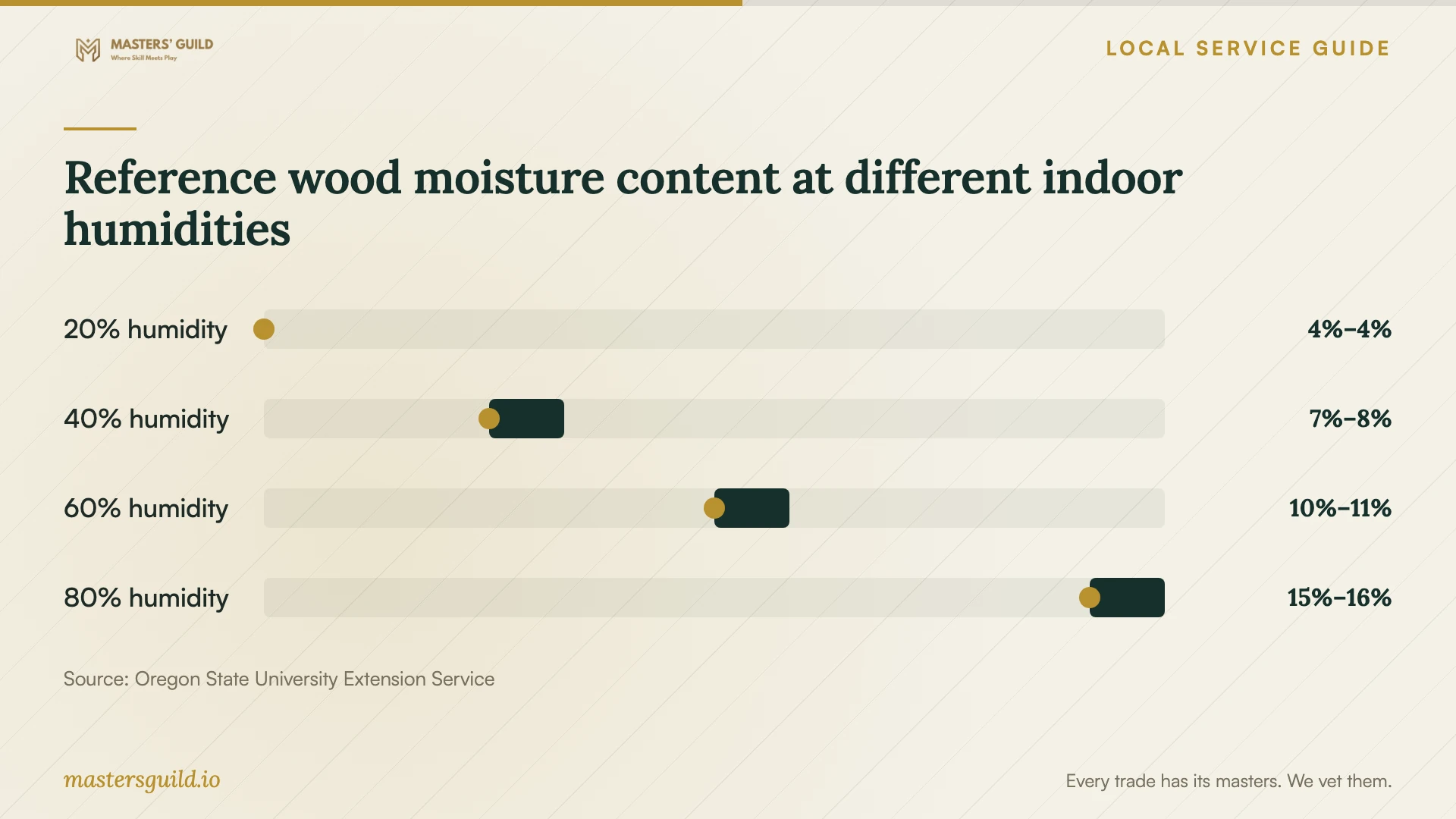
Oregon State University Extension explains that solid wood shrinks and swells as it loses or gains moisture. Its reference table relates indoor relative humidity to the moisture content wood approaches over time. Use the chart to understand why the installer should consider conditions inside your rooms rather than relying on a citywide assumption. [5]
For a wood-floor proposal, ask the installer how they will measure material moisture, document room conditions, and determine readiness under the selected manufacturer's instructions. Request the product name and those instructions before scheduling delivery. Ask for a plan for any readings outside the product's requirements, including who pays for additional visits.
The reference values below describe wood and humidity relationships. They are not measurements from Albuquerque homes, recommended humidity settings, or approval thresholds for a particular flooring product. Ask the installer to interpret the readings for your material and installation method. [5]
Compare complete written bids
Give each bidder the same room list and requested finish. Ask them to itemize materials, installation, existing-floor removal, preparation, trim, transitions, and hauling. Request separate allowances for work they cannot assess until removal. Agree on how you will approve a change and its price before anyone performs extra work.
Ask who moves furniture and appliances, protects adjoining rooms, and returns the space to use. Request a schedule that separates delivery, preparation, installation, and any waiting period required by the chosen product. Have the installer state when you can walk on the floor and return furniture, with the relevant product instructions.
The sources supplied here do not establish local installed flooring prices or a permit exemption for routine replacement. Obtain a measured quote for your home. If the proposal includes structural changes or other work beyond the floor covering, ask the contractor to identify the applicable authority and confirm requirements before you approve that scope.
Plan debris removal and the final inspection
Ask where the crew will put removed flooring and who will haul it away. Albuquerque's commercial collection rules prohibit construction and demolition waste in commercial refuse bins. The city issues permits to private haulers transporting such materials and requires a special permit for an open-top container on a public street. If the crew proposes either arrangement, request its hauling and placement plan before delivery. [3]
Inspect the finished rooms with the installer before accepting the work. Check the agreed repair areas, doorway transitions, trim, and cleanup. Record unfinished items with photographs and a completion date. Keep the material details, care instructions, written workmanship terms, and any moisture records with your receipt.
Reference wood moisture content at different indoor humidities
Local details that affect your job
Ask Albuquerque's Air Quality Program about asbestos scope
The city regulates removal of regulated asbestos-containing material within Bernalillo County. It distinguishes affected-facility renovation from homeowner removal and states that asbestos inspections require accredited inspectors. Call 505-768-1972 to clarify your project's scope before arranging removal. For home disposal, the city directs residents to the New Mexico Solid Waste Bureau and prohibits putting asbestos in garbage. [1]
Confirm a street-container permit before booking tear-out
An open-top debris container on a public street requires a special permit under the city's published guidance. Ask who will obtain it and where the container will sit. Albuquerque Solid Waste also issues private-hauler permits for construction and demolition materials; call 505-761-8100 with hauling questions. [3]
Arrange your own moisture investigation
Albuquerque does not test, clean, or conduct environmental health assessments for mold. If you find water damage beneath flooring, arrange an appropriate investigation and leak repair rather than scheduling a city mold assessment. The city's guidance says to fix leaks and other water problems first. [4]
Choose the next step before booking installation
| Situation | Next step | Question for the bidder |
|---|---|---|
| Isolated damage | Request a localized repair option alongside replacement. | What will you remove, and can I approve the proposed finish first? |
| Suspect floor tile would be disturbed | Follow EPA guidance for accredited inspection and laboratory analysis. | Who will arrange sampling before demolition? |
| Leaks, stains, or musty odors | Investigate moisture and fix water problems first. | Who resolves the cause before you cover the area? |
| Wood installation | Request moisture records and product-specific readiness criteria. | How will you determine that the material is ready? |
| Open-top container on a public street | Confirm the required special permit and placement plan. | Who obtains the permit before the container arrives? |
Your hiring checklist
- Photograph damage and list the rooms, doorways, and transitions in the proposed scope.
- Ask for repair and replacement options where appropriate.
- Resolve suspect-material questions before authorizing removal.
- Assign responsibility for leak investigation and preparation.
- Request the exact flooring product and installation instructions.
- Compare itemized bids with matching inclusions and exclusions.
- Agree on hauling, container placement, and written change approvals.
- Schedule a final walkthrough and retain care instructions and project records.
Frequently Asked Questions
Can I tell whether old floor tile contains asbestos?
No. EPA says appearance cannot identify asbestos. If you suspect the tile and renovation would disturb it, EPA recommends sampling by a trained, accredited inspector and analysis by a qualified laboratory. [2]
Can removed flooring go in the building's commercial dumpster?
Albuquerque prohibits construction and demolition waste in commercial refuse containers. Ask the installer to arrange an appropriate hauling method and specify disposal in the quote. Keep asbestos disposal separate: the city prohibits asbestos in garbage. [1] [3]
Does the city inspect mold under a damaged floor?
Albuquerque says it does not test, clean, or perform environmental health assessments for mold. Arrange an investigation through an appropriate professional and resolve leaks or other water problems before proceeding with flooring. [4]
How long should I allow for installation?
Ask for a schedule based on the measured scope, preparation, selected material, and its installation instructions. Have the installer distinguish workdays from delivery or waiting periods and state when you can use the room and return furniture.
Sources and scope
This guide combines the sources below with practical planning guidance. Figures apply to the stated geography and period; request a written quote for your property.