
Local service guide
Duct cleaning in Albuquerque: scope and hiring
Duct cleaning in Albuquerque should start with an inspection and a written scope. Ask the cleaner to show the contamination that warrants the work, then compare estimates covering the same system components. EPA recommends cleaning as needed for substantial visible mold, pests, or excessive debris. If the proposal includes equipment or ductwork installation, Albuquerque requires a plumbing/mechanical permit and a licensed contractor for that installation. Separate installation from the cleaning agreement and confirm the permit requirements before approving the job. [1] [2]
Decide whether cleaning addresses your problem
Describe what you have observed before requesting a quote: debris blowing from supply registers, suspected growth inside the system, evidence of pests, or dust remaining after renovation. Ask the provider to inspect the affected areas and show you photographs or accessible surfaces. EPA identifies substantial mold on hard surfaces or system components, vermin, and excessive dust or debris as reasons to consider cleaning. [1]
For dust on a return grille, start by cleaning the grille and checking the filter fit. EPA says dusty return registers do not establish heavy contamination inside the ducts. If your concern involves unexplained symptoms, discuss them with your doctor. EPA says duct cleaning has not been shown to prevent health problems. [1]
Ask who will correct the underlying problem. EPA warns that contamination can recur when owners leave its cause unresolved. Wet or moldy duct insulation requires removal and replacement. Request a separate explanation and scope for moisture repairs, pest-related work, or insulation replacement before agreeing to cleaning. [1]
Compare the work behind each estimate
Have each bidder identify the supply and return ducts, registers, air handler, blower, coils, and drain pans covered by the price. EPA advises cleaning all components of a contaminated system because an untreated component can contaminate the system again. Ask the bidder to identify exclusions and explain who will handle components outside their qualifications. [1]
Ask how the crew will collect loosened debris. EPA recommends vacuum equipment that exhausts outdoors, or HEPA vacuum equipment when the exhaust stays inside. Ask how workers will protect furnishings and choose brushes suited to the duct material. For fiberglass duct board or fiberglass-lined metal ducts, EPA specifies soft-bristled brushes. [1]
Request an itemized total separating cleaning, access openings, access-hole repairs, equipment servicing, replacement work, and proposed chemical treatments. Ask whether the quote covers each system in your home. Have the contractor explain how they will price additional work and obtain your approval before proceeding. Keep each bidder's scope beside the price when comparing offers.
Treat a proposed disinfectant or interior coating as a separate decision. EPA describes unresolved questions about these treatments and advises against routine sealant use. Before approving a chemical, ask for its label, intended use, reason for application, and compatibility with your duct material. EPA's guidance states that no biocides are registered for fiberglass duct board or fiberglass-lined ducts. [1]
Arrange access and inspect the finished work
Before booking, send the contractor your observations, photographs, system count, and known access constraints. Ask which rooms and equipment areas the crew needs to enter, how long they expect the work to take, and whether you should remain home. Agree on arrangements for pets and furniture before the visit. Identify who can approve changes if the crew discovers a problem.
Request inspection for suspected asbestos-containing materials before anyone disturbs insulation or register boots. EPA says specially trained and equipped contractors must handle such materials. Ask the cleaner to explain how they will stop and refer the work if they encounter a concern. [1]
At completion, ask the provider to show the cleaned components, including representative supply and return sections. EPA recommends visual inspection and says the system should have no debris visible to the naked eye. Check that workers have reattached registers, sealed and reinsulated access holes, and confirmed system operation. Keep the photographs and final itemized invoice. [1]
Choose filtration your system can accommodate
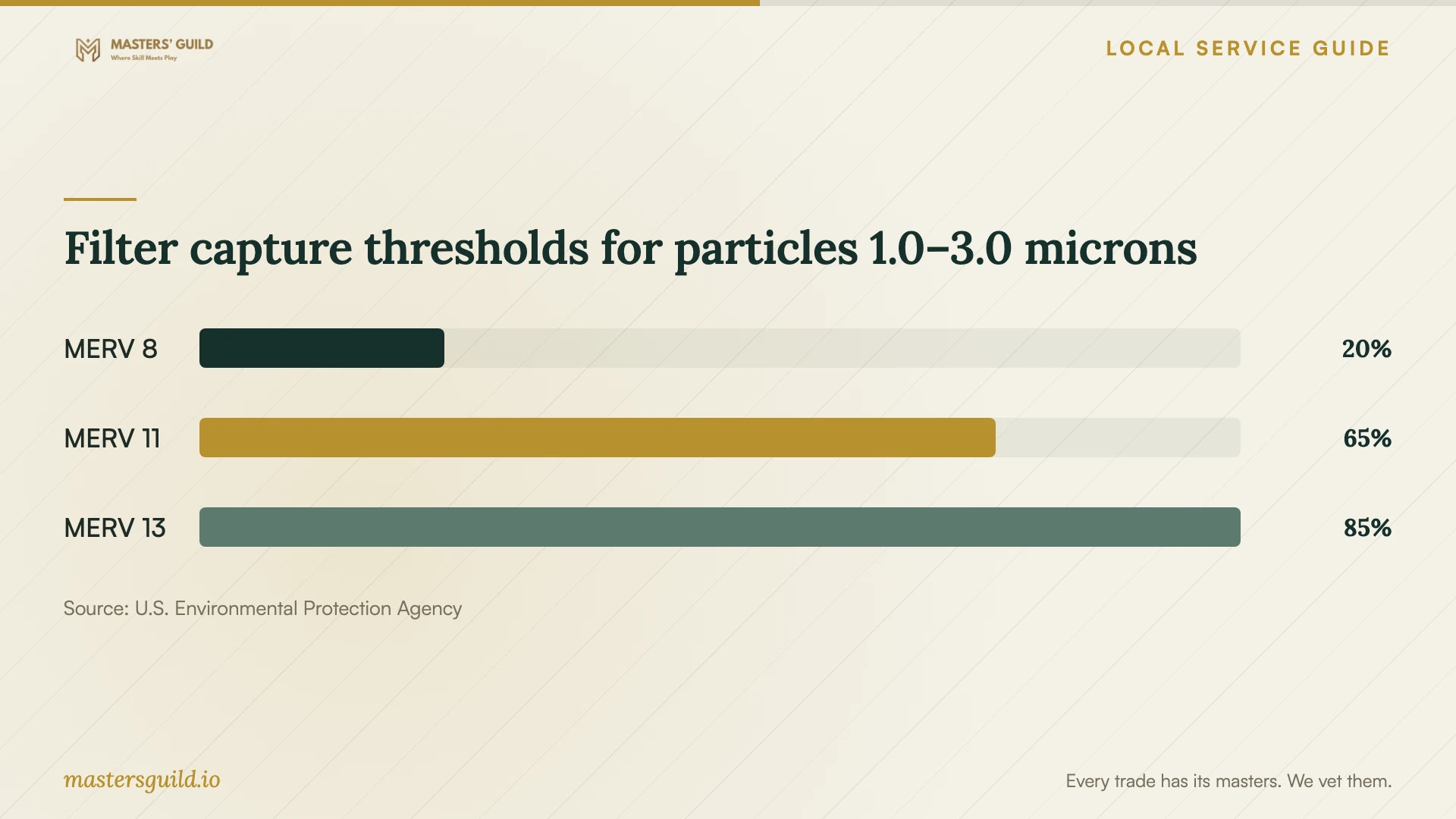
Ask your HVAC technician which filter efficiency your fan and filter slot can accommodate before buying an upgrade. EPA recommends MERV 13 or the highest rating the system can accommodate when upgrading filtration. Follow the manufacturer's replacement guidance and check that air cannot bypass the filter through gaps. [1] [3]
The chart compares EPA's published minimum average capture efficiencies for one particle-size band. Use it to discuss filter selection with your technician. These reference values do not measure your home's air quality, establish a need for duct cleaning, or predict the results of a cleaning visit. [3]
Filter capture thresholds for particles 1.0–3.0 microns
Local details that affect your job
Separate installation from the cleaning scope
Albuquerque lists equipment or ductwork installation under work requiring a plumbing/mechanical permit and says only a licensed contractor can complete that installation. If a cleaner proposes replacing a duct section or installing equipment, ask Building Safety to confirm the permit scope before you approve it. Confirm cleaning-only requirements with Building Safety; the city lists equipment and ductwork installation as permit work. Contact the city's mechanical inspections and trade-permit staff at 505-924-3320. [2]
Confirm the specific trade permit before work starts
For an expanded proposal that includes permit work, agree on who will obtain the permit and request its number. Albuquerque allows online applications, document uploads, payments, and application tracking through ABQ-PLAN. Ask Building Safety at 505-924-3320 how to confirm the specific plumbing/mechanical permit for your address and installation scope. The city assigns responsibility for obtaining required permits before work begins to the homeowner or contractor. Keep the installation agreement and permit information together. [2]
Choose the next step from what you observe
| Observation or proposal | Next step | Reason |
|---|---|---|
| Dust on a return grille | Clean the grille and check the filter before ordering whole-system cleaning. | EPA says dusty return registers do not establish heavy duct contamination. |
| Excessive debris or particles blowing from supply registers | Request inspection and comparable written cleaning scopes. | EPA identifies these conditions as reasons to consider cleaning. |
| Suspected mold or wet insulation | Ask for evidence and a plan to correct moisture; discuss insulation replacement. | EPA says wet or moldy duct insulation cannot be effectively cleaned. |
| Equipment or ductwork installation added to the quote | Confirm a licensed contractor and ask Building Safety how to verify the specific permit. | Albuquerque requires a plumbing/mechanical permit for this installation. |
| Higher-efficiency filter proposed | Confirm fan and filter-slot compatibility with an HVAC technician. | EPA qualifies filter upgrades by what the system can accommodate. |
Your hiring checklist
- Record the problem you want the provider to investigate and request evidence before approving cleaning.
- Send each bidder the same system information and request the same itemized scope.
- Ask about debris collection, duct materials, furniture protection, and access-hole repairs.
- Separate chemical treatments and replacement work from the base cleaning price.
- Ask Building Safety how to confirm requirements and the specific permit for any proposed installation.
- Agree on access, pets, expected duration, and who can approve additional work.
- Inspect the finished components with the provider and retain photographs and the invoice.
Frequently Asked Questions
Should I book duct cleaning every year?
EPA recommends cleaning as needed. Ask the provider to show substantial contamination and explain what cleaning will address. Keep regular filter changes and heating-equipment inspections in your maintenance plan. [1]
Does cleaning alone require an Albuquerque permit?
Confirm cleaning-only requirements with Building Safety; the city lists equipment and ductwork installation as permit work. That installation requires a plumbing/mechanical permit and a licensed contractor. Call 505-924-3320 to discuss the proposed scope and ask how to confirm any required trade permit. [2]
Will cleaning ducts lower my energy bills?
EPA says little evidence supports improved efficiency from cleaning ducts alone. It distinguishes that work from cleaning dirty coils, fans, and heat exchangers, which may improve system efficiency. Ask the contractor to identify the component and evidence behind any savings claim. [1]
How should I compare a low-priced offer with a larger quote?
Ask both providers for written totals covering the same components, access work, and exclusions. EPA recommends estimates from at least three providers and a written agreement defining total cost and scope. Compare the agreed work before choosing by price. [1]
Sources and scope
This guide combines the sources below with practical planning guidance. Figures apply to the stated geography and period; request a written quote for your property.