
Local service guide
Albuquerque commercial building cleaning
Arrange commercial building cleaning in Albuquerque by walking the premises with prospective cleaners and requesting written quotes for the same rooms, tasks, and visit schedule. Separate routine cleaning, disinfection, floor treatments, and exterior washing. Before you sign, agree on access, insurance documentation, inspection standards, and responsibility for wastewater or hazardous materials.
Define the work before requesting prices
Prepare a room-by-room brief. Identify the cleanable floor area, flooring materials, restrooms, break room, entrances, and spaces the crew must avoid. Specify tasks such as emptying bins, cleaning restroom fixtures, vacuuming, mopping, and wiping agreed surfaces. Ask the cleaner to mark exclusions instead of relying on a broad promise to clean the building.
Choose the visit schedule around your opening hours and the condition you want at handover. Tell bidders whether staff will remain on site, who can admit the crew, and where they may store equipment. For a shared building, confirm with your landlord who arranges common-area cleaning and who authorizes access to utility sinks or waste facilities.
Request separate proposals for carpet extraction, floor stripping or refinishing, interior glass, and exterior washing. If you operate a medical or dental practice, supply your facility’s cleaning protocol and ask the bidder to identify the tasks their crew can perform. Avoid treating a general office-cleaning proposal as approval for clinical work.
Compare complete quotes and contract terms
Obtain site-specific, itemized quotes after a walkthrough and compare totals for the same agreed service period. Ask each bidder to identify included visits, supplies, restroom consumables, initial cleaning, and optional tasks. Require them to show applicable tax and disposal charges in the written total. Confirm whether the quoted floor area includes shared spaces or rooms you have excluded.
Agree on a process for extra work before the first visit. Name the person who can authorize charges, the method for approving them, and any spending limit. Read cancellation terms, price-change provisions, missed-visit arrangements, and the procedure for reporting damage. Ask who will supervise the crew and handle complaints.
Specify cleaning and disinfection separately
EPA distinguishes cleaning, which removes dirt and organic matter with soap or detergents, from sanitizing and disinfecting. Surface sanitizers kill bacteria and are not intended to kill viruses. Surface disinfectants kill viruses and bacteria. Ask the bidder to name the intended treatment for each area rather than using these terms interchangeably. [4]
For disinfected surfaces, request the product name, EPA registration number, and label directions. EPA instructs users to follow the label and pay attention to contact time, the period the surface must remain wet. Ask the crew how they will accommodate that time before occupants resume using the area. [4]
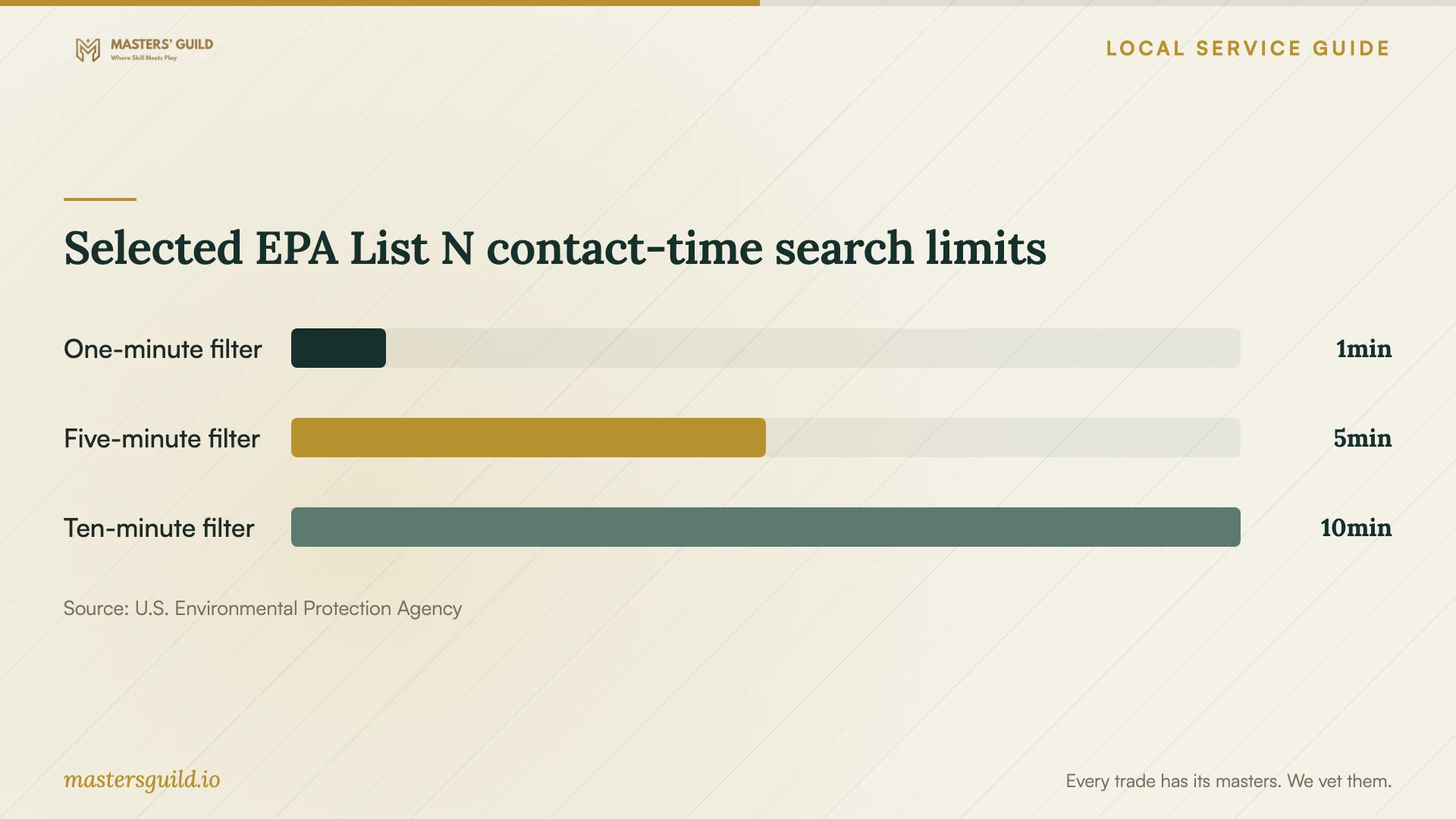
For a specific SARS-CoV-2 claim, EPA’s List N tool lets you search by registration number, use site, surface type, and contact time. EPA states that listed products meet its criteria for use against SARS-CoV-2 on surfaces. Use the tool for that claim; ask for the relevant label evidence for other organisms or applications. [5]
Check insurance and control building access
Ask for current general liability insurance documentation and confirmation of workers’ compensation coverage where required. New Mexico’s Workers’ Compensation Administration states that employers with three or more workers must carry coverage. It counts part-time and seasonal workers, and its ownership rules can affect the headcount. Employers performing activities requiring Construction Industries Licensing Act licensure must carry coverage regardless of employee count. [3]
If a bidder says coverage is unnecessary, ask them to explain their staffing and business structure, then seek clarification from the Administration if needed. Also ask whether employees or subcontractors will attend your premises and who takes responsibility for their work.
Write down rules for keys, alarm codes, locked rooms, and confidential documents. Assign an opening and closing contact. Before issuing access, agree on how the cleaner reports a lost key, damaged item, or unsecured door. Keep the approved task list available to both your contact and the crew supervisor.
Prepare for the first visit and inspect the result
Clear agreed work surfaces, secure sensitive records, and identify fragile finishes during the walkthrough. Mark any existing damage together. Point out electrical outlets, authorized water access, and the waste area. Ask the supervisor to explain any floor-treatment drying or reopening instructions before you schedule work around customers.
At handover, inspect the tasks you purchased: restroom fixtures, entry glass, bins, agreed touch surfaces, and floor edges. Record missed tasks and send them to the named supervisor. Agree on a correction deadline and review the visit schedule after the initial service period using your inspection notes.
Selected EPA List N contact-time search limits
Local details that affect your job
Exterior cleaning needs an Albuquerque wastewater plan
The City states that storm-drain flows reach the Rio Grande without treatment and prohibits wastewater discharge to the ground or storm drains. It recommends sweeping pavement instead of hosing pollutants into the street. If your scope includes entrances, loading areas, or exterior equipment, ask the bidder how they will collect wash water and confirm an authorized disposal route. The City also notes sewer restrictions, so do not assume any nearby drain accepts the collected water. [1] [2]
Commercial hazardous waste needs a permitted vendor
Albuquerque’s household hazardous waste center accepts residential materials only. The City directs businesses, nonprofits, and public agencies to state-permitted vendors for commercial hazardous waste. During a cleanout, identify stored chemicals and mercury-containing lamps before the crew starts. Ask who will classify the waste, arrange the appropriate vendor, and approve disposal charges. Keep that work separate from the routine janitorial agreement. [2]
Match the proposal to the work you need
| Your situation | Request | Confirm before approval |
|---|---|---|
| Routine office upkeep | A recurring room-by-room cleaning scope | Included tasks, visit schedule, supplies, and inspection process |
| Targeted surface disinfection | Named products and selected surfaces | Label directions and required wet contact time |
| Exterior entrance or loading-area washing | Wash-water collection and disposal arrangements | No wastewater discharge to the ground or storm drains |
| Cleanout involving hazardous business waste | Separate disposal scope using a state-permitted vendor | Waste classification, responsibility, and approved charges |
| Carpet or floor treatment | A separately priced task | Finish compatibility, access restrictions, and reopening instructions |
Your hiring checklist
- Prepare one room-by-room task list for all bidders.
- Arrange a walkthrough and identify excluded spaces and fragile finishes.
- Request an itemized total for the same visit schedule.
- Ask for product labels for proposed disinfection.
- Review insurance documentation and the crew’s staffing arrangements.
- Confirm wastewater and hazardous-waste responsibilities before approving those tasks.
- Agree on keys, alarms, supervision, and an emergency contact.
- Inspect the first visit against the agreed task list.
Frequently Asked Questions
How much should I budget for commercial cleaning?
Obtain site-specific, itemized quotes after a walkthrough. Ask bidders to price the same cleanable area, tasks, and schedule, with separate totals for initial cleaning and optional treatments. Confirm supplies, applicable tax, and disposal charges before choosing a provider.
Does a cleaning visit include disinfection?
Ask the provider to specify it. EPA treats cleaning and disinfection as different actions. If you buy disinfection, agree on the surfaces, product, and label-required wet contact time. [4]
Can the crew take our old chemicals to the household collection center?
The City limits that center to residential materials. Commercial hazardous waste from businesses, nonprofits, and public agencies must go through a state-permitted vendor. Assign disposal responsibility before approving a cleanout. [2]
Must every cleaning business carry workers’ compensation?
The state Administration requires coverage for employers with three or more workers and counts part-time and seasonal workers. Ownership rules can affect the count. Ask the bidder for coverage documentation or an explanation of why the requirement does not apply, and contact the Administration for clarification. [3]
Sources and scope
This guide combines the sources below with practical planning guidance. Figures apply to the stated geography and period; request a written quote for your property.