
Local service guide
Gardening in Akron: Plan the Work and Compare Quotes
Arrange Gardening in Akron by defining the work before requesting quotes: bed cleanup, recurring upkeep, planting, or rainwater collection. Send providers photographs, approximate bed dimensions, access details, and the plants you want to preserve. Request separate charges for labor, materials, disposal, and follow-up care. Before approving amendments or rainwater work, agree on soil-testing responsibilities and a plan for keeping collected water away from foundations.
Define the work and the plants you want to keep
Walk through the garden and mark the work area. Identify beds for weeding, shrubs for assessment, and plants for preservation. Photograph unfamiliar plants and request identification before removal. Separate a first cleanup from recurring maintenance so you can approve each commitment.
For planting, request names, quantities, sizes, and proposed locations. Describe your goal, such as vegetables, seasonal flowers, or native planting. Have the gardener explain each selection for your sunlight and water conditions. Agree on substitutions, watering responsibilities, and any replacement terms before purchasing plants.
Show providers the gates, steps, parking area, water access, and delivery route. Specify whether they should remove debris or leave it in an agreed compost area. Include photographs of the access route alongside bed photographs so each provider can quote the same job.
Choose soil analysis before buying amendments
In an October 2025 Summit County exchange, an Ohio State University Extension expert distinguished testing for pH and nutrients from testing for heavy metals. For the Barberton school garden discussed, she recommended all three and advised using a certified laboratory. [2]
Tell the testing contact whether you intend to grow food, flowers, or both. Describe any concerns about the soil and ask which analysis fits the site. Have the gardener identify proposed sampling areas. Decide who will collect samples, submit them, and explain the results before you authorize amendments.
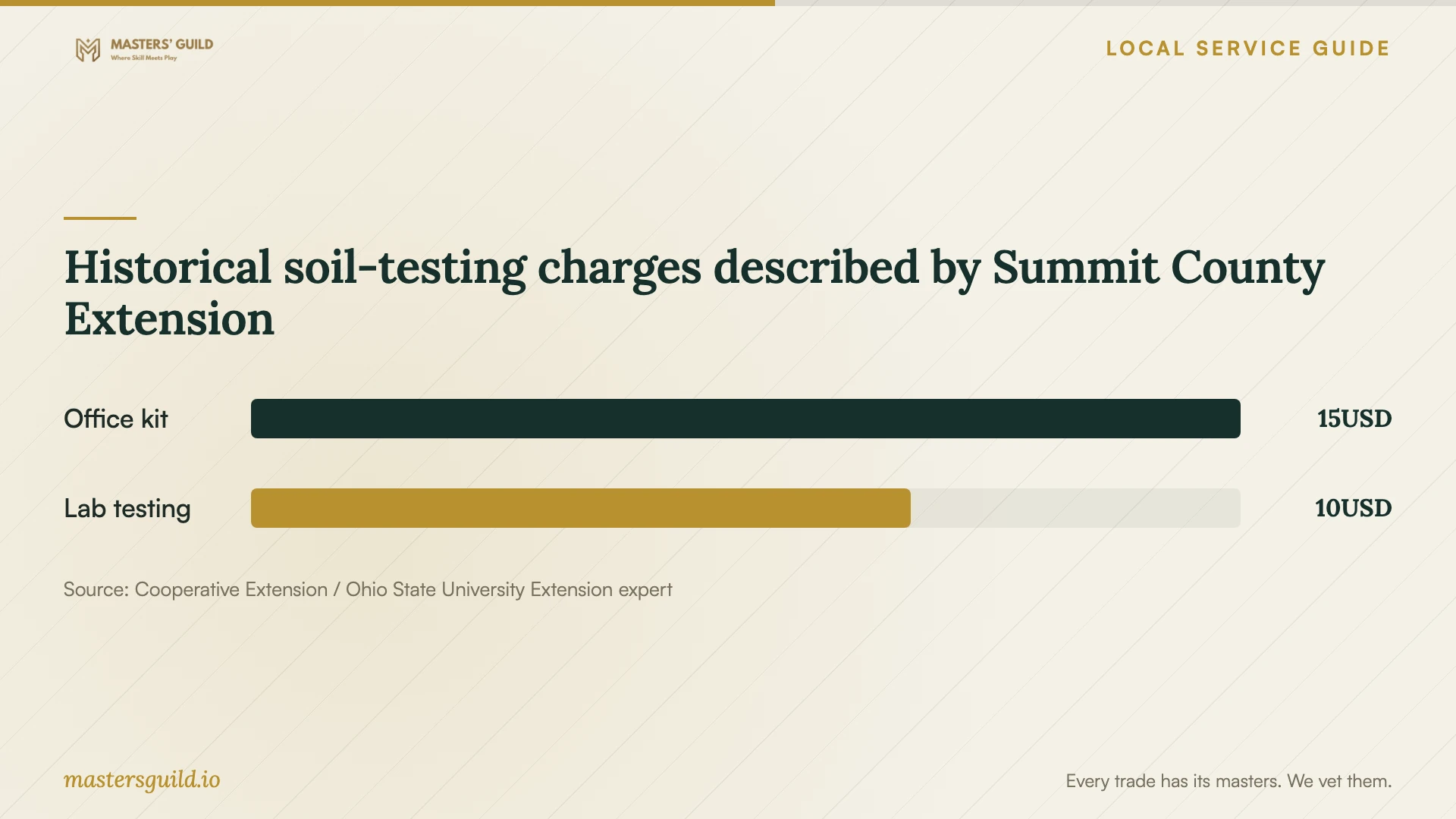
The response described a temporary local sample-drop-off opportunity and a Penn State testing route in 2025. For pH and nutrient testing through Penn State, the expert quoted a $15 kit from the Extension office and an additional $10 testing charge. These historical charges provide an example of separate purchasing and testing costs; confirm current arrangements before budgeting or visiting the office. [2]
Specify the water route and winter maintenance
Summit Metro Parks describes rain gardens as planted depressions that hold and absorb runoff before it reaches storm sewers and waterways. Its regional guidance advises avoiding saturated soil around foundations, especially in winter. For a proposed installation, request a drawing or marked photograph showing the collection area, overflow route, and relationship to the house. [3]
If water enters your basement, arrange an assessment of that problem before approving garden work as a remedy. Have the installer explain how you should check the installation after rain and who will adjust it if water collects in an unwanted place. Keep that responsibility in the written scope.
Summit Metro Parks advises covering rain-barrel openings to prevent mosquito reproduction, adjusting rain gardens to prevent standing water for more than a week, and disconnecting barrels in winter. Request a demonstration and written maintenance instructions. Include a seasonal return visit if you want the provider to handle disconnection. [3]
Agree on timing, charges, and completion
Request the same breakdown from each gardener: labor, materials, delivery, debris removal, and return visits. For hourly work, agree on an estimated total and a spending limit that requires your approval to exceed. For a fixed quote, request included tasks and exclusions. Ask the provider to explain any charge you cannot connect to the scope.
The National Weather Service's Akron-Canton table reports lower normal mean minimum temperatures in November than October. The table carries a May 5, 2021 update date. Use that regional seasonal context to discuss autumn work; choose planting dates with the gardener using the proposed plants, current forecast, and conditions in your beds. [1]
Before payment, walk through the completed work with the gardener. Check the agreed beds, plant quantities, debris removal, and rainwater equipment. Collect plant names and care instructions. For recurring maintenance, specify the tasks at each visit and how you will authorize changes.
Historical soil-testing charges described by Summit County Extension
Local details that affect your job
Confirm Summit County's current soil-testing arrangements
The local Extension response concerns a Barberton school garden in October 2025. The expert described different testing routes and recommended heavy-metal analysis for that school project. Before paying for an Akron edible-bed sampling job, contact Summit County Extension with your intended use and testing concerns. Confirm the current laboratory, submission instructions, and charges; the historical drop-off opportunity does not establish present availability. [2]
Include the downspout arrangement after winter disconnection
Summit Metro Parks advises disconnecting rain barrels in winter and avoiding saturated soil around foundations. Apply that regional guidance to your installation: have the gardener demonstrate disconnection and explain where downspout water will go afterward. Decide who will make the seasonal change and include a return visit in the quote if needed. [3]
Match the quote to your garden goal
| Your goal | Request | Settle before approval |
|---|---|---|
| Restore an overgrown bed | A defined cleanup with plants to preserve marked | Removal boundaries, disposal, and extra-work approval |
| Maintain established beds | A recurring task list | Visit arrangements, included tasks, and material charges |
| Prepare an edible bed | A discussion of pH, nutrients, and any heavy-metal testing concerns | Appropriate analysis, sampling areas, and current laboratory instructions |
| Collect roof runoff | A rainwater proposal with maintenance instructions | Foundation protection, covered barrel openings, and winter disconnection |
Your hiring checklist
- Photograph beds and mark plants you want to preserve.
- Measure work areas and describe gates, steps, parking, and water access.
- Separate initial cleanup from recurring care.
- Confirm soil-analysis needs and sampling responsibilities before approving amendments.
- Request plant names, quantities, sizes, and substitution terms.
- Specify debris disposal and an approval limit for extra work.
- Agree on rainwater overflow routing and seasonal maintenance where applicable.
- Inspect completed work and collect written care instructions.
Frequently Asked Questions
How should I compare gardening prices?
Give providers the same scope and request separate labor, materials, delivery, disposal, and return-visit charges. For hourly work, set an approval limit. Compare property-specific quotes with the same inclusions before choosing a provider.
Should I test soil before installing a vegetable bed?
Discuss testing before buying amendments. The Summit County Extension expert distinguished pH and nutrient analysis from heavy-metal testing and recommended all three for the school garden in her 2025 response. Ask the testing contact which analysis fits your site and intended use. [2]
Can I leave a rain barrel connected through winter?
Summit Metro Parks advises winter disconnection. Ask the installer to demonstrate the procedure and explain the downspout arrangement afterward. Include a seasonal visit if you want the provider to do the work. [3]
How should I arrange autumn planting?
Request a planting plan for the specific plants and beds, plus a weather-related rescheduling arrangement. The Akron-Canton normals table describes regional averages. Use the current forecast and your site's conditions when agreeing on the work date. [1]
Sources and scope
This guide combines the sources below with practical planning guidance. Figures apply to the stated geography and period; request a written quote for your property.