
Local service guide
Duct and Vent Cleaning in Akron, OH: Hiring Guide
Arrange Duct and Vent Cleaning in Akron, OH by having a contractor show you the contamination, correcting its underlying causes before cleaning, and comparing written estimates for the same system components. EPA recommends cleaning as needed for substantial mold growth, vermin or excessive debris. If the proposal expands into duct replacement or alterations, contact Akron Plans and Permits about the scope before approving that work. [1] [2]
Check whether cleaning addresses your complaint
Have the inspector show you contamination inside the system and identify the affected components. EPA lists substantial visible mold on hard surfaces, vermin, and excessive dust or debris as reasons to consider cleaning. Dust on a return register alone does not establish that the system needs cleaning. [1]
For suspected mold, request photographs and an explanation of the moisture source. EPA says an expert may need laboratory analysis to confirm mold. EPA advises correcting the underlying cause before cleaning or replacement to prevent recurrence. For wet or moldy duct insulation, EPA recommends removal and replacement because cleaning cannot address it. [1]
Describe odors or unexplained symptoms before requesting a cleaning package. Summit County Public Health identifies poor ventilation, combustion appliances, humidification, household products and radon among indoor-air contributors. EPA advises discussing unexplained symptoms with your doctor. Have the contractor explain what connects your complaint to contamination in the ducts. [1] [4]
Request estimates for the same work
Request current Akron estimates for your system. EPA recommends at least three written estimates and a written agreement covering the total cost and scope before work starts. For hourly work, request an estimated duration and an explanation of interruptions. [1]
A whole-system proposal should identify supply and return ducts, registers, coils, drain pans, fan components and the air-handling housing. EPA warns that leaving a contaminated component untreated can contaminate the system again. Have each bidder identify exclusions and explain who will handle those components. [1]
Give each bidder the same description: system count, equipment location, accessible registers, known contamination and access restrictions. Request separate prices for repairs and additional services. Agree on how the contractor will obtain your approval for changes, and ask whether the quoted total includes protecting furnishings and closing access openings.
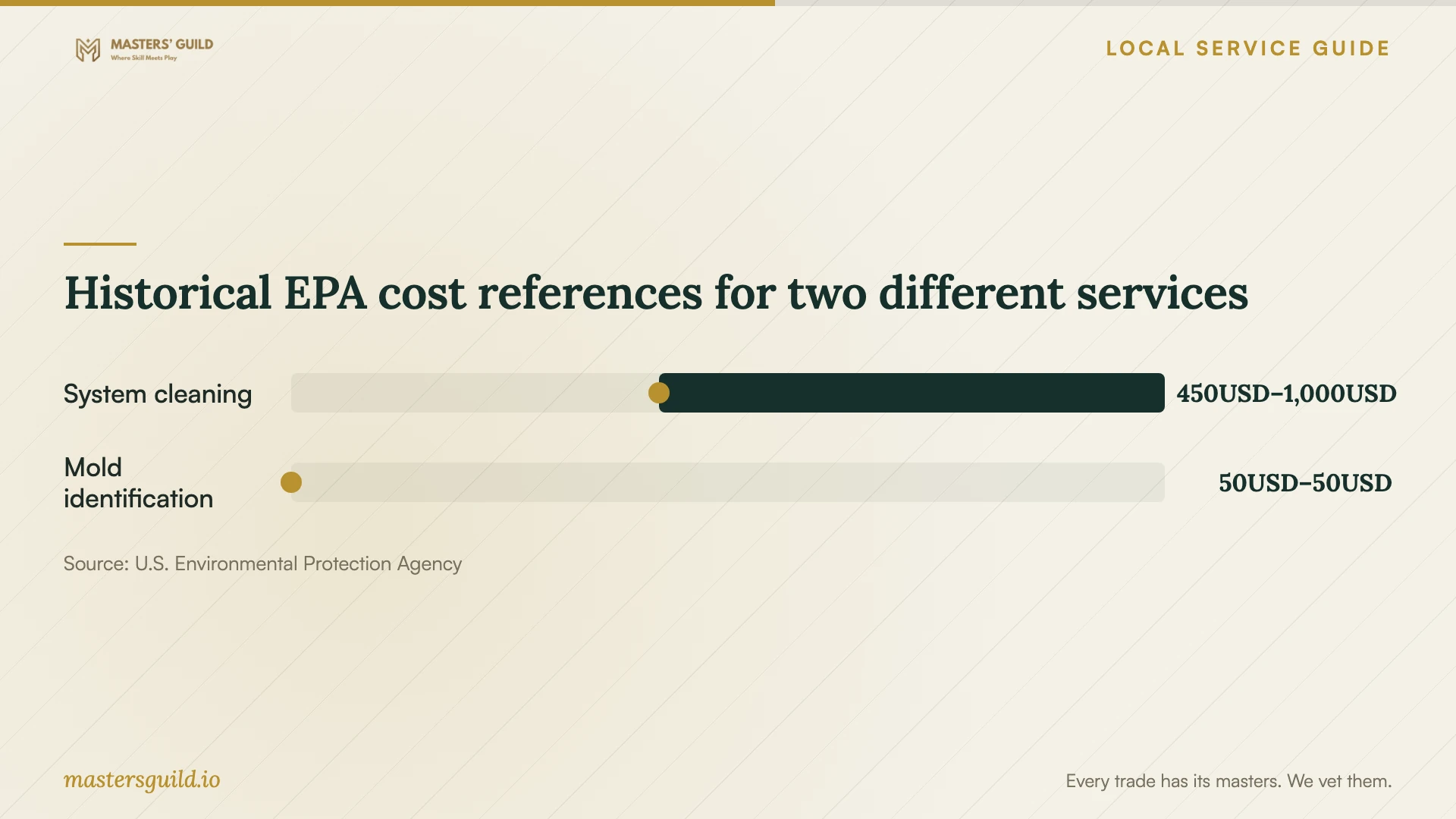
The historical cost chart distinguishes system cleaning from laboratory identification of suspected mold. EPA published those reference amounts in guidance dated October 1997. Use them to recognize separate scopes of work; obtain current written prices before purchasing either service. [1]
Choose methods that protect your system
Have the contractor identify sheet metal, flexible duct and fiberglass-lined sections before choosing tools. EPA recommends controlled brushing with vacuum collection and soft-bristled brushes for fiberglass materials. The contractor should exhaust collected particles outdoors or use HEPA vacuum equipment when exhausting indoors. [1]
Ask the contractor to inspect for possible asbestos-containing materials before anyone disturbs insulation or register boots. EPA advises using specially trained and equipped contractors to handle these materials. Pause ordinary cleaning through a suspect area until the contractor explains the assessment and handling plan. [1]
Treat chemical application as a separate approval. Request the product label, proposed use and duct material, plus an explanation of why physical cleaning and moisture control would be insufficient. EPA advises understanding the benefits and risks before permitting biocides or sealants. EPA does not certify duct-cleaning companies. [1]
Prepare access and coordinate heating service
If you are arranging work before heating season, include a separate conversation about fuel-burning equipment. EPA recommends inspecting and servicing fuel-burning furnaces, stoves and fireplaces before each heating season. That recommendation does not establish a need for routine duct cleaning. [1]
Before booking, agree on system downtime and ask whether the crew will restore heat before leaving. Clear routes to equipment and registers. Arrange access with the household, choose a place for pets, and point out fragile belongings. Give the crew any restrictions before accepting the appointment.
Inspect the work before accepting completion
Agree on completion evidence before work starts. EPA recommends a visual inspection and having the provider show each cleaned component. Review photographs of inaccessible areas, supply and return sections, secured registers, sealed and insulated access openings, and system operation. [1]
Keep the estimate, photographs and invoice together. Have the contractor record inaccessible components and remaining defects with a proposed next step. For prevention, EPA recommends regular filter changes, manufacturer-recommended filter efficiency, and attention to leaks and condensate drainage. [1]
Historical EPA cost references for two different services
Local details that affect your job
Check an expanded repair proposal with Akron
The Summit County Engineer directs projects within the City of Akron to Akron Plans and Permits at 330-630-7305 or 330-375-2010 for compliance requirements. If the inspection leads to proposed replacement, rerouting or mechanical alterations, call with the written scope before approving that work. The county's permit guidance does not specify whether routine duct cleaning requires a permit; ask about the work at your address. [2]
Get local guidance for an unresolved housing concern
Summit County Public Health's Healthy Homes program offers services for homeowners and renters concerned about environmental dangers in a house or apartment. Call 330-926-5600 and describe the moisture, suspected mold or other concern. Ask which services fit your situation before buying a cleaning package. The program page does not promise duct inspection, testing or payment for cleaning. [3]
Choose the next step from the inspection findings
| Finding | Next step | Reason |
|---|---|---|
| Dust on return grilles | Clean the grilles and inspect before purchasing system cleaning. | EPA says dusty return registers do not establish heavy duct contamination. |
| Excessive debris or particles leaving supply registers | Identify and correct underlying causes before arranging warranted cleaning. | EPA identifies these conditions as reasons to consider cleaning. |
| Suspected mold or wet insulation | Confirm suspected mold, correct the moisture cause, then arrange appropriate cleaning or replacement. | EPA recommends replacing wet or moldy duct insulation. |
| Vermin in ducts | Correct underlying infestation causes before cleaning. | EPA advises correcting underlying causes to prevent recurrence. |
| Proposed duct replacement or rerouting | Contact Akron Plans and Permits with the written scope. | The county directs Akron projects to the city's compliance office. |
Your hiring checklist
- Describe the complaint and request photographs showing the contamination and its location.
- Ask for a plan to correct underlying moisture or infestation causes before authorizing cleaning or replacement.
- Compare written estimates with the same components, exclusions and total cost.
- Have the contractor explain duct materials, vacuum collection and surface protection.
- Require separate approval for chemicals, repairs and additional services.
- Contact Akron Plans and Permits about proposed replacement or alterations.
- Clear equipment access and agree on system downtime and pet arrangements.
- Review cleaned components, photographs, access closures and system operation.
Frequently Asked Questions
Should I schedule duct cleaning every year?
EPA recommends cleaning as needed. Request evidence of substantial mold, vermin or excessive debris before booking. Continue regular filter care and heating-equipment inspections even when the ducts do not need cleaning. [1]
Will cleaning solve allergies or lower heating bills?
EPA says duct cleaning has not been shown to prevent health problems, and little evidence supports efficiency gains from cleaning ducts alone. Cleaning dirty coils, fans or heat exchangers may improve efficiency. Have the contractor identify the component and problem behind any promised benefit. [1]
Do I need a permit for routine cleaning?
The Summit County Engineer's permit guidance does not specify requirements for routine duct cleaning. It directs Akron projects to Akron Plans and Permits for compliance requirements. Contact that office about your scope, particularly if the proposal includes replacement, rerouting or mechanical alterations. [2]
How can I check that the crew completed the work?
Have the crew show you the cleaned components and photographs of inaccessible areas. EPA's checklist covers visible cleanliness, intact fiberglass, secured registers, access closures and heating and cooling operation. Review unresolved items before accepting completion. [1]
Sources and scope
This guide combines the sources below with practical planning guidance. Figures apply to the stated geography and period; request a written quote for your property.