
Local service guide
Business Plan Consulting in Akron, OH
Arrange Business Plan Consulting in Akron by defining who will read your plan, what decision you need to make and which financial work you need help completing. Start with the local SBDC’s no-cost advising and the Main Library’s research resources, then request a paid proposal for the work you still need. Ask your lender or investor for submission requirements before commissioning a financing plan. [1] [2]
Choose the help that matches your decision
Write a short brief before contacting a consultant: describe your business, intended customers, proposed location, deadline and reason for the plan. State whether you need to test an idea, seek financing, buy a business or plan an expansion. Ask the consultant to explain which parts you should prepare and which parts they will research or calculate.
The SBA distinguishes between detailed traditional plans and high-level lean startup plans. It describes lean plans as useful for relatively simple businesses and owners who expect to revise their plans. Lenders and investors commonly request traditional plans, so obtain their checklist before paying for a document. [3]
For internal planning, ask for help testing customer demand, pricing and expenses before commissioning a long narrative. For financing, ask the recipient to confirm the forecast period, supporting documents and required format. Send that information with your request for a quote.
Prepare local market evidence before paying for research
Arrange a meeting with the Small Business & Nonprofit Resource Librarian at Main Library. The library offers individualized resource training and research assistance. Its SizeUp resource focuses on Akron and Summit County, while IBISWorld industry reports require a visit to Main Library. [2]
Bring a specific research question, such as which customers a proposed shop would serve or which competitors operate within your intended service area. Ask the librarian which resources fit that question and what access conditions apply. Record each source’s date and geographic coverage so your consultant can distinguish local evidence from national industry information.
The SBA’s market-research guidance covers demand, market size, customer location, competition and pricing. It also distinguishes existing research from direct customer research, including interviews and surveys. Ask a consultant to identify gaps that require customer conversations rather than treating a national industry report as proof of demand for your proposed location. [3]
Specify financial work you can understand
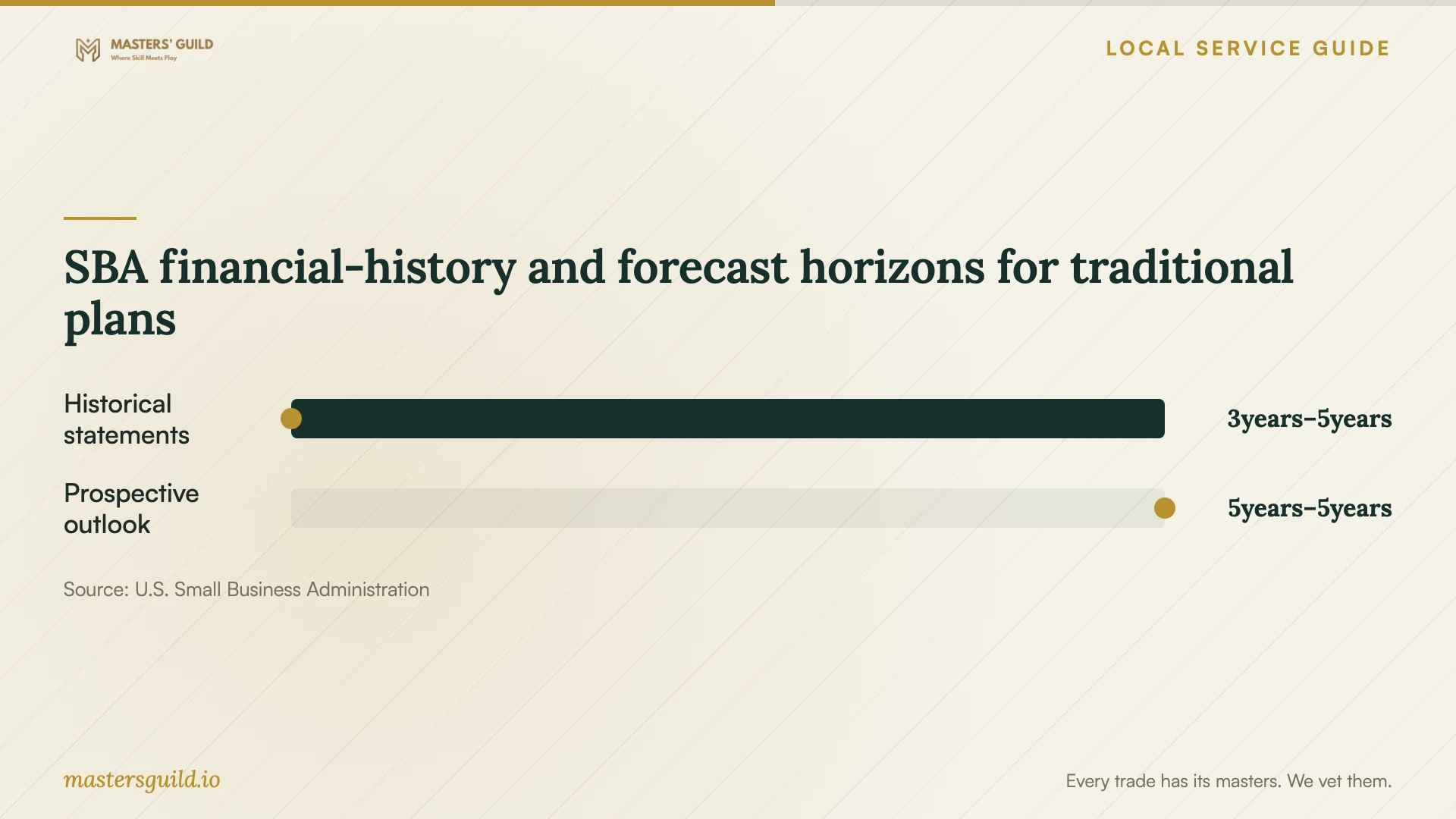
For a traditional plan, the SBA recommends that established businesses include income statements, balance sheets and cash-flow statements from the last three to five years. It calls for a five-year prospective financial outlook, with quarterly or monthly detail for the first year. These are national planning guidelines; your recipient may specify a different submission. [3]
Request an editable spreadsheet and an assumptions list alongside the written plan. Ask the consultant to explain sales volumes, prices, staffing, rent, inventory and payment timing. Have them show how you can change an assumption and trace its effect on cash needs. Request a lower-sales scenario and discuss what action you would take if sales fall short.
The SBA advises owners to separate startup expenses into one-time and monthly costs. Prepare vendor quotes, proposed lease costs, equipment needs and payroll assumptions before the consultant builds the forecast. Label uncertain inputs as estimates and ask who will verify them. [3]
Compare scope and fees before signing
The sources reviewed here do not establish a paid consulting price range for Akron. Request written quotes for the same brief. Ask each consultant to separate plan writing, market research, financial modeling and submission support so you can compare the work included. [1] [2] [3]
Ask for a redacted sample relevant to your business type. Have the consultant explain the research behind it and the assumptions in its forecast. Confirm who will perform the work, how you will review drafts and whether you receive editable files. Agree on revisions, payment milestones, confidentiality and any additional hourly charges.
Build the schedule backward from your submission date. Include your document preparation, consultant interviews, draft review and recipient feedback. Ask the consultant to put delivery dates and dependencies in the agreement. At handover, review the spreadsheet together and confirm that you can explain the funding request in your own words.
SBA financial-history and forecast horizons for traditional plans
Local details that affect your job
Use SBDC advising to define your paid scope
The Ohio SBDC at Summit Medina Business Alliance serves Summit, Portage and Medina counties from its Akron main office at 526 S. Main St., Suite 601. It offers confidential, no-cost advising and training, including How to Write a Business Plan. It encourages first-time founders to attend Business Basics before individual advising. Request advising to identify what you can prepare yourself and what you want a consultant to deliver. [1]
Plan a Main Library research visit
The Small Business & Nonprofit Resource Center occupies the first floor of Main Library at 60 South High Street. Its librarian offers research assistance and referrals to local entrepreneurial support. SizeUp focuses on Akron and Summit County, and IBISWorld requires in-library use. Arrange resource training before commissioning market research, and ask a prospective consultant how they will use or supplement the evidence you collect. [2]
Choose a starting point for your business plan
| Your situation | Starting point | Scope to discuss |
|---|---|---|
| First business and uncertain about the basics | SBDC Business Basics, followed by an advising request | Identify preparation tasks before commissioning a complete plan |
| Need evidence about customers or competitors | Main Library research assistance and local SizeUp data | Commission research for gaps that remain after your resource visit |
| Need a simple plan for your own decisions | Consider the SBA’s lean startup format | Ask for targeted review of costs, customers and revenue assumptions |
| Preparing a lender or investor submission | Confirm recipient requirements; the SBA says traditional plans are commonly requested | Specify the narrative, financial forecasts and supporting documents |
Your hiring checklist
- Identify the reader, purpose, submission deadline and requirements for your plan.
- Request SBDC advising; consider Business Basics if you are starting your first business.
- Book library resource assistance with a specific customer or competitor research question.
- Gather financial records, vendor quotes, proposed lease costs and existing sales information.
- Send the same brief to consultants and request itemized written proposals.
- Agree on editable files, research citations, revisions, confidentiality and payment milestones.
- Review forecast assumptions with the consultant before accepting the final work.
Frequently Asked Questions
Can I get business-plan help without paying a consultant?
Yes. The local SBDC offers no-cost individual advising and training, including a business-plan seminar. Main Library offers research assistance and business resources. Ask each organization what help it can provide for your project, then define any paid work you still need. [1] [2]
How much does a paid business-plan consultant cost in Akron?
The reviewed sources do not establish a local paid price range. Request quotes against the same written scope, including research, projections, revisions and delivery dates. Ask about additional charges before signing. [1] [2] [3]
What should I bring to the first consultation?
Bring your business description, intended customers, deadline, recipient requirements and available financial records. Include supplier quotes, proposed premises costs and your current questions. Tell the consultant which figures you have verified and which remain estimates.
Does a completed plan guarantee financing?
Treat the plan as preparation for a funding decision. The SBA describes investors reviewing management, markets, products, governance documents and financial statements during due diligence. Ask your intended lender or investor what else they need before committing to consulting work. [3]
Sources and scope
This guide combines the sources below with practical planning guidance. Figures apply to the stated geography and period; request a written quote for your property.